Introduction
When the incessant honking of city trams and congested arterial flyovers overwhelm your senses, you do not need an expensive flight to a commercial hill station to reset your spirit. Modern vacation spots have turned into sterile, commercial theme parks filled with selfie queues and identical concrete souvenir kiosks. In sharp contrast, the verdant fringes encircling Kolkata preserve a raw, grounded countryside where life moves strictly to the rhythm of tidal rivers, whispering mangrove thickets, and birdsong.
Stepping into these rural green belts offers authentic cultural immersion and genuine natural silence. Old mango groves, tidal creeks, and quiet river confluences provide the exact antidote to metropolitan sensory overload.
Why Kolkata is a must-visit city
Kolkata remains the geographical springboard to one of the planet’s richest, most bio-diverse deltaic and riparian landscapes. Positioned along the fertile Gangetic basin, the city offers seamless transit out of urban bustle into untamed wilderness via extensive suburban railway networks, water ferries, and multi-lane expressways like NH 16 and NH 12. Backpackers, family day-trippers, and wildlife photographers can easily transition from historic colonial boulevards to quiet wetland trails within a couple of hours.
The surrounding nature circuit spans saline mangrove deltas, freshwater oxbow lakes, river confluences, and dense canopy sanctuaries. Each getaway provides comfortable village homestays, state-run tourism lodges, and fresh countryside cuisine.
| Travel Circuit Metric | Regional Scope & Key Facts |
|---|---|
| Ecosystem Varieties | Mangrove deltas, freshwater oxbow lakes, river confluences, village forest groves |
| Peak Wildlife Season | October to March (migratory waterfowl and pleasant humidity) |
| Accessibility Gateways | Howrah Junction, Sealdah Station, Kona Expressway, Diamond Harbour Road |
| Average Commute Time | 45 minutes to 3.5 hours from the city center |
| Ideal Trip Cadence | Single-day escapes or 2-day weekend retreats |
Best Places or Experiences
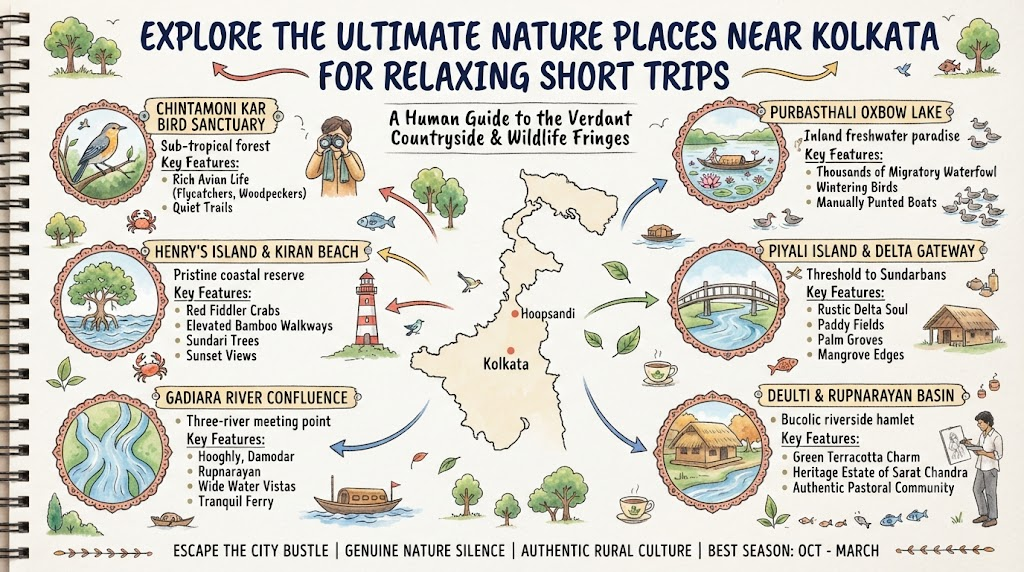
Chintamoni Kar Bird Sanctuary
Tucked away in the southern suburban canopy of Narendrapur, this sanctuary represents an invaluable ecological relic preserved from urban sprawl. Originally a private orchard known locally as “Kayal-er Bagan,” the habitat was reclaimed by natural secondary growth, ferns, and towering wild jackfruit trees. It was formally designated a protected sanctuary to honor the celebrated sculptor Chintamoni Kar, who campaigned vigorously for its conservation.
Today, the sanctuary acts as an incredible natural green lung, harboring resident orchids, hanging epiphytes, butterflies, and over a hundred species of avian life. Walking along its mud-beaten trails beneath dense foliage makes the nearby metropolitan highway completely disappear.
Canopy trails of Chintamoni Kar Sanctuary.
- Location: South 24 Parganas district, approximately 20 km south of Kolkata city center.
- Why it is worth visiting: Rare suburban biodiversity hotspot harboring native cuckoos, shikras, woodpeckers, and seasonal migrants in a preserved heritage orchard.
- Best things to do: Spot the Asian Paradise Flycatcher, photograph native butterfly clusters, and identify ancient canopy trees.
- Best time to visit: November through February; early morning between 6:30 AM and 9:00 AM yields the best bird activity.
- Ideal for whom: Ornithologists, macro photographers, and urban naturalists seeking quiet solitude.
- Travel tip: Mosquitoes and forest gnats thrive along the shade; apply organic insect repellent generously before entering.
Henry’s Island and Kiran Beach
Perched at the southern tip of the Bengal delta near Bakkhali, Henry’s Island is an pristine coastal wildlife reserve operated by the State Fisheries Department. Named after a 19th-century British surveyor who mapped the intertidal zone, the island features an engineered landscape of interconnected fish-rearing lakes framed by dense Sundari and wild mangrove shrubbery.
The elevated bamboo walkways cut through dense tidal brush, opening suddenly to reveal Kiran Beach. Here, uninterrupted sands stretch out to meet the shimmering Bay of Bengal, populated only by millions of scurrying red fiddler crabs and passing seagulls.
Mangrove boardwalk crossing Henry’s Island.
- Location: South 24 Parganas, approximately 130 km south of Kolkata. Thrillophilia
- Why it is worth visiting: Quiet tidal mangrove beaches free of loud motorized watersports and tourist crowds.
- Best things to do: Climb the Sundari Complex watchtower for a 360-degree delta view, walk the red-crab beach, and taste fresh local seafood. Thrillophilia
- Best time to visit: October to February, particularly during late afternoons for spectacular sunset vistas. Thrillophilia
- Ideal for whom: Eco-tourists, writers, couples, and birdwatchers.
- Travel tip: Do not attempt to walk across deep mudflats at low tide; the tidal silt sinks quickly and tides turn rapidly.
Gadiara River Confluence
Gadiara sits quietly at the geographical meeting point of three major waterways: the Hooghly, the Damodar, and the Rupnarayan rivers. During the colonial era, the British recognized its strategic vantage point and erected Fort Mornington, whose eroded brick foundations occasionally peek out during severe low tides. The village maintains an unhurried cadence defined by fishermen mending nets and traditional wooden boats bobbing against the currents.
The absolute highlight here is the immense expanse of open sky and water, making you feel as though you have reached the edge of an inland sea. Walking along the stone river embankments under swaying betel palms provides an unpretentious, grounding
escape.
Serene river sunset over Gadiara.
- Location: Howrah district, approximately 85 km southwest of Kolkata.
- Why it is worth visiting: Panoramic three-river confluence offering crisp river winds, stunning sunsets, and tranquil water ferry crossings.
- Best things to do: Board a country boat across to Geonkhali, view the submerged ruins of Fort Mornington, and watch river dolphins surface.
- Best time to visit: September to March, especially during sunrise and golden hour before sunset.
- Ideal for whom: Solitary travelers, weekend family picnics, and slow-travel enthusiasts.
- Travel tip: River ferry operations suspend quickly during heavy monsoon wind squalls; verify evening return schedules with the boat master.
Purbasthali Oxbow Lake (Chupi Char)
Formed by a dramatic oxbow meander of the holy Bhagirathi River, Purbasthali is an inland freshwater paradise. Because the lake is separated from the main river silt, its waters are crystalline and transparent, supporting vast underwater meadows of submerged hydrilla, lotus leaves, and aquatic lilies. This unique environment serves as a prime wintering nursery for tens of thousands of migratory waterfowl traveling along the Central Asian Flyway.
Drifting soundlessly in an unmotorized wooden dinghy guided by local fishermen-boatmen creates a deeply peaceful connection with nature. You can watch diving waterfowl hunt right beneath your boat in the transparent waters.
Wintering waterfowl at Purbasthali Lake.
- Location: Purba Bardhaman district, approximately 130 km north of Kolkata.
- Why it is worth visiting: Crystal-clear oxbow lagoon offering one of Eastern India’s finest manually punted birdwatching boat circuits.
- Best things to do: Spot wintering Red-Crested Pochards, take sunrise rowing tours, and sample rural milk confections in nearby villages.
- Best time to visit: December to early February for maximum migratory duck density.
- Ideal for whom: Serious wildlife photographers, environmental researchers, and nature-loving families.
- Travel tip: Avoid noisy speedboats or loudspeaker playing; quiet hand-punted boats allow you to glide within a few feet of wild waterfowl without disturbing them.
Piyali Island and Delta Gateway
Piyali Island serves as the serene, crowd-free overland threshold to the Sundarbans mangrove wilderness. Bound by the meandering Piyali and Matla rivers, the island is connected to the mainland via a modest bridge, making it reachable without complicated tidal ferry timetables. It exhibits the true soul of deltaic Bengal: sweeping paddy fields edged by palm groves, saline ponds, and winding earthen embankments.
The atmosphere remains rustic and slow. The absence of roaring engine traffic allows the natural symphony of rustling reeds and whistling birds to dominate every corner of the landscape.
- Location: South 24 Parganas, roughly 72 km southeast of Kolkata.
- Why it is worth visiting: Offers an authentic taste of Sundarbans delta life, dense birdlife, and mangrove scenery without boat-only logistics.
- Best things to do: Walk atop mud embankments, observe village organic farming, and enjoy river cruises along the mangrove edges.
- Best time to visit: October to March, particularly during early winter morning mists.
- Ideal for whom: Rural lifestyle seekers, birding enthusiasts, and peaceful weekend vacationers. Reddit
- Travel tip: Cellular mobile network connectivity can be spotty along the outer dikes; download offline navigation maps prior to arrival.
Deulti and the Rupnarayan Basin
Perched gracefully along the gentle sweeping curves of the Rupnarayan River, Deulti is a bucolic village celebrated for its green terracotta charm. The hamlet was famously immortalized as the home of legendary Bengali novelist Sarat Chandra Chattopadhyay, whose heritage house stands preserved amid quiet mango and guava groves. Narrow earthen trails wander beneath leafy canopies, leading travelers through authentic pastoral communities.
Sitting quietly on the earthen embankments watching the evening tides roll in offers complete mental clarity. The river reflects changing hues of twilight while country dhows glide past carrying reed harvests.
- Location: Howrah district, approximately 60 km west of Kolkata via NH 16.
- Why it is worth visiting: Quintessential rural Bengal pastoral scenery combined with the heritage estate of a master literary icon.
- Best things to do: Visit the thatched heritage bungalow of Sarat Chandra, walk riverbank mud paths, and enjoy traditional rural Bengali lunches.
- Best time to visit: October through March; monsoon turns the fields vibrant green but makes rural tracks muddy.
- Ideal for whom: Literature enthusiasts, reflective solo walkers, and landscape sketchers.
- Travel tip: Rural paths can turn slick; opt for vulcanized trekking shoes rather than open sandals.
Offbeat Exploration: Hidden Gems Tourists Miss
Santragachi Lake Early Winter Roost
Often dismissed merely as an industrial railway junction, Santragachi houses a sprawling urban wetland situated just 13 km from Kolkata’s core. During early winter mornings, the overgrown aquatic hyacinth beds transform into a bustling sanctuary for thousands of Lesser Whistling Ducks, Ferruginous Pochards, and Swinhoe’s Snipes. Arriving at dawn allows you to witness incredible flocking displays right behind suburban streets.
Parmadan Forest Deer Sanctuary
Tucked away near Bongaon along the winding Ichamati River, this lesser-known forest reserve spans across lush green woodlands. Shaded by vast canopies of wild teak and bamboo, it provides a protected habitat for free-roaming spotted chital deer, langurs, and kingfishers. It is one of the closest legitimate closed-canopy forest tracts accessible for an unhurried day trek.
Bawali Village Homestead Forest Trails
Beyond the famous local Rajbari lies a network of historic village ponds, protected groves, and age-old banyan clusters. These ancient village pathways offer peaceful nature strolls where you can spot diverse butterflies, giant dragonflies, and rare resident water monitors foraging undisturbed in clean lotus ponds.
Detailed Practical Guidance for Travelers
| Destination | Standard Entry Fee | General Timings | Best Local Food Options Nearby | Recommended Nearby Attractions |
|---|---|---|---|---|
| Chintamoni Kar Sanctuary | ₹100 per person | 6:00 AM – 5:00 PM (Daily) | Traditional sweets and kachoris at Narendrapur Bazaar | Ramakrishna Mission Narendrapur campus |
| Henry’s Island | ₹20 (Beach gate) | 6:00 AM – 6:00 PM | Fresh fish thali, pomfret fry at Benfish Complex | Bakkhali Watchtower, Frazerganj Windmill Beach |
| Gadiara Confluence | Free entry | Open 24 Hours | Hilsa and Rui macher jhol at local riverfront dhabas | Geonkhali riverfront, Nurpur ferry point |
| Purbasthali Lake | Free (Boats ₹300-₹500/hr) | 6:00 AM – 5:30 PM | Steaming country rice, posto bora, and fresh pond carp | Mayapur ISKCON complex, Nabadwip heritage temples |
| Piyali Island | Free access | Dawn to Dusk | Village cooked duck egg curry, local fresh seasonal vegetables | Canning market, Matla river suspension bridge |
| Deulti Basin | Free entry | 7:00 AM – 6:30 PM | Homemade Bengali thali, luchi with alur dom | Samtaber Sarat Chandra Kuthi, Madangopal Terracotta Temple |
Logistics & On-Ground Navigation
Local Transport Options
- Suburban Railway (Local Trains): The most cost-efficient travel option. Sealdah connects southwards to Canning (for Piyali) and Namkhana (for Henry’s Island), while Howrah connects westwards to Deulti and northwards to Purbasthali.
- Private Vehicle / App Cabs: Ideal for flexible day trips to Gadiara (via NH 16) or Chintamoni Kar Sanctuary (via EM Bypass). App-based cabs operate comfortably to suburban borders.
- Country Ferry Boats: Motorized and wooden non-motorized rowboats run across river confluences at Gadiara and Purbasthali Lake, offering peaceful transit between scenic banks. Reddit
- Toto & Auto-Rickshaws: Battery-operated three-wheelers (Totos) wait at every local railway station; they provide quiet, clean rural transport across village dirt roads.
Budget Planning
- Budget / Backpacker Tier (₹800 – ₹1,500 per day): Travel via suburban local rail, use shared Toto shuttles, stay in budget eco-huts or make it a day return, and eat at authentic roadside rice hotels.
- Mid-Range / Comfort Tier (₹3,500 – ₹6,500 per day): Hire an air-conditioned private vehicle, stay at comfortable forest or fisheries resort complexes, hire personal nature guides, and savor curated regional seafood menus.
Safety and Inclusivity Tips
- Families: Destinations with established guest lodges like Henry’s Island and Gadiara offer fenced compounds, manicured play areas, and child-safe dining.
- Couples: Stick to active daytime hours at secluded spots like Deulti and Henry’s Island beaches; avoid unlit embankment trails after dark.
- General Safety: Rural Bengal is exceptionally welcoming and warm. Always confirm last-ferry and last-train schedules before starting long evening walks along isolated river levees.
Strategic Travel Planning Guardrails
Travel Planning Tips for Kolkata
- Advance booking is essential for state-run lodges (WBFDC and Fisheries) during the peak winter months of December and January.
- Carry sufficient cash notes; rural vendors, local boatmen, and Toto drivers rarely accept digital UPI payments due to intermittent mobile data connections.
- Carry binoculars with at least 8×42 magnification to appreciate distant migratory flocks across the wetlands.
- Respect rural boundaries; do not enter active paddy fields, fish ponds, or private farm orchards without asking local farmers.
- Start your trips before 6:30 AM to bypass heavy metropolitan bottlenecks at Kona Expressway and Diamond Harbour Road.
Local Travel Secret: Always hire human-powered rowboats rather than diesel motorized motorboats at wetlands like Purbasthali. The silence prevents wildlife scaring and allows you to observe water birds from incredible proximity.
Common Mistakes to Avoid
- Attempting to cover geographically opposed circuits (like northern Purbasthali and southern Henry’s Island) within the same short weekend.
- Arriving at bird sanctuaries during mid-afternoon heat when avian life rests quietly deep in the dense brush.
- Relying entirely on digital payment apps at rural river crossings and village sweet shops.
- Wearing loud, fluorescent clothing during wildlife and nature observation walks.
- Skipping rural tea stalls; sipping fresh earthen cup (bhar) tea provides the warmest, most authentic conversations with local villagers.
Suggested Itinerary Blueprints
1. Day Quick Dash (Southern Green Escape)
- Target Group: Time-crunched professionals and family weekenders.
- Layout: Depart South Kolkata at 6:30 AM for Chintamoni Kar Bird Sanctuary for a peaceful 2-hour morning forest walk. Drive southward along Diamond Harbour Road to Raichak or Gadiara for a fresh riverfront lunch and an afternoon boat cruise, returning to the city by 8:00 PM.
2. Day Deep-Dive (Coastal Mangrove Circuit)
- Day 1: Depart early via train or car towards Bakkhali; check into Henry’s Island, climb the Sundari watchtower, and spend a quiet afternoon observing red crabs on Kiran Beach. Thrillophilia
- Day 2: Wake up for sunrise over the mangrove forests, walk the village fisheries trails, explore the nearby Frazerganj coast, and return to Kolkata by evening.
3. Complete Weekend Travel Plan (Riparian & Cultural Loop)
- Friday Afternoon: Drive out to Deulti, check into a quiet riverside retreat, and watch the sunset over the Rupnarayan River.
- Saturday: Explore the historic Sarat Chandra heritage home, transition northward toward Kalna and Purbasthali, and check into an eco-homestay near the oxbow lake.
- Sunday: Take a dawn boat ride across Chupi Char to watch migratory duck flocks, enjoy a traditional post-noon meal, and drive back to Kolkata relaxed and rejuvenated.
Common Tourist Mistakes to Avoid
Geographic Blunders
Attempting to connect Western Howrah riverbanks with the Southern Sunderban delta zone on the same excursion is a logistical disaster. Traffic across river bridges can consume hours. Focus your itinerary on one dedicated direction per journey.
Commercial Traps
Spending your getaway inside crowded highway waterparks or modern resort lawns robs you of the genuine rustic beauty found along open riverbeds and forest paths.
Neglecting Modern/Alternative Zones
Travelers frequently overlook newer community-managed eco-tourism projects in peripheral wetlands, sticking only to mainstream, over-commercialized holiday towns.
Transport Overpayment
Hiring station-side taxis without agreeing on rates or bypassing local meter protocols can lead to inflated fares. Cross-reference rates with locals or book through cooperative taxi kiosks where available.
Luxury Dining Bias
Refusing to dine at local village pice hotels means missing Bengal’s culinary crown: fresh pond carp (katla), hand-ground mustard gravies, and authentic date palm jaggery sweets.
Frequently Asked Questions
1. Which nature place near Kolkata is best for single-day birdwatching?
Chintamoni Kar Bird Sanctuary in South 24 Parganas is the best single-day birdwatching sanctuary near the city. Located just 20 km away, its preserved orchard canopy attracts shikras, woodpeckers, and seasonal flycatchers without requiring an overnight stay.
2. Can I visit Henry’s Island on a day trip from Kolkata?
While theoretically possible by private car, a day trip to Henry’s Island entails over seven hours of round-trip driving. Booking an overnight stay at the Fisheries Department lodges allows you to enjoy the quiet sunset and sunrise without exhausting yourself.
3. What is the most scenic river confluence near Kolkata?
Gadiara in Howrah district is the most stunning river confluence. It marks the dramatic meeting point of the Hooghly, Damodar, and Rupnarayan rivers, providing panoramic water views, gentle breezes, and memorable ferry rides.
4. Are private boats easily available at Purbasthali Lake?
Yes, local fishermen operate hand-punted wooden dinghies at the main Purbasthali entry ghat. Standard rates range between ₹300 and ₹500 per hour; booking early in the morning ensures skilled boatmen who know prime bird roosting areas.
5. How safe is traveling to rural getaways around Kolkata for solo female travelers?
Rural destinations around Kolkata are culturally hospitable, peaceful, and safe for solo travelers. Using daylight hours for walking, staying at government-run eco-resorts, and hiring established local guides ensures a secure and rewarding journey.
6. Which nature spot near Kolkata is most suitable for elderly family members?
Deulti and Gadiara are ideal for seniors due to minimal elevation, flat brick paths, and comfortable direct road access via national highways without stressful boat transfers or steep wilderness climbs.
7. When do migratory birds arrive at wetlands near Kolkata?
Migratory waterfowl begin arriving from the Tibetan plateau and Siberia by late November. Peak birdwatching density runs through December and January, with most species departing by early March as summer temperatures rise.
8. Do I need special forest permits to visit Chintamoni Kar Bird Sanctuary?
No advance government permit is required. Visitors simply purchase an inexpensive entry ticket at the entrance gate kiosk on arrival. Professional video equipment may incur a modest nominal surcharge.
9. Are pet animals allowed inside West Bengal nature reserves?
Domestic pets are prohibited inside designated bird sanctuaries like Chintamoni Kar and active reserve forests to protect wildlife. However, open rural stretches like Gadiara and Deulti welcome leashed pets in private resorts.
10. What is the quickest rural getaway accessible via public transport?
Deulti in Howrah is extremely quick to reach via local suburban train. Trains from Howrah Junction take approximately 1.5 hours; battery-run Totos at Deulti station ferry you directly to riverside spots in fifteen minutes.
11. What special delicacies should travelers look for during winter trips?
Winter visitors must sample fresh date-palm jaggery (Nolen Gur), authentic pond fish curries cooked with mustard seeds, crisp vegetable pakoras, and freshly harvested green winter peas prepared in local village kitchens.
12. Is mobile connectivity reliable across delta locations like Piyali Island?
Major telecom providers offer basic voice network coverage across Piyali Island, but high-speed mobile internet can be intermittent. It is wise to download offline travel maps and store emergency contacts beforehand.
Conclusion
Stepping away from Kolkata’s energetic urban core into its surrounding natural reserves reveals a world governed by pristine tides, golden harvests, and undisturbed canopies. Choosing these quiet rural sanctuaries over manufactured holiday complexes enriches your journey with genuine human connections, serene water scapes, and bird-filled mornings. It is an invitation to slow down, reconnect with the earth, and discover the timeless, breathing soul of Bengal’s countryside.