Introduction
Welcome to this comprehensive career guide tailored specifically for modern engineering professionals navigating the complexities of artificial intelligence in IT operations. The AiOps Certified Professional (AIOCP) has rapidly become a benchmark for excellence in the cloud-native ecosystem. This guide is designed for site reliability engineers, platform engineers, and technical managers who want to understand how this credential impacts career trajectories and daily engineering workflows. By bridging the gap between traditional operations and machine learning-driven automation, the curriculum offered by aiopsschool ensures you are learning practical implementation rather than just theoretical concepts. As a mentor, my goal here is to help you make informed decisions about your learning path and demonstrate how mastering these capabilities translates directly into enterprise value.
What is the AiOps Certified Professional (AIOCP)?
The AiOps Certified Professional (AIOCP) is a rigorous validation of an engineer’s ability to apply machine learning and artificial intelligence to traditional infrastructure and operational challenges. It represents a paradigm shift from reactive incident management to predictive, automated system remediation.
This certification is built entirely around real-world, production-focused scenarios rather than vendor-specific marketing material. It forces practitioners to understand how data pipelines, telemetry, and machine learning models intersect to reduce alert fatigue and automate root cause analysis.
In today’s modern engineering workflows, relying on manual dashboard monitoring is no longer sustainable for large-scale enterprise deployments. This credential proves that a professional can architect intelligent systems that analyze logs, metrics, and traces at massive scale, ultimately aligning IT operations with advanced business reliability goals.
Who Should Pursue AiOps Certified Professional (AIOCP)?
Software engineers and operations specialists who are tired of manual troubleshooting and want to build self-healing systems will find immense value in this path. It is particularly beneficial for Site Reliability Engineers (SREs) who need to elevate their service level objective (SLO) management through predictive analytics.
Cloud professionals, security experts, and data engineers should also pursue this to understand how intelligent automation applies to their specific domains, such as automated threat detection or data pipeline reliability.
For engineering managers and technical leaders, understanding these concepts is crucial for directing team strategies and evaluating the ROI of automation tools. The curriculum is highly relevant globally, and specifically in markets like India where large-scale enterprise support and rapid digital transformation are demanding smarter, faster operational capabilities.
Why AiOps Certified Professional (AIOCP)
The demand for intelligent operations is accelerating as distributed microservices and multi-cloud architectures create environments too complex for human-only teams to monitor. Enterprises are aggressively adopting predictive models to reduce downtime, making professionals who can implement these solutions highly sought after.
This certification focuses on core, underlying principles of machine learning and system architecture rather than just teaching you how to click through a specific commercial tool. This means your skills will remain highly relevant and resilient even as the landscape of commercial monitoring software shifts.
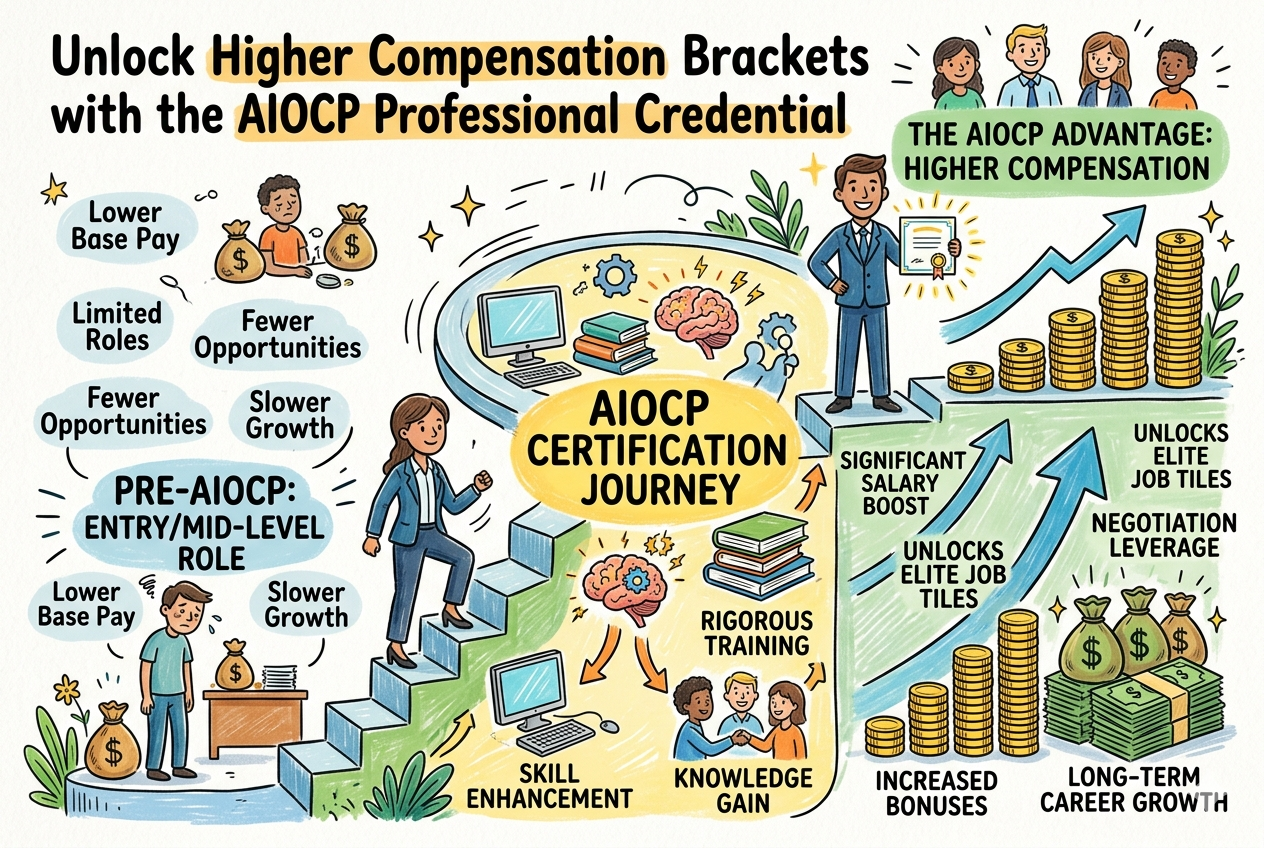
Investing your time in this credential yields a massive return by positioning you as a forward-thinking architect rather than a traditional system administrator. It clearly signals to employers that you can drive significant cost savings and reliability improvements, directly impacting the bottom line of the business.
AiOps Certified Professional (AIOCP) Certification Overview
The official training and assessment program is delivered via and is fully hosted and managed by devopsschool. The program is structured to provide a hands-on, assessment-heavy approach that mirrors the actual challenges faced in production environments.
Candidates are evaluated through practical assignments and architectural designs rather than simple multiple-choice memorization tests. The certification structure is divided into distinct, progressive tiers to accommodate different levels of experience and technical depth.
Ownership of the curriculum is strictly maintained by industry veterans who actively work in the field, ensuring the content is constantly updated to reflect modern enterprise realities. This practical approach guarantees that certified professionals are fully prepared to contribute from day one on the job.
AiOps Certified Professional (AIOCP) Certification Tracks & Levels
The certification is broken down into clear progression stages, starting with a foundation level that establishes core vocabulary and fundamental concepts. This initial stage is crucial for ensuring all practitioners share a common understanding of telemetry, data ingestion, and basic automation before advancing.
The professional level dives deep into the operational implementation of these intelligent systems. It covers how to integrate models with existing continuous integration and deployment pipelines, and how to effectively train algorithms on historical incident data.
The advanced level focuses heavily on specialized tracks such as integrating predictive analytics with FinOps for cost forecasting, or with DevSecOps for proactive vulnerability management. This tiered progression allows engineers to start where they are comfortable and scale their expertise as their career demands.
Complete AiOps Certified Professional (AIOCP) Certification Table
| Track | Level | Who it’s for | Prerequisites | Skills Covered | Recommended Order |
|---|---|---|---|---|---|
| Fundamentals | Foundation | Junior Engineers, Managers | Basic Linux, Python | Telemetry basics, Alerting logic | 1 |
| Operations | Professional | SREs, DevOps Engineers | Foundation level, CI/CD | Model deployment, Log analysis | 2 |
| Architecture | Advanced | Platform Architects | Professional level | Predictive scaling, Self-healing | 3 |
| Security | Specialist | SecOps, Cloud Engineers | Professional level | Anomaly detection, Threat ops | 4 |
| Financial | Specialist | FinOps, Managers | Professional level | Cloud cost forecasting, Usage analytics | 5 |
Export to Sheets
Detailed Guide for Each AiOps Certified Professional (AIOCP) Certification
AiOps Certified Professional (AIOCP) – Foundation Level
What it is
This entry-level credential validates your baseline understanding of intelligent operational strategies. It confirms that you know the difference between traditional rule-based monitoring and modern machine learning approaches.
Who should take it
This is designed for junior operations staff, software engineers transitioning into reliability roles, and engineering managers. It requires no prior experience with machine learning but assumes a basic understanding of software deployment.
Skills you’ll gain
- Understanding telemetry fundamentals including metrics, logs, and distributed traces.
- Designing basic alert correlation logic to reduce notification noise.
- Identifying use cases where artificial intelligence can replace manual scripts.
- Mapping existing infrastructure data to machine learning ingestion pipelines.
Real-world projects you should be able to do
- Audit an existing monitoring setup and identify areas for intelligent automation.
- Design a centralized logging pipeline capable of feeding an analytics engine.
- Implement basic threshold-based alerting alongside a predictive anomaly system.
Preparation plan
- 7-14 days: Review core documentation on telemetry standards and logging architectures.
- 30 days: Complete hands-on labs setting up open-source data ingestion tools.
- 60 days: Analyze historical incident reports from your organization to theorize model applications.
Common mistakes
Candidates often try to jump straight into complex machine learning algorithms without understanding how to properly format and clean operational data. Another common error is assuming AI will completely replace human operators, rather than augmenting their workflows.
Best next certification after this
- Same-track option: AiOps Certified Professional (AIOCP) Professional Level
- Cross-track option: Standard DevOps Practitioner Certification
- Leadership option: Agile Engineering Management
AiOps Certified Professional (AIOCP) – Professional Level
What it is
The Professional tier is a hands-on, implementation-focused credential that proves you can build and maintain intelligent systems. It demonstrates your ability to write the code and configure the pipelines that power self-healing infrastructure.
Who should take it
Mid-level DevOps engineers, active SREs, and platform engineers should target this tier. You should already have a firm grasp of cloud infrastructure and continuous delivery pipelines before attempting this assessment.
Skills you’ll gain
- Deploying and managing machine learning models within operational environments.
- Training models on historical incident and performance data.
- Automating root cause analysis by correlating events across complex microservices.
- Implementing automated remediation scripts triggered by predictive alerts.
Real-world projects you should be able to do
- Build a system that automatically scales infrastructure based on predictive traffic models.
- Create a dashboard that clusters related alerts into a single, actionable incident.
- Develop a pipeline that automatically rolls back a deployment if behavioral anomalies are detected.
Preparation plan
- 7-14 days: Brush up on Python scripting and data manipulation libraries.
- 30 days: Deploy a test environment and simulate production failures to train a basic model.
- 60 days: Build a complete, automated remediation pipeline from alert generation to resolution.
Common mistakes
Many engineers fail to establish a baseline of “normal” system behavior, leading to excessive false positives from their predictive models. Additionally, practitioners often forget to implement fail-safes for when the automated remediation scripts inevitably make an incorrect decision.
Best next certification after this
- Same-track option: AiOps Certified Professional (AIOCP) Advanced Level
- Cross-track option: Cloud Security Professional
- Leadership option: Enterprise Architecture Frameworks
AiOps Certified Professional (AIOCP) – Advanced Level
What it is
This elite credential validates your ability to architect enterprise-wide intelligent operational strategies. It proves you can integrate predictive capabilities across security, finance, and reliability domains seamlessly.
Who should take it
Senior platform architects, principal engineers, and head of reliability engineering roles are the primary targets. It requires extensive production experience and a deep understanding of organizational constraints.
Skills you’ll gain
- Designing custom algorithms tailored to highly specific enterprise architectures.
- Integrating advanced natural language processing for automated incident communication.
- Orchestrating predictive financial scaling to eliminate cloud waste dynamically.
- Building zero-touch operational environments with robust safety guardrails.
Real-world projects you should be able to do
- Architect a global, multi-region observability platform with predictive failover.
- Implement an automated chaos engineering system driven by machine learning discovery.
- Design an executive dashboard that translates technical anomalies into predicted business impact.
Preparation plan
- 7-14 days: Study advanced mathematical concepts related to time-series forecasting.
- 30 days: Prototype complex architectural integrations between disparate enterprise toolchains.
- 60 days: Formulate a comprehensive organizational strategy for transitioning to predictive operations.
Common mistakes
Architects sometimes overcomplicate solutions by applying advanced models to problems that could be solved with simple heuristics. There is also a tendency to ignore the cultural friction that occurs when operations teams are asked to trust automated decisions.
Best next certification after this
- Same-track option: N/A – This is the pinnacle of the track.
- Cross-track option: Master level Cloud Architecture
- Leadership option: Executive Technology Management
Choose Your Learning Path
DevOps Path
For traditional automation engineers, the focus should be on transitioning existing CI/CD pipelines into intelligent systems. This path teaches you how to implement deployment strategies that rely on behavioral analysis rather than simple health checks. You will learn to automate rollbacks based on subtle performance degradation detected by algorithms. This ensures faster, safer release cycles without manual oversight.
DevSecOps Path
Security professionals must focus on the integration of predictive threat modeling within the operational pipeline. This path explores how to use anomaly detection to identify zero-day vulnerabilities or unauthorized access patterns in real-time. You will learn to automate infrastructure isolation and security patching based on intelligent risk scoring. It shifts the security posture entirely from reactive to proactively defensive.
SRE Path
Reliability engineers will find this path deeply aligned with their core mission of protecting system uptime. The focus here is on predicting cascading failures before they impact the end-user experience. You will master the art of dynamic service level indicators and automated incident response orchestration. This learning route is essential for reducing toil and maintaining aggressive availability targets.
AIOps Path
This dedicated path focuses purely on the operationalization of intelligent systems for infrastructure management. You will learn to ingest massive volumes of log and metric data to establish deep operational baselines. The curriculum emphasizes reducing alert noise by clustering related events and automating the triage process. It is the core route for mastering predictive infrastructure behavior.
MLOps Path
Unlike the operational focus, this path is dedicated to the lifecycle management of the machine learning models themselves. You will learn how to build deployment pipelines specifically for algorithms, ensuring they are versioned, tested, and audited. The focus is heavily on monitoring model drift and automating the retraining processes when operational baselines shift. This is crucial for maintaining the accuracy of intelligent systems over time.
DataOps Path
Data engineers will focus on the reliability and quality of the pipelines feeding the intelligent systems. This path teaches how to ensure high-fidelity telemetry ingestion without overwhelming the network or storage layers. You will learn to implement intelligent schema validation and automated data cleansing routines. It guarantees that the models are making decisions based on accurate, timely information.
FinOps Path
This path connects operational data directly to financial accountability and cloud cost management. You will learn to apply predictive models to forecast infrastructure spending based on granular usage patterns. The curriculum covers automating resource rightsizing and identifying abandoned assets through behavioral analysis. It bridges the gap between engineering decisions and corporate financial health.
Role → Recommended AiOps Certified Professional (AIOCP) Certifications
| Role | Recommended Certifications |
|---|---|
| DevOps Engineer | Foundation, Professional |
| SRE | Professional, Advanced |
| Platform Engineer | Professional, Advanced |
| Cloud Engineer | Foundation, Professional |
| Security Engineer | Specialist Security Track |
| Data Engineer | Professional, DataOps Path Focus |
| FinOps Practitioner | Specialist Financial Track |
| Engineering Manager | Foundation, Leadership Tracks |
Export to Sheets
Next Certifications to Take After AiOps Certified Professional (AIOCP)
Same Track Progression
Continuing deeply into the same track involves pursuing specialized vendor implementations or advanced algorithmic design credentials. This deep specialization ensures you become the absolute authority on predictive infrastructure within your organization. It involves mastering bespoke data science tools and integrating them with bare-metal or highly customized edge computing environments.
Cross-Track Expansion
Broadening your skills through cross-track expansion means applying your operational knowledge to new domains like advanced cybersecurity or data engineering. By learning how these disciplines operate, you can build models that address problems across siloed enterprise departments. This horizontal growth is critical for engineers aiming to become enterprise-wide architects.
Leadership & Management Track
Transitioning to leadership requires certifications focused on business alignment, agile scaling, and technology management. You must learn how to translate the technical benefits of predictive automation into clear return-on-investment metrics for executives. This track prepares you to lead large teams through the cultural transformations necessary to adopt automated operations successfully.
Training & Certification Support Providers for AiOps Certified Professional (AIOCP)
DevOpsSchool DevOpsSchool stands out as a premier institution for mastering complex engineering disciplines, offering a curriculum that is deeply rooted in practical application. Their approach to teaching emphasizes hands-on keyboard time, ensuring that students do not just memorize concepts but actually build functional systems. The instructors are industry veterans who bring real-world production war stories into the classroom, enriching the learning experience significantly. By focusing on the latest enterprise tools and methodologies, they bridge the crucial gap between academic theory and daily engineering requirements. Their comprehensive mentorship programs guide professionals through every step of their career transition, making it a highly reliable partner for teams looking to upskill rapidly in cloud-native and intelligent operational technologies.
Cotocus Cotocus specializes in high-end consulting and tailored corporate training, making it an excellent choice for massive enterprise transformations. Their methodology revolves around assessing an organization’s specific technical debt and operational challenges before customizing the educational delivery. This ensures that the training directly impacts the company’s bottom line by solving immediate, real-world problems during the learning process itself. They excel in guiding legacy IT teams through the painful but necessary transition into modern, automated workflows. By blending advisory services with rigorous technical instruction, Cotocus empowers engineering managers to not only train their staff but to completely overhaul their departmental efficiency and operational strategies with confidence and precision.
Scmgalaxy Scmgalaxy is a highly community-driven platform that has spent years curating an extensive library of resources for build, release, and automation engineers. Their strength lies in their massive, collaborative forums where practitioners share actual deployment scripts, troubleshooting guides, and best practices. This open-source ethos fosters a learning environment where professionals learn from the collective mistakes and successes of their global peers. It is particularly valuable for engineers who prefer self-paced discovery backed by a strong support network of active industry contributors. By continually updating their repositories with the latest continuous integration and deployment methodologies, Scmgalaxy remains a vital daily resource for engineers deep in the operational trenches.
BestDevOps BestDevOps functions as a critical content aggregator and thought leadership hub, keeping professionals continuously updated on the rapid evolution of automation tools. They publish high-tier articles, detailed case studies, and architectural breakdowns that help engineers stay ahead of industry trends. Their focus is not just on how to use a tool, but when and why it should be implemented within a broader enterprise strategy. This makes it an invaluable resource for platform architects who need to make informed decisions about technology adoption. By filtering out marketing noise and focusing on purely technical evaluations, BestDevOps provides clear, unbiased guidance for teams navigating the complex cloud-native landscape.
devsecopsschool devsecopsschool takes a rigorous, uncompromising approach to teaching security as an integral part of the engineering lifecycle. Their curriculum aggressively champions the “shift-left” philosophy, ensuring that vulnerability management and threat modeling are built into code from the very first commit. They provide intense, hands-on labs where students learn to automate security testing within continuous deployment pipelines, entirely removing the manual bottleneck of traditional audits. This provider is essential for organizations dealing with strict compliance requirements or sensitive data, as it trains engineers to build robust, hardened systems by default, seamlessly blending operational speed with bulletproof enterprise security practices.
sreschool sreschool is wholly dedicated to the discipline of Site Reliability Engineering, focusing heavily on the metrics that define system health and user satisfaction. Their training programs dive deep into the mathematics of availability, teaching engineers how to properly define, measure, and enforce Service Level Objectives (SLOs). They emphasize the cultural aspects of reliability, such as conducting blameless post-mortems and managing error budgets effectively. For teams struggling with constant downtime and alert fatigue, sreschool provides the exact frameworks needed to transition from chaotic firefighting to structured, data-driven system management, ensuring that product velocity never compromises overall platform stability.
aiopsschool aiopsschool is at the absolute forefront of merging artificial intelligence with traditional infrastructure operations. They provide targeted, specialized training on how to replace reactive manual monitoring with proactive, machine learning-driven analytics. Their courses teach engineers how to build vast data ingestion pipelines and train algorithms to detect subtle operational anomalies before they escalate into outages. By focusing purely on intelligent automation, they prepare practitioners to drastically reduce alert noise and automate complex root cause analysis. This provider is the definitive choice for modern engineers who want to lead the charge in building self-healing systems and future-proofing their organization’s operational capabilities.
dataopsschool dataopsschool addresses the critical, often overlooked challenge of maintaining the reliability and quality of enterprise data pipelines. Their focus is on treating data infrastructure with the same rigor and automation as application code. Students learn to implement continuous testing for data sets, ensuring that analytics engines and machine learning models are always fed with accurate, clean information. They teach advanced schema management, pipeline orchestration, and data observability techniques. For any organization relying on data-driven decision-making, dataopsschool provides the essential training needed to eliminate data silos, reduce reporting latency, and build a truly resilient, high-speed data engineering culture.
finopsschool finopsschool tackles the increasingly complex world of cloud financial management, bridging the massive gap between engineering teams and corporate finance. Their curriculum focuses on teaching engineers how to build cost-awareness directly into their architectural designs and deployment strategies. Students learn to automate resource tagging, forecast cloud expenditure using advanced modeling, and identify idle assets for immediate remediation. By establishing a culture of financial accountability, finopsschool enables organizations to scale their cloud infrastructure aggressively without suffering from unpredictable billing surprises, making it an indispensable resource for modern engineering managers and technical leaders.
Frequently Asked Questions (General)
1. How do I balance speed of deployment with system reliability? Balancing these two requires implementing robust automated testing and canary deployments. By gradually rolling out changes and strictly monitoring error budgets, teams can push code quickly while ensuring any degradation is caught and rolled back before impacting a wide user base.
2. What is the most effective way to reduce technical debt in legacy systems? The best approach is incremental refactoring tied to business value. Instead of rewriting everything at once, teams should identify the most painful, frequently failing components and modernize them step-by-step, wrapping legacy code in modern APIs to ensure continuous functionality.
3. How can engineers avoid tool fatigue in a rapidly changing ecosystem? Focus on understanding core architectural principles rather than memorizing vendor-specific dashboards. When you deeply understand networking, Linux fundamentals, and continuous delivery concepts, learning a new tool simply becomes an exercise in mapping syntax to concepts you already know.
4. What role does mentorship play in an engineering career? Mentorship accelerates learning by providing context that documentation lacks. A good mentor helps junior engineers navigate organizational politics, review complex architectural decisions, and avoid common production pitfalls, effectively shaving years off their professional development curve.
5. How should a team handle a major production outage? Teams must establish a clear incident command structure beforehand. During an outage, communication must be centralized, and the immediate goal is mitigating customer impact, not finding root cause. Afterward, a blameless post-mortem is strictly required to prevent recurrence.
6. Is contributing to open-source software necessary for career growth? While not strictly mandatory, contributing to open-source demonstrates a passion for the craft and the ability to collaborate with distributed teams. It builds a public portfolio of your coding and communication skills, which is highly attractive to enterprise technical recruiters.
7. How do I convince management to invest in building an internal developer platform? You must frame the platform in terms of developer productivity and time-to-market. Demonstrate exactly how many engineering hours are wasted on manual provisioning and environment setup, and show how a self-service platform directly reduces operational bottlenecks and costs.
8. What is the biggest challenge when transitioning from traditional IT to modern operations? The biggest hurdle is almost always cultural, not technical. Traditional teams are used to siloed work and passing blame during failures. Transitioning requires building a culture of shared responsibility, where developers and operations collaborate daily on reliability goals.
9. How do we ensure security does not slow down our release cycles? Security must be integrated seamlessly into the continuous integration pipeline through automated static and dynamic analysis. By catching vulnerabilities at the code-commit stage rather than during a final audit, teams maintain high velocity while ensuring compliance.
10. What are the signs of a poorly optimized cloud architecture? Indicators include massive, unpredictable monthly bills, an inability to autoscale during traffic spikes, heavy reliance on manual infrastructure configuration, and a lack of granular tagging, which makes it impossible to attribute costs to specific teams.
11. How important is coding for modern infrastructure engineers? It is absolutely essential. The days of clicking through graphical interfaces to manage servers are gone. Modern infrastructure is defined as code, requiring engineers to be proficient in version control, scripting languages like Python or Go, and declarative configuration formats.
12. How do we maintain team morale during intensive migration projects? Leadership must set realistic milestones and celebrate small victories. Overworking teams leads to burnout and critical errors. Clear communication about the project’s business impact and ensuring developers have the right automated tools to succeed will maintain momentum and morale.
FAQs on AiOps Certified Professional (AIOCP)
1. What exactly does the AiOps Certified Professional (AIOCP) teach regarding alert fatigue? The credential focuses heavily on teaching engineers how to configure machine learning algorithms to cluster related alerts. Instead of receiving fifty notifications for a single database failure, practitioners learn to build systems that analyze the topological relationship of the infrastructure, automatically suppressing downstream alerts and presenting the operator with one single, correlated incident report.
2. Do I need a background in data science to pass this certification? No, a formal data science background is not required. The curriculum approaches artificial intelligence strictly from an applied operations perspective. You need to understand how to ingest data, configure models, and act on the outputs. You will not be asked to manually write complex neural networks from scratch, but rather how to implement enterprise models.
3. How does this training handle the problem of machine learning model drift? The professional and advanced tiers heavily emphasize lifecycle management for algorithms. You will learn to establish continuous monitoring pipelines that track the accuracy of your predictive models over time. When the baseline behavior of your infrastructure changes, the curriculum teaches you how to automate the retraining process to ensure predictions remain highly accurate.
4. Can the concepts learned here be applied to on-premise infrastructure? Absolutely. While cloud-native architectures frequently utilize these methodologies, the core principles of data ingestion, telemetry analysis, and automated remediation apply directly to bare-metal data centers. The certification focuses on universal operational concepts, ensuring you can build intelligent, self-healing systems regardless of where the actual servers physically reside.
5. How much time should a working engineer dedicate to preparation? A typical working professional should plan for roughly sixty days of preparation for the professional tier. This allows sufficient time to deeply understand the theoretical concepts, complete the mandatory hands-on practical labs, and set up a sandbox environment to test various automated remediation scripts without impacting their daily engineering responsibilities.
6. Will this credential help me transition into a Site Reliability Engineering role? Yes, it is arguably one of the strongest catalysts for that transition. Traditional operations focus on responding to broken systems. SREs focus on engineering reliability upfront. By mastering predictive analytics and automated recovery taught in this curriculum, you instantly demonstrate the exact mindset and technical capability required of a senior Site Reliability Engineer.
7. What is the difference between this and traditional automation certifications? Traditional certifications teach you how to write scripts that execute a fixed set of rules if a specific threshold is crossed. This certification teaches you how to deploy algorithms that dynamically learn what “normal” looks like and can predict failures before any static threshold is ever breached, shifting you from reactive scripting to proactive engineering.
8. How does the certification assess your practical capabilities? The program avoids simple memorization techniques. Instead, candidates must complete rigorous, scenario-based evaluations. You will be provided with complex, simulated infrastructure data and asked to architect a logging pipeline, train a basic anomaly detection model, and write the automation logic that responds to the model’s output, proving absolute real-world competence.
Final Thoughts: Is AiOps Certified Professional (AIOCP) Worth It?
Taking a pragmatic, mentor-level view of the industry, the shift toward intelligent operations is not a passing trend; it is an absolute necessity driven by infrastructure complexity. The AiOps Certified Professional (AIOCP) is highly worth the investment because it teaches enduring architectural principles rather than fleeting tool mastery. It forces you to elevate your perspective from maintaining servers to engineering autonomous systems. If you are serious about remaining relevant in a landscape where manual operations are rapidly being automated away, this learning path provides the exact practical frameworks needed to position yourself as a crucial, strategic asset to any modern engineering organization.