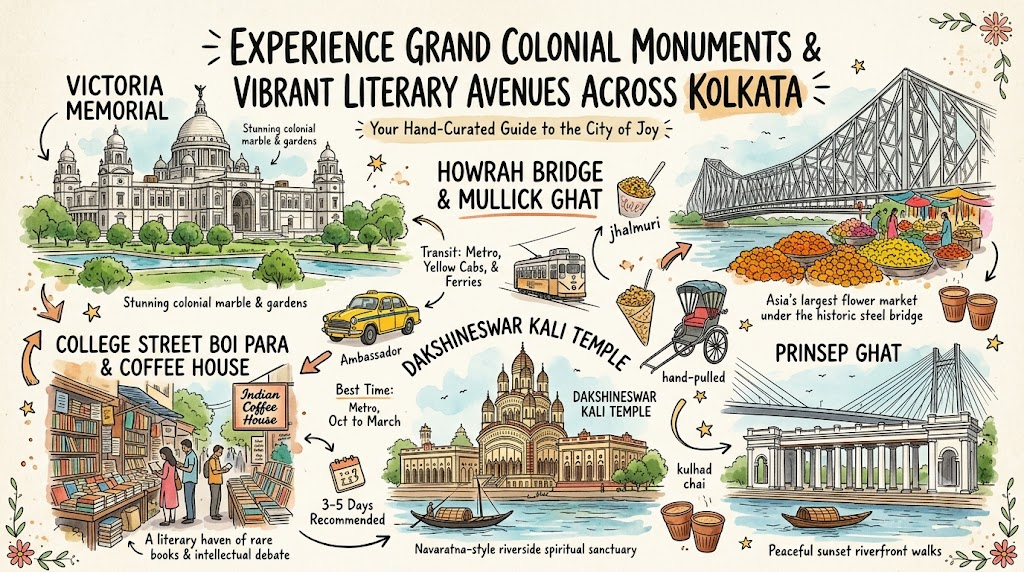
Introduction
While most metropolitan centers race toward sterile steel high-rises and hyper-commercialized leisure zones, Kolkata thrives on an intoxicating, old-world cadence. India’s erstwhile imperial capital does not merely showcase monuments; it invites travelers into an intimate conversation with its living literary salons, hand-pulled rickshaws, and timeworn colonial mansions. Bypassing the rushed, cookie-cutter vacations found elsewhere, a journey through this storied metropolis rewards wanderers with genuine warmth, profound intellectual roots, and deep sensory authenticity.
Why Kolkata is a must-visit city
Kolkata holds an incomparable position in the global cultural narrative as the crucible of the nineteenth-century Bengal Renaissance and modern Indian arts. Perched gracefully along the eastern bank of the Hooghly River, the city serves as the primary gateway to East and Northeast India. Arriving travelers enjoy effortless transit logistics via Netaji Subhas Chandra Bose International Airport (CCU), historic railway terminuses at Howrah and Sealdah, and a well-connected suburban highway network.
The city’s classic travel circuit weaves seamlessly between imperial architectural relics in the center, bustling bohemian university lanes in the north, and contemporary lakeside avenues in the south.
| Metric | Essential Details |
|---|---|
| Geographic Zone | Lower Gangetic Plain, West Bengal, Eastern India |
| Prime Weather Window | Late October through March (Crisp, temperate winter) |
| Core Rail Hubs | Howrah Junction (HWH), Sealdah Junction (SDAH) |
| Urban Transit Modes | Underground Metro, Iconic Yellow Cabs, River Ferries, Trams |
| Recommended Stay Duration | 3 to 5 Full Days |
Best Places or Experiences
Victoria Memorial Hall
Commissioned in memory of Queen Victoria and designed by William Emerson, this colossal marble masterpiece stands enveloped within sixty-four acres of lush gardens. Crafted entirely from white Makrana marble imported from Rajasthan, the structure blends British-Italianate symmetry with graceful Mughal domes and colonnaded verandas.
Step inside to explore royal oil canvases, antique regional cartography, and rare Raj-era artifacts housed in twenty-five expansive galleries. Outside, manicured flowerbeds, reflective water bodies, and ornate bronze statues offer a calm retreat from urban traffic.
Victoria Memorial surrounded by manicured lawns.
- Location: Queens Way, Maidan, Central Kolkata (approx. 5 km from Howrah Railway Station).
- Why it is worth visiting: The premier symbol of British imperial architecture in the subcontinent, finished in luminous marble.
- Best things to do: Inspect the Royal Gallery miniature paintings, relax by the northern ornamental ponds, and attend the evening musical light display.
- Best time to visit: 10:00 AM for uncrowded galleries, or 5:00 PM for golden-hour exterior photography.
- Ideal for whom: History enthusiasts, fine-art photographers, and architectural scholars.
- Travel tip: Book entry tickets online using the official QR boards at the gate to bypass lengthy ticketing lines.
Howrah Bridge and Mullick Ghat
Spanning the wide Hooghly River without intermediate riverbed pylons, this iconic balanced cantilever bridge represents an engineering marvel completed in 1943. Underneath its massive riveted steel frame sits the Mullick Ghat Flower Market, Asia’s largest floral trading exchange, buzzing with thousands of flower farmers each dawn.
Walking across the bridge brings you into a rush of porters carrying towering baskets, commuter trams gliding nearby, and river ferries churning below. Down on the riverbank ghats, sweet scents of fresh marigold garlands mix with the cool river breeze
.
Howrah Bridge illuminated over the Hooghly.
- Location: Strand Road, Bada Bazaar riverside crossing to Howrah (approx. 1 km from Howrah Station).
- Why it is worth visiting: A pulsing symbol of Kolkata’s everyday resilience and raw industrial beauty.
- Best things to do: Stroll the pedestrian deck during sunrise, photograph marigold auctions at Mullick Ghat, and ride the cross-river public ferry.
- Best time to visit: 5:30 AM to 7:30 AM for morning flower trading and peaceful bridge crossings.
- Ideal for whom: Street photographers, cultural travelers, and documentary filmmakers.
- Travel tip: Strict security rules prohibit tripod photography directly on the road deck; take hand-held snapshots instead.
College Street Boi Para and Coffee House
Spanning almost a mile of continuous open-air book stalls, College Street is the largest second-hand book market on earth. Flanked by historic institutions like Presidency University and the University of Calcutta, this bustling avenue breathes the intellectual energy that ignited the Bengal Renaissance.
Tucked above the market stands the historic Indian Coffee House, where generations of poets, filmmakers, and student philosophers have debated under slow ceiling fans. Settle in with a porcelain cup of black coffee and hot vegetable cutlets while listening to the lively conversations all around
.
Packed roadside bookstalls along College Street.
- Location: Central-North Kolkata (approx. 2.5 km north of Esplanade Transit Station).
- Why it is worth visiting: An intellectual sanctuary housing rare first-edition prints and classic campus culture.
- Best things to do: Hunt for rare vintage paperbacks, join the spirited conversation over coffee at Coffee House, and visit the historic Sanskrit College facade.
- Best time to visit: 2:00 PM to 6:00 PM on weekdays when all wooden book kiosks are open.
- Ideal for whom: Bookworms, writers, and cultural historians.
- Travel tip: Cash is essential here; paper book sellers rarely accept mobile digital payments for modest book purchases.
Dakshineswar Kali Temple
Erected in 1855 by the philanthropist Rani Rashmoni, this sacred riverfront complex represents classical Navaratna (nine-spired) Bengali temple architecture. Perched along the upper reaches of the Hooghly, the primary sanctum honors Goddess Bhavatarini, an aspect of Kali, framed by twelve matching riverside shrines dedicated to Lord Shiva.
The sanctuary gained historic prominence through the nineteenth-century mystic Ramakrishna Paramahamsa, who served as head priest and taught religious unity from these very grounds. The cool marble courtyards, shaded river ghats, and regular temple chants foster a deeply contemplative sanctuary.
Dakshineswar Kali Temple complex by the river.
- Location: Dakshineswar, North Suburban Kolkata (approx. 13 km north of city center).
- Why it is worth visiting: One of Eastern India’s most significant spiritual sanctuaries, featuring traditional Bengal terraced roofs.
- Best things to do: Attend the morning riverside aarti ritual, sit quietly inside the historic chamber of Sri Ramakrishna, and cross by ferry to nearby Belur Math.
- Best time to visit: 6:00 AM to 8:30 AM before midday queues form.
- Ideal for whom: Spiritual pilgrims, architecture enthusiasts, and cultural observers.
- Travel tip: Mobile phones, leather accessories, and cameras must be deposited in cloakroom lockers outside before entering the inner courtyard.
Prinsep Ghat Riverfront
Constructed in 1841 to commemorate Anglo-Indian scholar James Prinsep, this heritage riverside landmark features an ornate Greek Palladian colonnade. Located directly under the towering modern cables of Vidyasagar Setu, it forms one of the city’s most picturesque public riverfront escapes.
As late afternoon softens the light, families and couples stroll the brick-paved riverside promenades shaded by ancient banyan trees. Traditional wooden boats glide across the water, carrying passengers who want to catch the sunset against the broad river horizon.
Prinsep Ghat beneath Vidyasagar Setu.
- Location: Strand Road, Hastings, Central-South Kolkata (approx. 4 km south of BBD Bagh).
- Why it is worth visiting: A peaceful blend of British neoclassical columns and modern bridge engineering along the water.
- Best things to do: Hire a hand-cranked wooden rowboat at sunset, stroll the paved pedestrian promenade, and enjoy spicy street-side jhalmuri.
- Best time to visit: 4:30 PM to 7:00 PM for gentle river breezes and evening lighting.
- Ideal for whom: Couples, leisure walkers, and landscape photographers.
- Travel tip: Negotiate wooden boat ride rates upfront with the boatmen; standard private hire costs ₹300 to ₹500 for thirty minutes.
Offbeat Exploration: Hidden Gems Tourists Miss
Kumartuli Clay Idol Makers’ District
Hidden inside the narrow brick alleys of North Kolkata lies Kumartuli, where multi-generational artisan families hand-sculpt clay idols of Hindu deities. Using river silt from the Hooghly, straw armatures, and natural plant dyes, these master craftsmen create elaborate statues for Durga Puja and overseas temples. Visiting here reveals a raw, hands-on sculptural heritage practiced continuously for over two centuries.
South Park Street Cemetery
Opened in 1767, this quiet burial ground stands as one of the world’s earliest non-churchyard cemeteries. Enclosed beneath tall mahogany trees, its towering Gothic, Indo-Saracenic, and neoclassical tombs house eighteenth-century British administrators, poets, and soldiers. It offers an eerie, quiet window into colonial life far away from modern street noise.
Bow Barracks Anglo-Indian Enclave
Tucked quietly behind Central Metro Station, Bow Barracks is an atmospheric row of red-brick apartments built as military quarters during the First World War. Today, it remains the cherished heart of Kolkata’s Anglo-Indian community. The neighborhood comes alive with acoustic carols, homemade ginger wine, and festive neighborly warmth, particularly in late December.
Detailed Practical Guidance for Travelers
| Destination | Standard Entry Fee | General Timings | Best Local Food Options Nearby | Recommended Nearby Attractions |
|---|---|---|---|---|
| Victoria Memorial | ₹50 (Indians), ₹500 (Foreigners) | 10:00 AM – 5:00 PM (Gardens 5:30 AM – 6:00 PM) | Flurys (Park Street), Nizam’s Kathi Rolls | St. Paul’s Cathedral, Kolkata Racecourse |
| Howrah Bridge & Mullick Ghat | Free Public Access | Open 24 Hours (Market peak 5:00 AM – 10:00 AM) | Jagannath Ghat Sweet Shops, Kachori Stalls | Armenian Ghat, Rail Museum Howrah |
| College Street & Coffee House | Free (Individual purchases) | 10:00 AM – 8:00 PM (Closed Sundays) | Indian Coffee House, Paramount Sherbet | Senate House, Marble Palace |
| Dakshineswar Temple | Free (Special queue ₹50) | 6:00 AM – 12:30 PM, 3:30 PM – 8:30 PM | Radha Romon Sweets, Luchi-Torkari Stalls | Belur Math (Cross via River Ferry), Joy Mitra Ghat |
| Prinsep Ghat | Free Public Access | Open 24 Hours (Boating till 8:00 PM) | Street Pav Bhaji, Kulhad Tea Stalls | Fort William Exterior, Eden Gardens Stadium |
Logistics & On-Ground Navigation
Local Transport Options
- Underground & Elevated Metro: The Blue Line (North-South) and Green Line (connecting Howrah under the river) provide rapid, air-conditioned transport across key stops.
- Iconic Yellow Ambassador Taxis: Found everywhere at curbside stands; request the driver to run the meter or check the official prepaid police counter rate.
- Ride-Sharing App Cabs: Uber and the regional government app Yatri Sathi provide reliable, tracked rides across every neighborhood.
- Hooghly River Ferries: Run by the state transport department for just ₹6 to ₹10 per trip, these ferries beat roadway traffic between Howrah, Armenian Ghat, and Dakshineswar.
- Historic Tramways: Limited heritage lines still operate around Gariahat and the Maidan, perfect for a slow, nostalgic ride.
Budget Planning
- Backpacking Tier (₹1,500 – ₹2,500 / day): Clean hostel accommodation around Sudder Street, street dining (Kathi rolls, kachori, egg curry meals), public metro rides, and shared public ferries.
- Mid-Range Comfort Tier (₹5,000 – ₹9,000 / day): Boutique heritage stays in South Kolkata or Salt Lake, rides via app-based cabs, dining at classic heritage restaurants, and private guided walking tours.
Safety and Inclusivity Tips
- Family Travelers: Safe, broad pedestrian walkways are found around the Maidan, Victoria Memorial, and modern Salt Lake Eco Park; avoid overcrowded local commuter trains during peak rush hours (8:30 AM–10:30 AM).
- Couples & Women Travelers: Kolkata consistently ranks among India’s safest urban metros; normal personal awareness is fine on public transport, while app cabs are the easiest option for late-night transit.
- General Health Precautions: Drink filtered or bottled water exclusively; when tasting street food, pick busy stalls that prepare fresh batches over high heat.
Strategic Travel Planning Guardrails
Travel Planning Tips for Kolkata
- Schedule visits between November and February to avoid the heavy monsoon rains and hot summer humidity.
- Keep cash on hand (₹10, ₹20, and ₹100 notes) because small book stalls, fruit vendors, and yellow taxis rarely accept digital payments.
- Pick up an East-West Metro ticket to experience India’s first underwater subway tube beneath the Hooghly River.
- Wear easy-to-remove slip-on shoes when visiting sacred places like Kalighat and Dakshineswar.
- Learn a few basic Bengali pleasantries like Nomoshkar (Greetings) and Dhonnobad (Thank you) to break the ice with locals.
Common Mistakes to Avoid
- Trying to cram distant North Kolkata alleys and modern South suburban parks into the same morning outing.
- Visiting major North Kolkata shopping strips like College Street and Hatibagan on Sundays when most shutters are closed.
- Relying exclusively on private taxis during rush hours instead of taking the quick, air-conditioned underground metro.
- Dining only inside upscale five-star hotels and skipping iconic street foods like kathi rolls, dimer devil, and phuchka.
- Skipping pre-paid taxi counters at Howrah Railway Station and getting overcharged by unmetered curbside drivers.
Suggested Itinerary Blueprints
1. Day Quick Dash (The Classic Imperial Circuit)
- Target Audience: Business travelers and short weekend visitors.
- Routing: Begin at 8:00 AM at St. Paul’s Cathedral and Victoria Memorial lawns. Head to Park Street for lunch at Peter Cat or Mocambo. Spend your late afternoon wandering the Prinsep Ghat riverfront, followed by a sunset drive over the Vidyasagar Setu bridge.
2. Day Deep-Dive (Colonial Roots & Cultural Quarters)
- Day 1: Explore Central colonial landmarks (Victoria Memorial, General Post Office, BBD Bagh). Spend the evening exploring Park Street’s vibrant jazz clubs and heritage restaurants.
- Day 2: Head north early for the Mullick Ghat Flower Market, browse books on College Street, and visit the clay artists at Kumartuli before wrapping up at the peaceful Indian Coffee House.
3. Complete Weekend Travel Plan (North to South Cultural Arc)
- Friday Afternoon: Check into your hotel, followed by an evening walk around the Southern Avenue cafes and Rabindra Sarobar lake.
- Saturday: Explore the north circuit—take the river ferry to Dakshineswar Kali Temple, visit Kumartuli’s artisan studios, and shop on College Street.
- Sunday: Spend the morning admiring Victoria Memorial and South Park Street Cemetery. Wrap up your trip with evening boat rides at Prinsep Ghat and dinner in the bustling New Market area.
Common Tourist Mistakes to Avoid
Geographic Blunders
Attempting to cross the city from Dakshineswar in the extreme north to Ballygunge in the south during peak evening rush hours will leave you stuck in heavy road traffic. Always group your outings into focused northern, central, and southern sightseeing days.
Commercial Traps
Spending your valuable sightseeing hours inside modern suburban glass shopping malls deprives you of Kolkata’s rich cultural life. Prioritize century-old markets like New Market (Hogg Market) and Gariahat, where classic bargaining and neighborhood flavor still thrive.
Neglecting Modern/Alternative Zones
Don’t focus solely on colonial Raj-era buildings. Modern South Kolkata neighborhoods like Hindustan Park and Keyatala offer restored art-deco homes, independent fashion boutiques, and cozy contemporary coffee roasters.
Transport Overpayment
Avoid accepting arbitrary flat rates from freelance yellow cab drivers near airport and railway exits. Always use official pre-paid traffic police booths, insist on the electronic meter, or book through verified ride-hailing apps like Yatri Sathi.
Luxury Dining Bias
Eating only in private luxury dining rooms keeps you from experiencing the city’s real culinary magic. The true soul of Bengali food lives in humble neighborhood pice hotels, roadside roll counters, and family-run sweet shops that have used the same recipes for over a century.
Frequently Asked Questions
1. What is the single best time of year to visit Kolkata?
The best window to visit Kolkata is between late October and early March. During these months, the city experiences dry, pleasant weather with daily temperatures averaging between 15°C and 28°C. This makes exploring outdoor riverfronts, colonial monuments, and bustling street markets comfortable without the oppressive summer heat or heavy monsoon rains.
2. How do I travel smoothly between Howrah Railway Station and Central Kolkata?
The fastest and most reliable way to travel between Howrah Station and Central Kolkata is via the newly launched Green Line underwater metro, which crosses beneath the Hooghly River in minutes. Alternatively, pre-paid yellow taxi stands outside the platforms provide fixed, police-regulated fares directly into central areas without roadside price bargaining.
3. Is Kolkata safe for solo women travelers exploring on foot?
Kolkata is widely considered one of the safest metropolitan cities in India for solo female travelers. Busy cultural districts, metro lines, and shopping neighborhoods remain well-patrolled and active well into the evening. As with any large city, it is sensible to use app-based cabs for late-night journeys and avoid poorly lit alleys.
4. What unique souvenirs should I purchase while shopping in Kolkata?
Kolkata offers exceptional traditional craftsmanship, including handloom sarees like Baluchari, Jamdani, and Taant from government emporiums. Other prized keepsakes include terracotta horses from Bankura, decorative Sholapith handicrafts, patented date-palm jaggery (Nolen Gur) during the winter months, and rare antique publications discovered along College Street’s famous wooden book stalls.
5. How does the regional underground metro system work for tourists?
Kolkata’s metro system is convenient, safe, and cost-effective for getting around town. Commuters can purchase single-journey paper QR tickets or reloadable smart cards directly at automated station kiosks and customer counters. Station names and safety instructions are clearly announced in Bengali, Hindi, and English across all air-conditioned train services.
6. Can foreign tourists freely enter historic Hindu temples across Kolkata?
Most historic temples, including the expansive Dakshineswar Kali Temple complex and Belur Math, warmly welcome international visitors of all backgrounds. However, visitors must dress modestly with shoulders and knees covered, take off their footwear outside, and follow strict rules prohibiting mobile phones, cameras, and leather items inside inner sanctums.
7. Where can I taste authentic traditional Bengali cuisine on a budget?
To enjoy authentic Bengali homestyle meals on a modest budget, visit legendary neighborhood pice hotels like Sidheshwari Ashram or Tarun Niketan. These historic dining rooms serve freshly prepared freshwater fish curries (Maacher Jhol), spiced lentils, and leafy vegetable dishes served on banana leaves at very reasonable prices throughout lunchtime hours.
8. Is the tap water safe to drink in Kolkata hotels and restaurants?
Tap water is not recommended for direct consumption by travelers visiting Kolkata. You should stick strictly to packaged, sealed mineral water bottles or drink filtered water provided by reputable restaurants. Most quality boutique hotels also offer complimentary UV-filtered or reverse-osmosis purified drinking water carafes inside guest rooms.
9. What makes the winter season special for street food lovers in Kolkata?
Winter introduces delicious seasonal specialties across the city that you cannot find during the hotter summer months. Sweet makers produce authentic delicacies infused with fresh date-palm jaggery (Nolen Gur), including soft sandesh and warm rasgullas, while street vendors serve steaming green-pea stuffed pastries (Koraishutir Kochuri) accompanied by rich potato curries.
10. How do I arrange an evening wooden boat ride at Prinsep Ghat?
Private wooden hand-cranked boats can be hired directly from the boatmen waiting along the river steps at Prinsep Ghat. Standard private rides cost between ₹300 and ₹500 for a thirty-minute float along the water. It is best to arrange your trip in the late afternoon to watch the sunset over the river.
11. Are photography permits required for shooting around historic monuments?
Casual photography with handheld cameras and smartphones is permitted across the grounds of Victoria Memorial, Prinsep Ghat, and major public thoroughfares. However, setting up professional commercial video cameras, heavy tripods, or flying drones requires advance written permission from the Archaeological Survey of India or local civil police authorities.
12. What local etiquette should I follow when exploring historic neighborhoods?
Kolkata locals appreciate polite conversation, modesty, and mutual respect. Always ask for permission before taking close-up portraits of street vendors, artisans, or holy figures. When stepping into old family-owned shops or cultural institutions, a pleasant greeting like Nomoshkar goes a long way toward building friendly rapport with neighborhood locals.
Conclusion
Visiting Kolkata is far more than a routine holiday checkmark; it is a meaningful journey into the living cultural soul of Eastern India. Choosing its historic avenues over predictable, commercialized tourist spots rewards you with genuine intellectual warmth, artistic treasures, and memories of a city that cherishes its heritage. Take your time along its storied streets, listen closely to its everyday rhythms, and let the timeless City of Joy leave an indelible imprint on your traveler’s heart.