Introduction
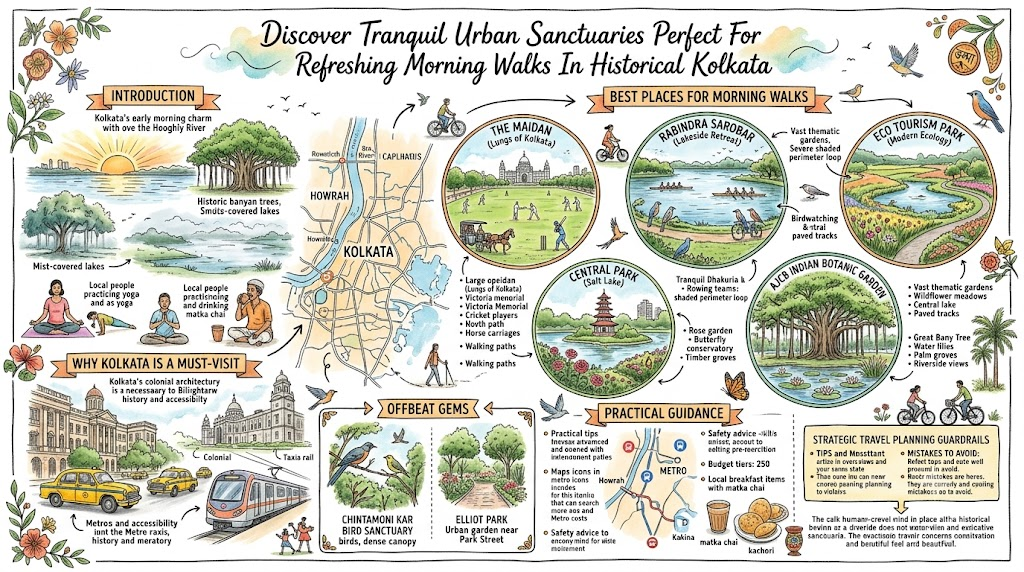
While mainstream travel guides relentlessly steer visitors toward crowded monument queues and chaotic commercial markets, Kolkata hides its true soul in the quiet early morning hours. As dawn softly breaks over the Hooghly River, the city sheds its noisy traffic and reveals a serene network of sprawling green lungs. Here, decades-old banyan trees canopy peaceful walkways, mist rises off historic lakes, and the gentle humming of early morning ragas fills the fresh air.
Walking through Kolkata at sunrise provides a genuine window into the everyday rhythm of Bengali life. Elderly scholars gather on park benches discussing literature over steaming clay cups of matka chai, while joggers, birdwatchers, and yoga groups claim their serene pockets of grass. Bypassing the conventional tourist trails in favor of these morning sanctuaries offers a profound, authentic connection to India’s cultural capital that few standard itineraries ever manage to capture.
Why Kolkata is a must-visit city
Kolkata is a living, breathing testament to South Asia’s rich historical and artistic transformation. From serving as the grand imperial seat of the British Raj to evolving into the epicenter of the Bengal Renaissance, the city boasts unmatched architectural diversity and intellectual heritage. Geographically positioned along the fertile lower Gangetic plain, Kolkata seamlessly integrates major urban sprawling zones with vast wetlands, lush colonial-era botanical reserves, and historic freshwater lakes. Practical accessibility is remarkably high across all budgets, backed by India’s oldest subterranean Metro railway network, suburban train lines, and extensive highway connections to Netaji Subhash Chandra Bose International Airport.
The regional green travel circuit spans from central heritage meadows right down to the modern eco-reserves of the eastern satellite expansions. Visitors can easily jump between Victorian-era urban parks, expansive lakeside bird sanctuaries, and sprawling modern ecological gardens within a single morning transit window.
| Travel Metric | Region Profile & Logistics Summary |
| Primary Region | Greater Kolkata Metro Area, West Bengal, India |
| Best Morning Walking Season | October to March (Cool winter dawns, crisp air, pleasant temperatures) |
| Primary Transit Modes | Kolkata Metro, Auto-rickshaws, Yellow Taxis, App Cab Networks |
| Average Daily Morning Temp | 14°C to 22°C (Winter) | 24°C to 28°C (Summer Dawns) |
| Key Circuit Zones | Central Heritage Hub, South Lakeside Zone, East Salt Lake & New Town |
Best Places or Experiences
The Maidan
Sprawling across more than 1,000 acres in the very heart of the metropolis, the Maidan is rightfully celebrated as the “Lungs of Kolkata”. Originally cleared in the 18th century around Fort William to create an open line of fire for colonial defense, this massive open meadow has organically transformed into the ultimate public sanctuary. As dawn illuminates the skyline, the vast open expanse comes alive with horse carriages strolling along red-brick paths, amateur cricketers practicing on dew-dropped turf, and mist drifting past the marble facade of the Victoria Memorial.
Walking through the Maidan at dawn allows you to experience an unscripted cross-section of local society. Towering mahogany, banyan, and rain trees border wide paved walkways, shielding walkers from the impending heat of the day. The sheer expanse guarantees that despite attracting thousands of fitness enthusiasts every morning, one can always find a quiet, meditative stretch of green beneath the shadow of historic obelisks.
- Location: Central Kolkata district, bounded by Park Street, Chowringhee Road, and the Hooghly River waterfront.
- Why it is worth visiting: It is one of Asia’s largest urban inner-city open parklands, rich with colonial monuments, open sky views, and unmatched morning energy.
- Best things to do: Walk the tree-lined Red Road avenue, photograph grazing horses in the morning fog, and watch local club footballers train on historic fields.
- Best time to visit: 5:30 AM to 7:30 AM for mist-filled views and peaceful walking conditions.
- Ideal for whom: Joggers, history lovers, solo ramblers, and street photographers seeking natural morning light.
- Travel tip: Start your walk near St. Paul’s Cathedral and end at Victoria Memorial South Gate to grab fresh ginger tea from local morning vendors.
Rabindra Sarobar
Formerly known as Dhakuria Lake, Rabindra Sarobar is an enchanting 192-acre artificial lake complex created in the 1920s as part of South Kolkata’s early urban planning. Named after Bengal’s Nobel laureate poet Rabindranath Tagore, this tranquil sanctuary comprises over 73 acres of pristine water bodies bordered by thick canopy forests, wooden pedestrian bridges, and charming brick paths. In the early morning hours, the mirror-like lake reflects overhanging mahogany foliage while migratory waterbirds skim across the surface.
The atmosphere at Rabindra Sarobar is deeply artistic and community-centric. It serves as a vital ecological haven for over a dozen resident and migratory bird species, while also housing historic rowing clubs and open-air cultural centers along its perimeter. A morning walk here provides clean air, rhythmic water views, and the soul-soothing ambient sound of birdsong far removed from vehicular noise.
- Location: Southern Avenue, Dhakuria, South Kolkata (approx. 8 km from the city center).
- Why it is worth visiting: It is South Kolkata’s primary ecological lake refuge, celebrated for its rich birdlife and paved lakeside walking loops.
- Best things to do: Walk the complete 4-kilometer perimeter loop, spot cormorants and kingfishers on the central island, and observe traditional rowing teams practicing.
- Best time to visit: 5:30 AM to 7:00 AM for birdwatching and cool lakeside breezes.
- Ideal for whom: Environmental enthusiasts, long-distance fitness walkers, couples, and birding hobbyists.
- Travel tip: Single-use plastic bottles are strictly prohibited around the lake zone; bring a reusable water flask to avoid penalties.
Eco Tourism Park
Spanning an astonishing 480 acres, New Town’s Eco Tourism Park is India’s largest urban ecological park. Developed around a massive 104-acre central lake, this modern green masterpiece features meticulously curated thematic gardens, wildflower meadows, and dense artificial rainforest zones connected by miles of paved, smooth walking tracks. During the designated early morning walker hours, the park is virtually empty of tourist crowds, offering an exceptionally quiet environment.
The engineering and landscaping of Eco Park blend environmental conservation with modern design. Walkers can journey through dedicated zones such as the Tea Garden, the Bamboo Forest, and the Mask Garden within a single morning stroll. The wide asphalt tracks and fresh air make it an absolute paradise for serious runners and power-walkers looking for smooth, uninterrupted stretches.
- Location: Major Arterial Road, Action Area II, New Town, Rajarhat (approx. 15 km from Central Kolkata).
- Why it is worth visiting: Unmatched scale, state-of-the-art landscaping, and pristine air quality away from the dense inner-city core.
- Best things to do: Walk around the Seven Wonders replica island at dawn, explore the quiet bamboo groves, and jog along the paved perimeter track.
- Best time to visit: Special morning walk timing opens strictly between 5:30 AM and 8:00 AM.
- Ideal for whom: Long-distance runners, modern urban explorers, and morning walkers staying near the airport or New Town.
- Travel tip: Morning walk access requires entering via specific gates (Gate 2 or Gate 3) during dedicated morning walker hours prior to general ticket sales.
Central Park
Also known as Banabithi, Salt Lake Central Park is the second-largest open green space in Kolkata after the Maidan. Laid out around a expansive central lake connected by a scenic footbridge to a pagoda-topped island, this park acts as the green heart of the Bidhannagar satellite township. The walking paths meander through sprawling lawns, dense timber groves, and specialized botanical exhibits including a renowned rose garden and a native butterfly conservatory.
Central Park offers a noticeably softer, more wooded atmosphere compared to the open fields of the Maidan. Tall shade trees provide total canopy cover over paved jogging tracks, attracting hundreds of neighborhood residents every dawn. The surrounding marshy edges of the lake host whistling ducks, egrets, and kingfishers, creating a delightful countryside feel right inside a bustling planned township.
- Location: Sector III, Bidhannagar (Salt Lake City), East Kolkata.
- Why it is worth visiting: A beautifully wooded lakeside escape featuring dedicated butterfly gardens, a island pagoda, and smooth walking trails.
- Best things to do: Cross the footbridge to the lake island pagoda, walk through the morning butterfly conservatory, and watch waterbirds from the shore.
- Best time to visit: 5:00 AM to 7:30 AM when gates open early for neighborhood morning walkers.
- Ideal for whom: Nature walkers, senior citizens seeking level paved ground, and birdwatchers.
- Travel tip: Use the Karunamoyee Metro station stop for direct pedestrian access right to Gate 1.
Acharya Jagadish Chandra Bose Indian Botanic Garden
Established in 1787 by Lieutenant Colonel Robert Kyd, this legendary 273-acre botanical institution in Shibpur is one of the oldest and most historically significant scientific plant reserves in the world. Home to over 12,000 living plant specimens gathered from across all continents, the garden’s crown jewel is the famous Great Banyan Tree—a living forest unto itself whose canopy spans over 480 meters in circumference.
Walking through the Botanic Garden at early morning light feels like stepping into a prehistoric botanical realm. Broad avenues named after famous naturalists wind past historic glasshouses, giant Amazonian lily ponds, and towering palm groves along the Hooghly riverbank. The sheer density of oxygen and ancient plant life makes a morning walk here a deeply therapeutic, restorative physical experience.
- Location: Shibpur, Howrah (just across the Vidyasagar Setu bridge, approx. 9 km from Central Kolkata).
- Why it is worth visiting: World-famous 230-year-old botanical sanctuary home to the legendary Great Banyan Tree and historic plant collections.
- Best things to do: Walk the perimeter of the Great Banyan Tree enclosure, photograph the giant Victoria Amazonica water lily pads, and stroll along the quiet riverfront drive.
- Best time to visit: 5:30 AM to 7:30 AM during morning walker pass entry windows.
- Ideal for whom: Botanists, heritage lovers, serious long-distance walkers, and quiet seekers.
- Travel tip: The park grounds are vast; carry a pocket map or smartphone GPS to easily navigate back to the main exit gate.
Offbeat Exploration: Hidden Gems Tourists Miss
Chintamoni Kar Bird Sanctuary
Tucked away in the southern suburban neighborhood of Narendrapur, this former orchard turned protected forest sanctuary is virtually unknown to mainstream tourists. A morning walk along its narrow, earth-packed dirt trails places you beneath a dense canopy of mango, jackfruit, and bamboo trees. It is one of the quietest spots in Greater Kolkata, offering glimpses of orchids, native butterflies, and rare resident birds like the Asian Paradise Flycatcher and Emerald Dove.
Elliot Park
Located directly off Park Street, Elliot Park is a beautifully restored 40-acre urban garden tucked right beside historic colonial avenues. Featuring paved walking loops, artistic water fountains, and small lotus ponds, it provides early morning risers with a quick, peaceful oasis right in the business district. It is ideal for travelers staying in central heritage hotels who want a quick 30-minute sunrise walk before hitting city sightseeing trails.
Subhas Sarobar
Positioned in the eastern neighborhood of Beliaghata, Subhas Sarobar is South Kolkata’s Rabindra Sarobar counterpart. Spanning 73 acres with a large central water body surrounded by dense coconut palms and paved walking tracks, it remains entirely free of commercial tourism. Local morning walkers gather here for lakeside tai chi, jogging, and calm sunrise viewing across the uncrowded water.
Detailed Practical Guidance for Travelers
| Destination | Standard Entry Fee | General Timings | Best Local Food Options Nearby | Recommended Nearby Attractions |
| The Maidan | Free Entry | Open 24 Hours (Best 5:00 AM – 9:00 AM) | Streetfront Kachori-Sabzi & Matka Chai on Chowringhee | Victoria Memorial, St. Paul’s Cathedral, Birla Planetarium |
| Rabindra Sarobar | Free Entry | 5:00 AM to 8:00 PM (Walker window 5:00 AM – 8:30 AM) | Traditional South Indian breakfast at Maharani or Tiffin Park | Kalighat Temple, Lake Mall, Southern Avenue Cafes |
| Eco Tourism Park | ₹30 (Morning Walk Pass: ₹10-₹20) | 5:30 AM to 8:00 AM (Morning Walkers) | Fresh fruit juices & breakfast stalls outside Gate 2 | Mothers Wax Museum, Urban Eco Zone, New Town Street Art |
| Central Park (Salt Lake) | ₹20 | 5:00 AM to 8:00 PM | Local Bengali tea stalls near Karunamoyee market | City Centre Salt Lake, Nalban Boating Park |
| AJCB Botanic Garden | ₹100 | 5:30 AM to 7:00 AM (Walker Pass) / 9:00 AM General | Traditional Bengali sweet shops near Shibpur Gate | Vidyasagar Setu Viewpoint, Howrah Riverfront |
| Chintamoni Kar Sanctuary | ₹120 | 6:00 AM to 5:00 PM | Local breakfast eateries near Narendrapur Auto Stand | Ramakrishna Mission Narendrapur Campus |
Logistics & On-Ground Navigation
Local Transport Options
- Kolkata Metro Railway: The most efficient way to access morning walking spots across central and southern zones. The North-South line directly connects key stops like Park Street (Maidan) and Rabindra Sarobar, while the East-West Green line serves Central Park in Salt Lake.
- Yellow Taxis & App-Based Cabs: Uber and Yatri Sathi apps operate smoothly during early morning hours. They are ideal for reaching out-of-the-way destinations like Shibpur Botanic Gardens or Eco Park before public transit frequency ramps up.
- Auto-Rickshaws & E-Rickshaws (Totos): Excellent for short-distance “first and last mile” connections from Metro stations to specific park gates, operating on fixed, inexpensive shared routes.
Budget Planning
- Backpacker / Solo Tier (₹800 – ₹1,500 per day): Travel via Metro trains and shared auto-rickshaws, stick to free-entry parks like Maidan and Rabindra Sarobar, and enjoy street-level morning breakfasts of kochuri and clay-cup tea.
- Mid-Range / Comfort Tier (₹3,000 – ₹6,000 per day): Hire app-cabs for convenient sunrise transfers across distant green hubs, pay nominal entry fees for special botanical reserves, and enjoy post-walk breakfasts at iconic heritage cafes.
Safety and Inclusivity Tips
- Family Comfort: Major parks like Central Park and Eco Park offer wide, flat, paved surfaces with zero vehicular traffic, making them exceptionally safe for children and senior citizens.
- Couple Safety: Green spaces in Kolkata are extremely welcoming and relaxed; well-patrolled spots like Rabindra Sarobar and Maidan provide a safe environment for morning strolls.
- Solo Traveler Advice: All major municipal parks are well-frequented by hundreds of local morning fitness groups from 5:30 AM onward, making solo morning walks safe and comfortable.
Strategic Travel Planning Guardrails
Travel Planning Tips for Kolkata
- Target Winter Months: Plan your morning walking itinerary between November and February when temperatures at dawn hover between a crisp 13°C and 18°C.
- Keep Physical Cash for Dawn Vendors: While digital UPI payments are widespread, early morning roadside tea sellers and fruit vendors often prefer small paper currency notes.
- Respect Morning Walker Hours: Certain parks enforce dedicated, quiet walker-only entry hours between 5:30 AM and 8:00 AM before tourist gates open.
- Carry Mosquito Repellent: Forested parks and lakeside loops like Central Park and Rabindra Sarobar have active mosquito activity near damp foliage right at dawn.
- Pack Lightweight Hydration Gear: Humidity levels climb quickly after 8:00 AM, so carry a reusable insulated water flask for mid-walk hydration.
Common Mistakes to Avoid
- Arriving Too Late: Reaching urban parks after 8:30 AM exposes you to rising heat, traffic noise, and the end of morning walker entry privileges.
- Carrying Single-Use Plastics: Parks like Rabindra Sarobar strictly enforce zero-plastic policies; carrying disposable water bottles can result in fines at gates.
- Underestimating Park Distances: Green reserves like Eco Park and the Botanic Garden span hundreds of acres; attempting to walk them without supportive shoes leads to rapid exhaustion.
- Relying Solely on Buses Early On: Public bus routes run infrequently before 6:00 AM; rely on Metro or app-cabs for dawn transfers.
- Skipping Roadside Breakfast Stalls: Skipping the post-walk ritual of warm hing kochuri and hot bharer chai misses a crucial part of local culture.
Suggested Itinerary Blueprints
1-Day Quick Dash (The Central Heritage Green Loop)
- Target Audience: Short-stay travelers staying in central Kolkata seeking immediate heritage park access.
- 5:30 AM – 7:30 AM: Start with a dawn walk across the open expanses of The Maidan, catching mist-filled views of the Victoria Memorial.
- 7:30 AM – 8:30 AM: Walk down Park Street to spend a quiet 30 minutes inside Elliot Park.
- 8:30 AM Onward: Enjoy a classic post-walk morning breakfast of club kachoris at Park Street eateries.
2-Day Deep-Dive (Heritage & Lakeside Retreat)
- Day 1 (Southern Lake Circuit): Begin at 5:30 AM with a complete lakeside walk around Rabindra Sarobar. Follow up with a traditional South Indian breakfast on Southern Avenue, then explore nearby artisan streets in Ballygunge.
- Day 2 (Colonial Botanical Legacy): Take an early cab across the Vidyasagar Setu to the AJCB Botanic Garden in Shibpur at 6:00 AM. Spend two hours walking beneath the Great Banyan Tree before heading into central heritage zones.
Complete Weekend Travel Plan (The Ultimate Green City Loop)
- Friday Afternoon: Arrival, hotel check-in around Park Street, and a gentle late-afternoon sunset stroll around Elliot Park.
- Saturday:
- 5:30 AM – 8:00 AM: Full morning walk and photography session across The Maidan and Victoria South Gardens.
- 8:30 AM: Morning street food tasting along Chowringhee.
- 4:00 PM: Late afternoon waterside walk around Prinsep Ghat along the Hooghly River.
- Sunday:
- 6:00 AM – 8:00 AM: Travel east to explore the modern thematic trails and lake paths of Eco Tourism Park in New Town.
- 8:30 AM: Breakfast at New Town, followed by a quiet walk through Central Park Salt Lake before departure.
Common Tourist Mistakes to Avoid
- Geographic Blunders: Attempting to combine geographically opposed green spaces—like Shibpur Botanic Garden in Howrah and Eco Park in New Town—on the exact same morning causes hours of frustration in traffic. Always group parks by regional sectors.
- Commercial Traps: Spending early morning hours in commercial shopping malls or modern air-conditioned hotel gyms instead of experiencing Kolkata’s atmospheric outdoor parks deprives you of authentic cultural connections.
- Neglecting Modern/Alternative Zones: Focusing exclusively on central colonial sights while ignoring modern green marvels like Salt Lake Central Park and Eco Park misses Kolkata’s impressive contemporary urban planning achievements.
- Transport Overpayment: Accepting unmetered yellow taxi rates outside park gates early in the morning often leads to inflated fares. Always insist on official meters or cross-reference pricing using ride-sharing apps like Yatri Sathi or Uber.
- Luxury Dining Bias: Opting solely for western hotel buffets after a morning walk deprives you of Kolkata’s legendary street-side morning food culture—where fresh, piping-hot puri-sabzi served on leaf plates represents the culinary heart of the city.
Frequently Asked Questions
1. What is the single best park in Kolkata for an early morning walk?
For first-time visitors seeking heritage atmosphere, The Maidan offers the most iconic sunrise views alongside historic colonial landmarks. For those prioritizing tranquil lakeside paths and rich birdlife, Rabindra Sarobar in South Kolkata is widely considered the finest natural sanctuary.
2. What hours are Kolkata parks open for morning walkers?
Most major public parks open their gates by 5:00 AM or 5:30 AM. Certain managed green zones, such as Eco Park and the AJCB Botanic Garden, operate strict morning walker windows between 5:30 AM and 8:00 AM before general tourist ticketing begins.
3. Is there an entry fee for morning walks in Kolkata parks?
Public parklands like The Maidan and Rabindra Sarobar are completely free to access. Managed reserves like Eco Park and Central Park Salt Lake charge nominal entry fees ranging from ₹10 to ₹30 during morning hours.
4. Are morning walks safe for solo female travelers in Kolkata?
Yes, Kolkata’s major parks are exceptionally safe and welcoming during morning hours. Between 5:30 AM and 8:30 AM, these spaces are filled with hundreds of local joggers, yoga groups, and senior citizens, creating a secure, vibrant community atmosphere.
5. Which Kolkata park is best for birdwatching during morning walks?
Rabindra Sarobar and Central Park Salt Lake are the premier birdwatching hubs within city limits, hosting cormorants, kingfishers, and winter migratory ducks. For a truly offbeat birding experience, Chintamoni Kar Bird Sanctuary in Narendrapur offers dense orchard paths.
6. Can I find traditional morning tea and breakfast near these parks?
Yes, local food vendors set up near the main gates of virtually every major park by 6:00 AM. You can easily enjoy freshly brewed ginger tea served in eco-friendly clay cups (bhar) alongside hot kochuri-sabzi.
7. Is photography allowed during morning walks in Kolkata parks?
Handheld personal photography and mobile photos are permitted across almost all public parks. However, bringing professional tripod gear or commercial DSLR setups into managed parks like Eco Park or Botanic Garden may require prior permission or camera ticket fees.
8. Which park is nearest to Netaji Subhash Chandra Bose International Airport?
Eco Tourism Park in New Town is located just 10 to 15 minutes away from the airport terminals. It is the ideal green spot for travelers with morning layovers or early flight schedules.
9. Are dogs or pets allowed inside Kolkata parks for morning walks?
Most major municipal parks, including Rabindra Sarobar and Eco Park, do not permit pets along primary walking tracks to protect local wildlife and lake ecosystems. However, smaller neighborhood gardens like Manzuma’s Son Park offer pet-friendly access.
10. What should I wear for a morning walk in Kolkata?
Lightweight, breathable sports cotton clothing is ideal year-round. If visiting between December and January, bring a light windbreaker or fleece jacket, as morning temperatures can drop to around 13°C before sunrise.
11. How do I travel between different parks during early morning hours?
The Kolkata Metro system begins early service and provides direct connections to central and southern parks. Ride-sharing mobile apps like Uber and Yatri Sathi also operate 24/7, making cab bookings simple even at 5:00 AM.
12. Why should travelers prioritize morning walks in Kolkata over afternoon sightseeing?
Kolkata’s afternoon heat and traffic can be intense. Exploring green spaces at dawn allows you to experience peaceful weather, clean air, stunning sunrise light, and authentic local cultural interactions before the city wakes up.
Conclusion
Choosing to experience Kolkata through its morning green sanctuaries transforms a standard vacation into a deeply moving cultural journey. Long after the memory of crowded tourist monuments fades, you will vividly recall the serene sunrise mist over the Maidan, the rhythmic splash of oars across Rabindra Sarobar, and the comforting warmth of a clay cup of tea shared among local morning walkers. Stepping onto these dew-kissed paths at dawn connects you directly to the living, breathing heartbeat of India’s cultural capital.