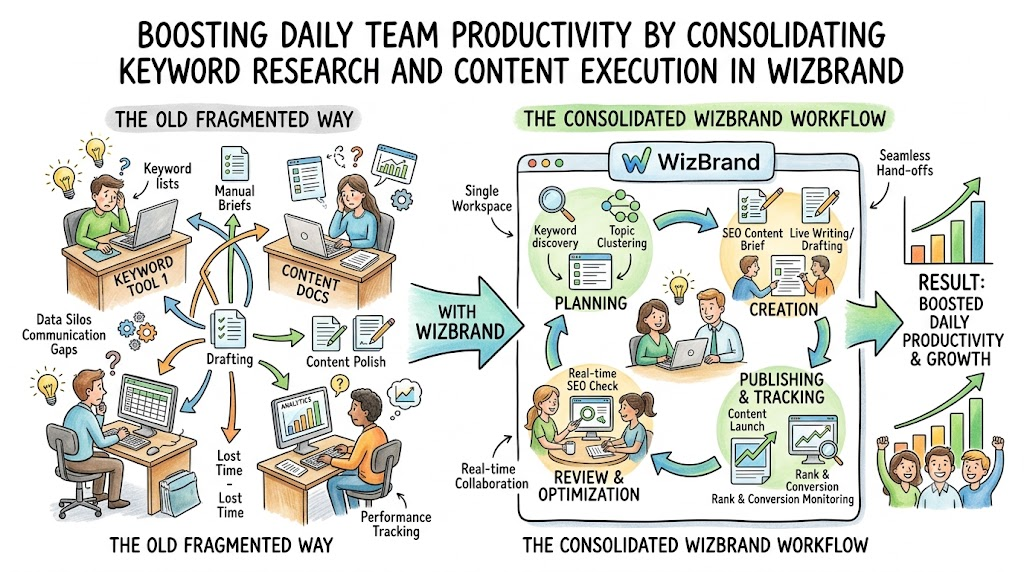
Modern digital marketing operations often struggle under the weight of fragmented tools, scattered data, and siloed communication channels. Marketing teams frequently waste valuable hours switching between separate applications for keyword tracking, content creation, asset management, and reporting. Implementing a single platform helps organizations unify strategic planning, daily execution, and performance tracking in one workspace. This comprehensive guide explores how tool consolidation, SEO management, digital asset organization, and streamlined workflows help teams eliminate friction and scale online visibility efficiently using platforms like WizBrand.
Why Digital Marketing Operations Become Difficult to Manage
Marketing teams hit severe operational speedbumps when running campaigns across fragmented software tools. Juggling separate platforms for keyword monitoring, backlink audits, creative storage, and task tracking forces team members into constant context switching. This division creates scattered campaign records, forces repetitive data entry, causes missed deadlines, slows down approvals, and creates communication breakdowns among specialists. Managing multiple clients or varied brand assets without a unified workspace obscures operational visibility, making comprehensive performance evaluation nearly impossible.
Common operational problems include:
- Disconnected data streams leading to inconsistent reporting and manual spreadsheet tracking
- High tool-switching overhead that degrades daily productivity and team focus
- Redundant software costs and fragmented user access management
- Misaligned communication between SEO specialists, content writers, and marketing managers
What Is an All-in-One Digital Marketing Platform?
An all-in-one digital marketing platform serves as a centralized hub that connects search engine optimization, content creation, performance tracking, and team collaboration. Instead of relying on a scattered collection of single-purpose software applications, an integrated platform provides a single environment where leaders transform marketing strategies into structured daily tasks. By connecting keyword research, site audits, asset management, and project tracking, organizations guarantee that every team member works from identical data. True integration prioritizes frictionless data sharing across features rather than simply piling up independent tools.
Standalone Tools Versus Integrated Marketing Platforms
| Marketing Area | Disconnected Tool Approach | Integrated Platform Approach |
| Keyword Management | Exported CSV files stored in disparate local folders | Centralized keyword lists connected to campaigns and tasks |
| Technical Audits | Manual audit exports emailed to web developers | Automated technical audit findings assigned directly as workflow tasks |
| Backlink Analysis | Isolated link profiles disconnected from strategic goals | Backlink metrics integrated with project timelines and outreach plans |
| Project Management | Third-party task boards detached from marketing analytics | Integrated SEO project management software workflows mapped to performance |
| Asset Management | Local cloud folders with unverified file versions | Dedicated digital asset management software for marketing teams with permissions |
| Reporting | Manual data consolidation using spreadsheets | Automated dashboards pulling cross-channel metrics seamlessly |
| Collaboration | Fragmented discussions scattered across chat apps | Contextual discussions directly within task and asset records |
The Role of SEO Management Software
Comprehensive SEO management software builds the foundation for scalable search visibility by organizing critical optimization actions under one roof. Effective search optimization requires continuous monitoring and structured execution rather than occasional fixes. An integrated platform allows specialists to manage keyword research, run technical health checks, refine content assets, track backlinks, evaluate competitor tactics, and assign actionable tasks in one fluid motion. This structured management connects search performance directly with broader business goals and daily marketing workflows.
Organising Keywords More Effectively
Organizing keywords effectively requires categorizing search terms based on user intent, topic relevance, and specific campaign goals. An all-in-one digital marketing platform empowers marketers to group keywords by user intent, map target terms to specific landing pages, and track competitor visibility systematically. Proper keyword structure prevents internal page competition, known as keyword cannibalization, while ensuring content production targets high-value search queries. Organizing keywords into dedicated project folders helps teams prioritize optimization work and monitor performance across separate product lines or service offerings.
Understanding an SEO Rank Tracking Tool
An SEO rank tracking tool delivers real-time visibility into keyword rankings across diverse search engines, geographical regions, and device types. Search positions fluctuate constantly due to algorithm updates, competitor actions, and shifting user search habits, which makes ongoing tracking vital. Modern rank trackers offer granular historical data, mobile versus desktop position breakdowns, local search performance, and instant alerts for major rank shifts. Evaluating keyword rankings alongside site traffic and conversion numbers ensures teams measure performance using revenue impact rather than vanity metrics.
Why Technical SEO Audits Matter
A robust technical SEO site audit tool uncovers underlying technical errors that block search engine crawlers from indexing web pages correctly. Technical flaws such as broken links, missing metadata, slow page speeds, duplicate content, mobile usability errors, and improper canonical tags directly damage organic rankings. Regular automated site audits help web teams catch crawlability barriers and sitemap errors before they cause ranking losses. Generating clear audit reports ensures web administrators and SEO specialists fix site health issues proactively.
Turning Audit Findings Into Action
Critical Issues
Critical issues instantly paralyze search engine crawling, indexing, or page rendering. Examples include server errors, unintended noindex tags on core revenue pages, and massive crawlability failures that hide content from search bots.
High-Priority Issues
High-priority issues erode user experience and suppress organic visibility over time. Examples include broken internal links, duplicate metadata, long redirect chains, and slow page loading speeds on key landing pages.
Improvement Opportunities
Improvement opportunities offer minor technical enhancements that strengthen long-term optimization. Examples include adding missing alt text, improving internal linking pathways, compressing oversized images, and refining structured data markup.
How a Backlink Analysis Tool Supports Off-Page SEO
A reliable backlink analysis tool analyzes an inbound link profile to strengthen off-page search engine optimization strategies. Search engines evaluate referring domain authority, anchor text balance, and overall link quality when calculating domain credibility. Tracking new, lost, and competitor backlink profiles allows marketing teams to uncover high-value link-building opportunities while filtering out hazardous spam links. Assessing backlink growth continuously helps organizations maintain a natural, authoritative link profile that fuels long-term search performance.
Using Competitor Backlink Information Responsibly
Analyzing competitor backlink data uncovers strategic content and public relations insights for marketing teams. Rather than trying to duplicate every single competitor link, smart marketers analyze backlink gaps to pinpoint industry publishers, research opportunities, and unlinked brand mentions. Understanding why authoritative websites link to competitors helps teams create superior, data-backed content assets that naturally attract organic backlinks. Responsible competitor research focuses on building long-term domain authority rather than chasing manipulative link schemes.
Connecting SEO With Project Management
Executing successful search campaigns requires tight coordination between SEO specialists, copywriters, developers, designers, and project managers. Using specialized SEO project management software connects high-level strategy directly with daily execution. Clear task assignments, scheduled deadlines, custom workflow milestones, contextual comment threads, and file permissions prevent miscommunication across departments. Centralized project dashboards give managers and clients complete transparency into task progress, campaign timelines, and strategic deliverables.
Building a Repeatable SEO Workflow
| Workflow Stage | Main Activities | Typical Responsibility |
| Research | Conduct keyword research, analyze search intent, and review competitors | SEO Specialist |
| Planning | Define content briefs, assign target keywords, and set timelines | Marketing Manager |
| Production | Write content, design visual assets, and construct landing pages | Content Writer & Designer |
| Technical Review | Verify page optimization, metadata, speed, and schema markup | SEO Specialist |
| Approval | Review final draft against brand guidelines and strategic goals | Content Strategist |
| Publishing | Upload content, configure canonical tags, and publish pages | Web Developer |
| Promotion | Distribute content across social channels and outreach networks | Outreach Coordinator |
| Measurement | Track keyword rank movements, organic traffic, and conversion metrics | Data Analyst |
| Improvement | Refine underperforming content and fix technical audit warnings | SEO Team |
Digital Marketing Workflow Management Software
Modern growth strategies reach far beyond basic search optimization, demanding versatile digital marketing workflow management software to coordinate complex campaigns. Structured workflows establish consistency across content marketing, social media scheduling, paid ad management, email marketing, and influencer partnerships. Setting clear phases from initial idea to final reporting removes confusion and speeds up campaign delivery across all channels.
A standard marketing campaign workflow follows eight structured stages:
- Campaign Ideation & Strategy Definition
- Asset Allocation & Resource Assignment
- Content & Creative Asset Creation
- Internal Technical & Editorial Approvals
- Multi-Channel Distribution & Publishing
- Influencer & Partner Media Coordination
- Performance Monitoring & Conversion Analysis
- Post-Campaign Optimization & Asset Archiving
Managing Marketing Assets From One Location
Using dedicated digital asset management software for marketing teams stops the chaos of lost graphics, wrong file versions, and scattered media storage. Centralizing digital assets guarantees instant access to high-resolution logos, campaign graphics, video files, sales presentations, and brand documentation. Advanced search filters, metadata tags, version controls, and user permissions allow global teams to find and reuse approved creative files efficiently without compromising brand consistency.
Why Version Control Matters
Without strict version control, marketing teams frequently publish outdated pricing graphics, retired logos, or unapproved promotional files. Consider a company updating its visual identity: without centralized asset control, old creative files stay saved locally on employee laptops, causing inconsistent branding across live campaigns. Digital asset management tools enforce strict file versioning, ensuring team members access, share, and publish only approved, current marketing collateral.
How an Influencer Marketing Marketplace Works
An integrated influencer marketing marketplace links brands directly with creative partners to simplify outreach, campaign setup, and performance tracking. Marketers easily evaluate creator profiles, audience metrics, and engagement history to select influencers matching their target market. Influencers use the platform to present media kits, display content categories, and manage sponsor deals. Selecting partners based on audience engagement and niche relevance rather than raw follower counts drives higher converting influencer campaigns.
What Agencies Need From SEO Software
Managing multiple client accounts requires scalable SEO software for agencies that supports separate client environments and customized access roles. Agencies need independent client workspaces, flexible rank tracking, isolated technical audit logs, and custom-branded client reports. Combining project management, asset storage, and campaign tracking into one platform improves account management productivity, enhances reporting clarity, and simplifies client communications.
Choosing the Right Digital Marketing Platform
Business Requirements
Analyze your specific operational challenges, redundant tool costs, and growth targets before committing to new software.
Team Size
Choose a flexible platform that supports your current team count while allowing effortless expansion as your marketing department grows.
Core Features
Confirm that the platform supplies robust digital marketing workflow management software, technical auditing tools, and keyword tracking features.
Workflow Flexibility
Check that project boards, task dependencies, and approval flows match your existing operational standards.
Ease of Use
Select an intuitive platform featuring clean visual interfaces to lower training time and maximize adoption among non-technical staff.
Collaboration
Test direct messaging, file sharing, comment threads, and task assignment tools to ensure effortless internal and external communication.
Reporting
Demand automated, exportable reporting dashboards that transform complex keyword, backlink, and campaign metrics into actionable insights.
Scalability
Verify that the software easily handles growing client portfolios, complex multi-channel workflows, and expanding asset libraries.
Common Mistakes to Avoid
- Buying multiple single-purpose tools without evaluating integrated platform options
- Failing to assign clear user roles, permissions, and task ownership during platform onboarding
- Treating technical SEO audits as sporadic projects rather than continuous maintenance routines
- Storing marketing assets in fragmented cloud folders without strict file naming or version controls
- Chasing keyword rankings while ignoring search intent and actual conversion metrics
How WizBrand Fits Into an Integrated Marketing Model
WizBrand builds a complete digital marketing workspace that unifies search engine optimization, content planning, project tracking, and asset management. By bringing core functions under one roof, the platform helps businesses replace scattered software setups with a single operational engine. Specialists conduct keyword research, track daily rankings using a built-in SEO rank tracking tool, audit site health with a technical SEO site audit tool, and analyze link profiles using a backlink analysis tool.
Beyond basic search capabilities, WizBrand functions as digital marketing workflow management software and SEO project management software, empowering teams to assign tasks, set deadlines, and track milestones. Its centralized file system provides robust digital asset management software for marketing teams, keeping campaign materials organized and instantly accessible. Furthermore, its influencer marketing marketplace connects brands with creators to execute and track promotional campaigns. As comprehensive SEO software for agencies and in-house teams, WizBrand offers a practical workspace to organize digital operations, boost collaboration, and scale online growth predictably.
Steps for Implementing an Integrated Marketing Platform
- Audit current tools: Catalog all active software subscriptions, recurring costs, and overlapping features.
- Identify duplicate work: Locate manual processes, repeated data entry tasks, and communication bottlenecks.
- Document existing workflows: Map campaign phases, task handoffs, and approval steps clearly.
- Clean and organise data: Standardize keyword lists, sanitize backlink files, and group core media assets.
- Assign platform administrators: Designate team leads to manage workspace setup and access permissions.
- Start with a pilot project: Run a single client campaign or marketing channel through the platform to refine setups.
- Train users by role: Deliver focused platform training for SEO specialists, writers, and account managers.
- Create naming standards: Enforce strict file naming rules, asset tags, and task categories across teams.
- Review platform adoption: Track feature usage, team activity, and task completion rates continuously.
- Improve workflows gradually: Refine project templates and reporting structures based on direct feedback from staff.
Measuring the Impact of a Centralised Platform
Evaluating the switch to an integrated platform involves tracking internal productivity gains alongside overall business growth. Streamlining software infrastructure delivers immediate operational efficiency across daily team workflows.
Key operational metrics include:
- Significant drop in context switching and redundant software logins
- Faster approval timelines for written content, design assets, and code fixes
- Lower dependency on manual spreadsheets for keyword and asset tracking
- Higher deadline compliance and faster milestone completion
- Increased asset reuse through organized digital asset libraries
Key business impact metrics include:
- Higher organic search traffic powered by regular technical and content optimization
- Increased qualified lead capture resulting from tightly aligned content campaigns
- Faster resolution of technical site errors uncovered by automated audits
- Reduced software subscription expenses and lower administrative overhead
FAQ SECTION
1. How would you explain an all-in-one digital marketing system?
Centralizing search tools, rank tracking, site audits, asset storage, and project task management inside one interface defines an all-in-one digital marketing platform. It replaces scattered software applications, enabling marketing teams to manage, execute, and evaluate their growth campaigns within a single workspace.
2. How does SEO management software improve organic search traffic?
Consolidating keyword research, technical site audits, backlink tracking, and task delegation allows SEO management software to transform optimization into a continuous business process. Teams fix site errors quickly, target high-value search queries, and adapt to competitor strategies to build long-term organic traffic.
3. Why is an SEO rank tracking tool necessary for marketing teams?
Delivering ongoing visibility into search engine positions across locations, search engines, and device types makes an SEO rank tracking tool essential. Tracking position changes alongside site traffic and conversions helps marketers evaluate campaign health and refine strategies based on actual search performance.
4. What issues does a technical SEO site audit tool detect?
Uncovering underlying site flaws like broken links, missing metadata, duplicate text, slow loading speeds, and mobile usability errors drives the utility of a technical SEO site audit tool. Identifying these crawlability barriers early helps teams maintain strong search engine indexing and prevent ranking drops.
5. How does a backlink analysis tool help off-page SEO?
Evaluating inbound link health, referring domain authority, anchor text distribution, and lost links defines the role of a backlink analysis tool. Marketers use these insights to find quality link-building targets, monitor competitor link strategies, and disavow harmful spam links that threaten search credibility.
6. What makes SEO project management software different from standard project tools?
Connecting marketing data like keyword databases, site audit alerts, and backlink metrics directly to task boards sets SEO project management software apart. This connection allows specialists, copywriters, and web developers to collaborate easily and turn complex technical audits into clear, trackable assignments.
7. Why do marketing teams need digital asset management software?
Providing a central location to organize, store, and find media files like logos, graphics, videos, and pitch decks explains why teams adopt digital asset management software. Tagging systems, permissions, and version controls prevent staff from using outdated creative assets or wasting time searching local folders.
8. How does digital marketing workflow management software streamline campaigns?
Standardizing campaign stages, task handoffs, approval chains, and publishing schedules across channels makes digital marketing workflow management software invaluable. Establishing repeatable workflows eliminates operational confusion, clears task bottlenecks, and ensures consistent campaign delivery across search, content, and social channels.
9. What is an influencer marketing marketplace?
Connecting brands directly with content creators for promotional campaigns describes an influencer marketing marketplace. Marketers review creator audience metrics, manage campaign tasks, and analyze ROI, while creators showcase their profiles and connect with relevant brand advertisers.
10. Why should agencies choose dedicated SEO software for agencies?
Offering multi-client account isolation, custom access permissions, white-label client reports, centralized asset controls, and scalable rank tracking makes dedicated agency SEO software vital. Account managers organize separate client projects efficiently while sending polished, professional performance reports.
11. How does version control in asset management prevent marketing errors?
Restricting team access to approved, current marketing files highlights the core value of asset version control. Centralizing creative files prevents employees from accidentally sharing outdated pricing graphics, old logo designs, or unapproved promotional copy across active marketing channels.
12. How long does it take to implement an integrated marketing platform?
Completing platform implementation generally takes two to six weeks depending on team size and operational complexity. Starting with a single pilot project, defining clear user permissions, and conducting role-based training ensures a smooth shift without disrupting live marketing campaigns.
CONCLUSION
Handling multi-channel digital campaigns demands seamless coordination across search optimization, content creation, project tracking, and asset management. Relying on disconnected software applications builds operational bottlenecks, triggers communication gaps, raises software expenditures, and hides performance metrics. Switching to an integrated digital marketing platform solves these challenges by combining keyword tracking, site audits, backlink analysis, task workflows, asset management, and influencer outreach in one workspace.
Unifying marketing operations empowers businesses and agencies to eliminate administrative waste, safeguard brand consistency with version-controlled media, and execute campaigns with predictable precision. Technology alone cannot replace strategic vision, but effective software provides the operational engine required to scale visibility and master daily team execution. Exploring integrated platforms like WizBrand gives growing organizations a clear path to replace software chaos with a streamlined, high-performing marketing environment.