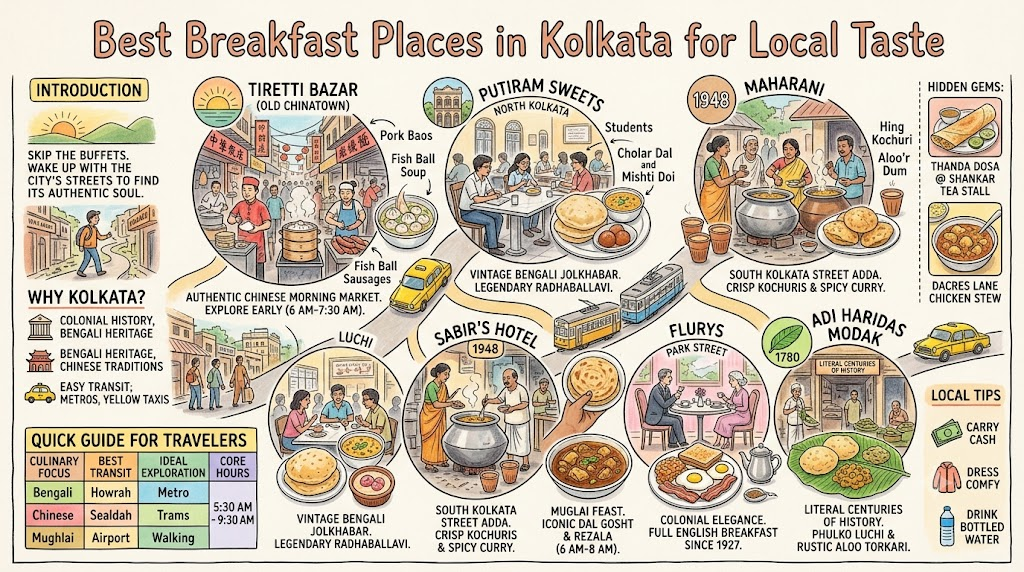
Introduction
While modern vacationers routinely flock to sterile, overcrowded shopping hubs or generalized culinary circuits, true travelers seek out cities with a deep, uninterrupted heartbeat. Kolkata does not cater to touristy pretense; it demands that you wake up with its streets to understand its soul. Long before the mid-day heat slows the city down, its historical neighborhoods transform into thriving, aromatic open-air kitchens. Skipping the standardized hotel buffets for the street corners of the cultural capital reveals an authentic culinary story built on centuries of migration, heritage, and pure devotion to flavor.
Why Kolkata is a must visit city
Kolkata stands as an indispensable chapter in global travel due to its unique historical weight as a major colonial trading hub and its geographical position as the gateway to Eastern India. This city does not merely preserve history; it consumes it daily through a culinary circuit that blends British high-tea elegance, indigenous Bengali heritage, Chinese immigrant traditions, and robust Awadhi flavors. Its flawless practical accessibility—featuring a massive network of suburban railways, India’s oldest underground Metro, and well-connected highways—allows backpackers, heritage buffs, and luxury seekers alike to navigate its varied neighborhoods with ease.
The travel circuit of Kolkata flows seamlessly from the narrow, memory-laden lanes of North Kolkata to the bustling commercial zones of Central Chowringhee, down to the leafy, artistic expansions of South Kolkata. Each zone offers a distinct architectural and cultural landscape, transforming your morning exploration into a live walk through time.
| Metric / Feature | Details for Travelers |
| Primary Culinary Focus | Traditional Bengali, Anglo-Indian, Hakka Chinese, and Awadhi Mughlai |
| Best Transit Hubs | Howrah Junction (HWH), Sealdah Junction (SDAH), Netaji Subhash Chandra Bose Airport (CCU) |
| Ideal Exploration Mode | Public Metro, Heritage Trams, Yellow Taxis, and Walking Tours |
| Core Breakfast Hours | 5:30 AM to 9:30 AM |
Best Places or Experiences
Tiretti Bazar (The Old Chinatown)
Before the first rays of sun strike the central business district, a tiny street behind the Poddar Court transforms into India’s only surviving authentic Chinese morning market. For over a century, the descendants of Hakka Chinese immigrants have gathered here to sell home-cooked breakfast items that you cannot find in any modern restaurant. The atmosphere is loud, kinetic, and entirely unpretentious, filled with steam from massive aluminum pots and the rich aroma of slow-cooked meat broths.
As you navigate the dense crowds, you will find elderly vendors serving hand-pulled pork sausages, delicate fish ball soups, and savory steamed baos stuffed with sweet barbecued pork. The food here represents a beautiful, century-old culinary adaptation that survived the test of time, making it an absolute pilgrimage site for any dedicated food traveler.
- Location: Sun Yat Sen Street, Central Kolkata (Approx. 2.5 km from Howrah Station)
- Why it is worth visiting: It is the last remaining venue to experience the living, century-old culinary legacy of Kolkata’s original Hakka Chinese community.
- Best things to do: Sip a bowl of clear, piping-hot fish ball soup, try the savory steamed pork pau (buns), and look for home-made Chinese sweet sticky rice cakes.
- Best time to visit: 6:00 AM to 7:30 AM (Most vendors pack up completely by 8:00 AM)
- Ideal for whom: Culinary explorers, adventurous eaters, and cultural photographers
- Travel tip: Arrive early because the best pork and fish stock varieties sell out within the first forty-five minutes of opening.
Putiram Sweets
Tucked away in the intellectual heart of the city near College Square, Putiram Sweets has been fueling generation after generation of students, professors, and writers since the colonial era. This vintage establishment epitomizes the quintessential Bangali jolkhabar (Bengali breakfast) experience, where time seems to have stood still for decades. The interior is gloriously old-school, featuring basic marble-top tables, heavy wooden chairs, and retro glass display cases filled with seasonal sweet treasures.
The star attraction here is their legendary Radhaballavi, a soft, golden-fried, lentil-stuffed flatbread made from premium flour. It is served alongside an aromatic, sweet-and-savory Cholar Dal (Bengal gram lentil) that is deeply flavored with fried coconut chips, asafoetida, and a secret blend of whole spices. Eating here is a lesson in how simplicity, when executed with ancestral precision, creates an unforgettable culinary memory.
- Location: Surya Sen Street, College Square, North Kolkata (Approx. 1 km from Mahatma Gandhi Road Metro Station)
- Why it is worth visiting: Renowned for serving the most authentic, consistently perfect Radhaballavi and traditional Bengali breakfast sweets in the entire city.
- Best things to do: Pair your savory lentil-stuffed puris with their signature thick Cholar Dal, sample a piece of their seasonal Nolen Gur Sandesh, and drink water from their signature earthen pots.
- Best time to visit: 7:00 AM to 9:00 AM
- Ideal for whom: Heritage lovers, vegetarians, and classic food purists
- Travel tip: The place gets incredibly busy around 8:30 AM, so stand near the counter to secure your token quickly before the queue grows.
Maharani
Located in the bustling residential expanse of South Kolkata near Deshapriya Park, Maharani is a legendary roadside joint that serves as the ultimate morning social hub for locals. This is where morning walkers, neighborhood regulars, and young professionals gather on the pavement to engage in adda—the classic Bengali art of intellectual, unstructured conversation. There are no fancy dining tables here; you simply stand by the giant iron cauldrons and watch the fryers masterfully churn out food.
Maharani is famous for its crisp, piping-hot Kochuris (deep-fried puffed bread) served with a deeply spiced, comforting Aloo’r Dum (thick potato curry). The curry here is notoriously robust, packed with local spices that instantly wake up your palate. To experience it like a true local, you must conclude your meal by cracking open a miniature clay cup of sweet cardamom tea.
- Location: Sarat Bose Road, Lake Market Area, South Kolkata (Approx. 800 meters from Kalighat Metro Station)
- Why it is worth visiting: It provides the ultimate street-side breakfast and adda atmosphere in South Kolkata, famous for its spicy potato curries.
- Best things to do: Order a platter of fresh hing (asafoetida) flavored kachoris, try their oversized sweet Malpua, and enjoy a clay cup of thick masala chai.
- Best time to visit: 6:30 AM to 8:30 AM
- Ideal for whom: Street food enthusiasts, couples, and casual travelers looking for a lively local vibe
- Travel tip: There is no dedicated seating, so prepare to stand on the sidewalk and eat from eco-friendly leaf plates just like the locals do.
Sabir’s Hotel
For those who believe a proper breakfast must include rich, slow-cooked meat and artisanal breads, Sabir’s Hotel in the historic Chandni Chowk area is an absolute revelation. Established in 1948, this sexagenarian Mughlai eatery has spent generations perfecting the art of the early-morning Awadhi feast. The setting is minimal and heavily nostalgic, with a steady hum of diners who have been coming here for half a century.
The ultimate morning ritual here centers around their iconic Dal Gosht—a magnificent, slow-simmered combination of tender mutton chunks and creamy lentils, enriched with clarified ghee and aromatic spices. Diners pair this rich stew with Sabir’s legendary tandoori rotis or their flaky, multi-layered parathas. It is a heavy, deeply satisfying meal that honors the grand Islamic culinary history of Central Kolkata.
- Location: Princep Street, Chandni Chowk, Central Kolkata (Walking distance from Chandni Chowk Metro Station)
- Why it is worth visiting: It is the undisputed capital for an authentic, historic Mughlai breakfast featuring masterful slow-cooked meat stews.
- Best things to do: Feast on the iconic Dal Gosht or Mutton Rezala, tear into a soft, layered paratha, and wash it down with their specialty strong milk tea.
- Best time to visit: 6:00 AM to 8:00 AM
- Ideal for whom: Meat lovers, history enthusiasts, and heavy-breakfast seekers
- Travel tip: Their breakfast-specific meat curries are prepared in limited batches and routinely sell out completely by 8:30 AM.
Flurys
If you wish to switch tracks from local spices to the refined elegance of the British colonial era, walking through the doors of Flurys on Park Street is non-negotiable. Founded in 1927 as a luxury English tearoom, Flurys retains its old-world European charm with its high ceilings, pastel pink interiors, pristine white tablecloths, and classic vintage cutlery. It offers a sophisticated window into the city’s complex, cosmopolitan history.
The quintessential order here is the legendary Flurys Full English Breakfast. This timeless platter features perfectly done eggs, crisp bacon strips, premium sausages, grilled tomatoes, baked beans, and buttery toast. Paired with a silver pot of authentic Darjeeling tea, it provides a quiet, luxurious morning experience that beautifully contrasts with the chaotic energy of the city’s street markets.
- Location: Park Street, Central Kolkata (Approx. 500 meters from Park Street Metro Station)
- Why it is worth visiting: It is India’s most iconic heritage tearoom, offering an unmatched, authentic taste of colonial-era British breakfast luxury.
- Best things to do: Indulge in the legendary Full English Breakfast, sample their famous rum balls or almond cubes, and enjoy properly brewed single-estate Darjeeling tea.
- Best time to visit: 7:30 AM to 9:00 AM (To avoid the long mid-day weekend queues)
- Ideal for whom: Lovers of luxury, couples, and fans of European baking history
- Travel tip: Request a table right next to the massive glass street-facing windows for prime people-watching along Park Street as the city wakes up.
Adi Haridas Modak
To experience a breakfast steeped in literal centuries of history, travel deep into North Kolkata to visit Adi Haridas Modak. Established way back in 1780, this historic shop is older than most modern nations. It has successfully fed generations of iconic Indian freedom fighters and literary giants. The interiors are purposefully kept simple, featuring classic wobbly wooden tables and age-old glass showcase counters that showcase their heritage sweets.
The breakfast of choice here is the absolute classic Phulko Luchi—puffed, feather-light white flatbreads served on a fresh green banana leaf. What makes their accompanying Aloo’r Torkari (potato curry) so special is that the potatoes are cooked completely unskinned. This ancient technique imparts a distinct, rustic flavor and earthy depth that modern commercial kitchens simply cannot replicate.
- Location: Shyambazar Five-Point Crossing, North Kolkata (Walking distance from Shyambazar Metro Station)
- Why it is worth visiting: It is one of the oldest operational sweet and breakfast shops in India, preserving 18th-century culinary techniques.
- Best things to do: Eat fresh Luchi and unskinned potato curry served on a traditional banana leaf, and follow it up with their hot, syrupy Jalebis.
- Best time to visit: 7:00 AM to 9:00 AM
- Ideal for whom: History buffs, cultural travelers, and budget backpackers
- Travel tip: Seating is communal during the busy morning rush; do not hesitate to share a marble table with a friendly local regular.
Offbeat Exploration: Hidden Gems Tourists Miss
Shankar Tea Stall (The Thanda Dosa Legend)
While tourists crowd the big restaurants, local stockbrokers and office commuters head to a tiny, unassuming lane near the Calcutta Stock Exchange. Shankar Tea Stall is famous for a bizarre yet addictive creation known as the Thanda Dosa. Instead of serving it piping hot from a griddle, they wrap savory fillings into a pre-cooled, uniquely textured crepe. It is a brilliant, fast-paced street culinary invention designed specifically to beat the intense summer humidity of the city.
Dacres Lane (James Hickey Sarani)
Hidden right in the belly of the central business district, this narrow, historic alleyway is arguably the oldest dedicated food lane in the city. While it draws massive crowds for lunch, its early morning avatar is a peaceful paradise for working-class food lovers. Look for tiny, nameless stalls serving bowls of slow-cooked pepper chicken stew paired with soft, heavily buttered quarter-loaves of local bakery bread. It is an incredibly cheap, comforting, and historic breakfast hidden in plain sight.
Detailed Practical Guidance for Travelers
The following table outlines the essential logistical metrics for planning your morning culinary exploration across the city’s key landmarks:
| Destination | Standard Entry Fee | General Timings | Best Local Food Options Nearby | Recommended Nearby Attractions |
| Tiretti Bazar | Free Access | 5:00 AM – 8:30 AM | Pork Baos, Fish Ball Soup, Pork Sausages | Bow Barracks, Parsi Fire Temple |
| Putiram Sweets | Free Access | 6:00 AM – 9:30 PM | Radhaballavi, Cholar Dal, Mishti Doi | College Street Boi Para, Calcutta University |
| Maharani | Free Access | 6:00 AM – 9:00 PM | Hing Kochuri, Aloo’r Dum, Hot Malpua | Lake Mall, Kalighat Temple, Rabindra Sarobar |
| Sabir’s Hotel | Free Access | 6:00 AM – 11:00 PM | Dal Gosht, Layered Paratha, Rezala | Chandni Chowk Market, Tipu Sultan Mosque |
| Flurys | Free Access | 7:30 AM – 11:00 PM | Full English Breakfast, Rum Balls, Baked Beans | Victoria Memorial, St. Paul’s Cathedral |
| Adi Haridas Modak | Free Access | 6:30 AM – 10:00 PM | Luchi on Banana Leaf, Unskinned Potato Curry | Sovabazar Rajbari, Kumartuli (Potters’ Quarter) |
Logistics & On-Ground Navigation
Local Transport Options
- The Underground Metro: This is the absolute fastest and most efficient way to travel between the North, Central, and South breakfast zones. It runs with clockwork precision and lets you bypass morning traffic jams completely.
- Suburban Railways: Ideal if you are staying near the outer rings and want to head straight into urban hubs like Howrah or Sealdah early in the morning.
- Hand-Pulled & Auto-Rickshaws: Excellent for navigating the narrow, historic labyrinth of lanes in North Kolkata where cars cannot physically enter.
- App-Based Cabs & Yellow Taxis: Readily available across the city via Uber and Yatri Sathi apps for convenient, door-to-door morning transit.
Budget Planning
- Backpacker / Budget Tier: Budget around ₹150 to ₹250 per day. This easily covers multiple plates of street-side kochuris, traditional sweets, transport via the underground Metro, and multiple clay cups of local chai.
- Comfort / Mid-Range Tier: Budget around ₹600 to ₹1200 per day. This allows you to combine heritage street eating with a sit-down meal at historical venues like Flurys, along with comfortable air-conditioned cab rides.
Safety and Inclusivity Tips
- For Families: Stick to historic indoor heritage shops like Putiram or Adi Haridas Modak, where comfortable bench seating and drinking water are readily available.
- For Couples: Park Street and the leafy pathways around Rabindra Sarobar Lake offer beautiful, highly secure morning walking options before or after your breakfast.
- General Safety: The city is widely recognized as one of the safest urban centers in India. However, keep a close eye on your personal belongings in incredibly dense morning crowds like Tiretti Bazar.
Strategic Travel Planning Guardrails
Travel Planning Tips for Kolkata
- Carry Physical Cash: While digital UPI payments are widespread, small roadside tea stalls and old Chinatown vendors still strictly prefer physical coins and low-denomination cash notes.
- Dress and Footwear Prep: Wear comfortable, closed-toe walking shoes to safely navigate old, uneven historic pavements and wet market streets.
- Understand the Seasons: The ideal months for pleasant food walks are from October to March when the winter weather is wonderfully cool and dry.
- Hydration Rules: Stick strictly to sealed, branded mineral water bottles during street food tours to ensure your stomach stays perfectly happy.
- Learn a Few Words: Using basic Bengali phrases like “Kemon achen?” (How are you?) or “Khub bhalo” (Very good) instantly wins the hearts of local shop owners.
Common Mistakes to Avoid
- Overscheduling Your Morning: Do not try to pack North and South Kolkata breakfast spots into the same morning; the geographical distance will exhaust you.
- Waking Up Too Late: Arriving at street markets past 8:00 AM is a massive mistake; you will miss the fresh food energy and find only empty counters.
- Assuming English Everywhere: While widely understood, be prepared to use simple hand gestures or translation apps when dealing with deep-interior local vendors.
- Skipping the Street Vendors: Avoiding street-side stalls out of over-caution deprives you of tasting the real, authentic culinary heritage of the region.
- Overpaying for Transport: Always insist on using official meters or cross-check your fare on ride-sharing apps like Yatri Sathi before stepping into an independent vehicle.
Suggested Itinerary Blueprints
1-Day Quick Dash (The Heritage Core Route)
Designed for travelers with limited time who want to capture the absolute essentials of Central Kolkata’s morning food scene.
- 6:30 AM: Start your morning with exotic pork buns and hot soup at Tiretti Bazar.
- 8:00 AM: Take a short, historic yellow taxi ride straight to Putiram Sweets for a plate of legendary Radhaballavi and Cholar Dal.
- 9:30 AM: Conclude your express run with an authentic clay cup of spiced milk tea right outside the historic College Square.
2-Day Deep-Dive (North vs. South Contrast Route)
An exceptional weekend layout that highlights the distinct cultural and culinary divide between the historic North and modern South zones.
- Day 1 (The Northern Heritage): Explore the 18th-century roots at Adi Haridas Modak in Shyambazar for traditional Luchi on banana leaves. Spend your morning exploring the nearby artistic potters’ colony of Kumartuli.
- Day 2 (The Southern Adda Vibe): Head down to Maharani on Sarat Bose Road for spicy Kochuris and hot Malpuas. Follow it up with a relaxing, scenic walk under the tree canopy of Rabindra Sarobar Lakes.
Complete Weekend Travel Plan (The Cross-Cultural Loop)
The ultimate, comprehensive three-day culinary journey covering British, Chinese, Bengali, and Mughlai food styles.
- Friday: Arrive and dive into the rich, slow-cooked Mughlai world of Sabir’s Hotel in Chandni Chowk for an early meat-and-bread breakfast feast.
- Saturday: Wake up at dawn for the bustling Chinese street market at Tiretti Bazar, followed by an afternoon shopping walk through the historic New Market.
- Sunday: Enjoy a luxurious, slow morning experiencing colonial British elegance with a Full English Breakfast at Flurys on Park Street, followed by a walk to the iconic Victoria Memorial.
Common Tourist Mistakes to Avoid
- Geographic Blunders: Trying to combine a breakfast at Adi Haridas Modak (extreme North) with a stroll near Rabindra Sarobar (extreme South) on the exact same morning will leave you stuck in heavy traffic for hours. Group your exploration strictly by neighborhood zones.
- Commercial Traps: Spending your precious vacation mornings inside modernized mall food courts or international chain outlets. These places offer zero local character and completely isolate you from the true atmospheric essence of the city.
- Neglecting Modern/Alternative Zones: Forgetting to explore the quieter, residential, and highly artistic expansions of South Kolkata, which offer an entirely different, relaxed lifestyle compared to the dense alleys of the old North.
- Transport Overpayment: Boarding unmetered taxis without confirming the price beforehand. Always use local ride-sharing apps like Yatri Sathi to check standard baseline rates so you can avoid price gouging.
- Luxury Dining Bias: Believing that cleaner, high-end hotel buffets provide better authenticity. Missing out on street-level vendors means you miss out on the actual culinary soul, heritage recipes, and living culture of the city.
Frequently Asked Questions
1. Is street food in Kolkata safe for international travelers to consume early in the morning?
Yes, it is remarkably safe if you follow basic, smart guardrails. Stick to highly popular stalls where you can see a massive, continuous line of local families and residents buying food. This high turnover ensures that items like kochuris and aloo curries are served sizzling hot straight from the frying cauldron, which naturally eliminates bacteria. Always drink bottled mineral water from sealed containers, and avoid raw chutneys or ice cubes at smaller street-side joints.
2. What is the standard cost of a traditional street breakfast for two people?
A classic street breakfast is incredibly friendly to your wallet. A hearty meal for two people consisting of fresh kochuris, potato curry, traditional sweets, and clay cups of hot chai typically ranges between ₹80 and ₹150 in total. Even at long-standing heritage sweet shops like Putiram, a full breakfast rarely crosses ₹200 for a couple, making it one of the most economical food destinations in the country.
3. Do breakfast places stay open throughout the afternoon if I wake up late?
No, the classic local breakfast menu items are strictly time-bound. Iconic street operations like the Tiretti Bazar Chinese market dismantle their stalls completely by 8:30 AM. Traditional sweet shops stop frying fresh luchis and kachoris by 9:30 AM or 10:00 AM as they transition their kitchens to mid-day meals and dry sweets. If you arrive late, you will miss out on the defining morning items.
4. What exactly is the difference between a Luchi and a Kochuri?
While both are delicious deep-fried flatbreads, they feature different ingredients. A Luchi is made from refined flour (maida), resulting in a pristine white, incredibly light, and melt-in-the-mouth texture. A Kochuri usually incorporates whole wheat flour or has a savory, spiced lentil stuffing (like biulir dal or asafoetida) embedded within the dough before it is fried, making it denser and far more robust.
5. Are there any good vegetarian breakfast options available in Kolkata?
Absolutely. Traditional Bengali breakfasts are predominantly vegetarian. Legendary heritage spots like Putiram Sweets, Maharani, and Adi Haridas Modak operate completely vegetarian breakfast counters. Their signature items—like Radhaballavi, Luchi, and Hing Kochuri—are paired with pure vegetarian lentil or potato curries that do not use any onions or garlic, making them excellent for vegetarian travelers.
6. Which breakfast spot offers the best authentic colonial British experience?
Flurys on Park Street is the undisputed heritage capital for an authentic British-era breakfast experience. Operating since 1927, it preserves the exact old-world charm of an English tearoom. Their iconic Full English Breakfast platter—complete with eggs, baked beans, bacon, sausages, and premium Darjeeling tea—presents a beautiful look into the city’s rich colonial history.
7. Can I easily get vegan breakfast options in the local street markets?
It can be slightly challenging but is entirely possible with clear communication. Most local deep-fried items like Luchi or Kachori are fried in vegetable oil, and the accompanying potato curries are completely plant-based. However, you must explicitly ask the vendor to ensure no clarified butter (ghee) is drizzled on top, and you will need to skip the traditional milk teas and milk-based Bengali sweets.
8. What is the best mode of public transport to reach North Kolkata early in the morning?
The Kolkata Underground Metro is the most efficient and reliable transport mode available. It connects the southern and central residential zones directly to historical northern hubs like Shyambazar, Shovabazar, and Mahatma Gandhi Road within minutes. Taking the Metro allows you to entirely bypass the unpredictable morning surface traffic and navigate the city with ease.
9. Why do local tea stalls serve hot chai in tiny clay cups instead of glass?
These traditional earthen clay cups are called bhanr. Locals prefer them because the porous, unglazed clay absorbs a tiny bit of moisture, imparting a wonderful, uniquely rustic and smoky aroma to the hot tea. Additionally, they are entirely eco-friendly, single-use, and biodegradable items that naturally return to the soil after you crush them on the ground.
10. Is photography freely permitted inside traditional eateries and morning markets?
Yes, local vendors and morning shoppers are incredibly warm, friendly, and deeply proud of their food culture. They generally welcome food bloggers and cultural photographers with open arms. However, it is always a polite and recommended practice to smile, make eye contact, and ask for verbal permission before pointing a large camera lens directly at a vendor’s face or their cooking station.
11. What seasonal winter specialities should I look out for during my breakfast tour?
If you are visiting during the pleasant winter months, look for Koraishuti’r Kochuri—a magnificent variety of deep-fried bread stuffed with a sweet, green pea filling spiced with ginger and green chilies. Additionally, ensure you sample fresh sweets made from Nolen Gur (liquid date palm jaggery), which is exclusively harvested during the winter season.
12. Do I need to book an entry permit or a guided tour to explore Tiretti Bazar?
No formal permits, entry tickets, or bookings are required to visit Tiretti Bazar. It operates as a completely free, open public street market. While you can easily walk through the lanes independently, joining a morning heritage food walking tour can provide valuable historical context regarding the evolution of the city’s Hakka Chinese community.
Conclusion
Choosing to explore the historic morning food lanes of Kolkata over a standard, predictable resort vacation offers an invaluable cultural and intellectual reward. As you sit at a wobbly marble table older than your grandparents, eating fresh luchis off a green banana leaf, you are not just consuming breakfast—you are actively participating in a living, unbroken chain of human history. The true soul of travel lies in these unfiltered moments of street-level connection. Long after the flavors fade, the sensory memories of the early morning steam, the shouting vendors, and the rich aroma of fresh spices will remind you why you chose to travel in the first place.