Introduction
Few cities in the world preserve their living soul quite like Kolkata. While popular tourist hubs across India often present sterile resorts, crowded selfie traps, and manufactured experiences, the grand old capital of Bengal invites travelers into an unfiltered world of living heritage. Here, century-old trams clatter past neoclassical balconies, literary debates hum across vintage coffee houses, and the sacred waters of the Hooghly River reflect both colonial spires and terracotta shrines.
A short weekend getaway here is not merely about ticking boxes off a sightseeing checklist. It is an immersive journey into authentic cultural roots where history, artistic vitality, and world-class street gastronomy converge to leave an unforgettable impression on every traveler.
Why Kolkata is a must-visit city
Kolkata holds exceptional cultural and historical significance as the intellectual powerhouse of the Bengal Renaissance and the former capital of the British Indian Empire. Geographically positioned in the fertile lower Gangetic delta along the Hooghly River, it offers an architectural tapestry found nowhere else in South Asia. Massive gothic structures, Indo-Saracenic palaces, traditional mansions with slatted green shutters, and bustling riverfront ghats coexist seamlessly with modern life.
Reaching the city is effortless for weekend travelers across India and abroad. Netaji Subhas Chandra Bose International Airport (CCU) connects directly to major domestic and global hubs, while Howrah and Sealdah railway stations rank among the busiest, best-connected rail terminals in the country. With hospitality options spanning atmospheric colonial heritage hotels to contemporary business suites, the city serves solo backpackers, couples, and family holidaymakers with ease.
The ideal travel circuit splits the metropolis into distinct geographic zones: the imperial grandeur of Central Kolkata, the sacred riverside heritage of North Kolkata, and the tree-lined, cafe-rich cultural enclaves of South Kolkata.
| Metric | Details |
|---|---|
| Geographic Zone | Lower Gangetic Plain, West Bengal, Eastern India |
| Ideal Travel Months | October to March (Crisp mornings, pleasant evenings) |
| Primary Transit Gateways | Netaji Subhas Chandra Bose Airport (CCU), Howrah Station (HWH) |
| Core Transit Network | Underground Metro Rail, Historic Trams, Yellow Taxis, River Ferries |
| Recommended Stay Duration | 2 to 3 Days (Perfect Weekend Scope) |
Best Places or Experiences
Victoria Memorial Hall
Commissioned in memory of Queen Victoria and completed in 1921, the Victoria Memorial Hall remains one of the finest colonial-era marble edifices in the world. Conceptualized by Lord Curzon and designed by William Emerson, the monument blends British classical lines with Mughal-inspired domes, colonnades, and ornamental corner towers. It stands resplendent amidst sixty-four acres of lush, manicured gardens, built entirely from white Makrana marble sourced from the same quarries as the Taj Mahal.
Inside, the royal gallery and museum house extensive collections of rare oil paintings, vintage lithographs, antique weaponry, and historical manuscripts that chronicle the transition of Calcutta from three tiny river villages into an imperial metropolis. Walking through the grand central hall beneath the bronze Angel of Victory gives visitors a profound sense of Bengal’s dramatic sociopolitical transformation.
Victoria Memorial Hall in Central Kolkata.
- Location: Queens Way, Maidan, Central Kolkata (approx. 4.5 km from Howrah Railway Station).
- Why it is worth visiting: Unmatched architectural grandeur featuring world-class colonial art collections and expansive urban green space.
- Best things to do: Explore the portrait gallery inside, stroll the manicured peripheral gardens, and photograph the monument illuminated at dusk.
- Best time to visit: October to February, specifically between 10:00 AM and 1:00 PM for gallery viewings.
- Ideal for whom: History buffs, architecture lovers, and visiting families.
- Travel tip: Book entry tickets online through the official portal to skip long weekend ticketing lines at the south gate.
Howrah Bridge and Mullick Ghat
Spanning the Hooghly River, the Howrah Bridge (Rabindra Setu) is an engineering triumph that has symbolized Kolkata since its opening in 1943. Built as a balanced cantilever truss bridge without a single nut or bolt in its steel framework, it carries hundreds of thousands of commuters and vehicles each day. Directly beneath its southeastern ramp lies the bustling Mullick Ghat, home to Asia’s largest wholesale flower market, which bursts into a vibrant explosion of orange marigolds, red hibiscus, and fragrant jasmine before sunrise.
The sheer sensory experience of standing near the riverfront as wooden country boats glide under the bridge against the rising sun is extraordinary. The clatter of traffic overhead blends with the rhythmic cries of flower auctioneers and river bathers, capturing Kolkata’s timeless, beating pulse
.
Howrah Bridge across the Hooghly.
- Location: Strand Bank Road / Howrah Approach, Central-North Kolkata border (directly outside Howrah Station).
- Why it is worth visiting: Witness an iconic marvel of civil engineering alongside one of Asia’s most dynamic traditional flower bazaars.
- Best things to do: Photograph the sunrise over the Hooghly from the riverbank, explore the flower market, and take a commuter ferry beneath the bridge.
- Best time to visit: 5:30 AM to 7:30 AM for peak flower auctions and soft dawn lighting.
- Ideal for whom: Street photographers, early risers, and cultural documentary travelers.
- Travel tip: Professional cameras require discretion around bridge security posts; capture street scenes within the flower market instead.
Dakshineswar Kali Temple
Perched on the eastern bank of the Hooghly River, Dakshineswar Kali Temple is a revered pilgrimage site built between 1847 and 1855 by the philanthropic queen Rani Rashmoni. Designed in the traditional nine-spired Navaratna style of Bengali temple architecture, the complex is renowned worldwide for its deep association with the 19th-century mystic saint Ramakrishna Paramahamsa. The sanctum sanctorum houses the deity Bhavatarini, an aspect of Goddess Kali, standing upon Lord Shiva atop a silver lotus pedestal.
Surrounding the central courtyard are twelve identical shrines dedicated to Lord Shiva, aligned along the riverfront, as well as a dedicated shrine to Radha-Krishna. Visiting this sacred precinct offers deep spiritual tranquility, accompanied by the gentle breeze of the river and the ringing of evening prayer bells
.
Dakshineswar Kali Temple complex.
- Location: Dakshineswar, North 24 Parganas / Northern Kolkata suburban fringe (approx. 13 km north of Esplanade).
- Why it is worth visiting: Premier center of Bengal’s spiritual heritage showcasing exquisite Navaratna temple architecture.
- Best things to do: Attend morning prayers, visit Sri Ramakrishna’s preserved room, and take a public ferry to Belur Math across the water.
- Best time to visit: 6:00 AM to 9:00 AM or 4:30 PM to 6:30 PM to avoid peak afternoon temple closures.
- Ideal for whom: Spiritual travelers, heritage seekers, and multi-generational families.
- Travel tip: Secure mobile phones and footwear in the verified cloakroom counters near the main entrance plaza before joining the sanctum queue.
Prinsep Ghat and Riverfront Promenade
Erected in 1841 in honor of the Anglo-Indian scholar and antiquarian James Prinsep, this riverside pavilion features stately Greek-Gothic Corinthian pillars set right along the banks of the Hooghly. Designed by W. Fitzgerald, the whitewashed colonnade historically served as the premier landing stage for British royalty and dignitaries arriving by boat. Today, it forms the centerpiece of the city’s renovated river promenade, perfectly framed by the majestic modern suspension cables of Vidyasagar Setu overhead.
The atmosphere here at twilight is poetic and serene. Travelers can hire traditional hand-rowed wooden boats to drift along the gentle ripples of the Hooghly, while the aroma of spiced street snacks drifts from riverside kiosks.
Prinsep Ghat riverfront colonnade.
- Location: Strand Road, Hastings, South-Central Kolkata (approx. 3 km from Park Street).
- Why it is worth visiting: Romantic riverside open space combining imperial architecture with scenic river views.
- Best things to do: Take a 30-minute wooden boat ride on the river, walk the paved riverside trail, and savor spiced street chai in clay cups.
- Best time to visit: 4:30 PM to 7:00 PM for sunset hues and bridge illuminations.
- Ideal for whom: Couples, solo strollers, and sunset photographers.
- Travel tip: Negotiate wooden boat hire rates directly with licensed boatmen stationed on the landing steps rather than unaccredited middlemen.
Indian Museum
Founded in 1814 by the Asiatic Society of Bengal under the guidance of Danish botanist Nathaniel Wallich, the Indian Museum is the oldest and largest multipurpose museum in the Asia-Pacific region. Known locally as Jadu Ghar (House of Magic), this massive neoclassical colonnaded structure contains thirty-five expansive public galleries organized across six distinct disciplines: Art, Archaeology, Anthropology, Geology, Zoology, and Economic Botany.
Its historic corridors house irreplaceable treasures, including an authentic four-thousand-year-old Egyptian mummy, the Lion Capital of Ashoka from Rampurva, fossilized prehistoric skeletons, and extraordinary Gandhara Buddhist sculptures. Walking through its soaring archways offers a comprehensive journey through South Asian history and human evolution.
Historic colonnaded Indian Museum.
- Location: 27 Jawaharlal Nehru Road, Park Street area, Central Kolkata (approx. 1 km from Esplanade).
- Why it is worth visiting: The cradle of Indian museum heritage, housing thousands of rare cultural and natural artifacts.
- Best things to do: View the Egyptian mummy, admire Gandhara art relics, and explore the extensive paleontology fossil halls.
- Best time to visit: 10:30 AM to 1:30 PM on weekday mornings or early weekend slots.
- Ideal for whom: Researchers, curious students, and cultural history lovers.
- Travel tip: Photography requires a separate permit token purchased at the main ticketing window; keep the permit handy inside the halls.
Offbeat Exploration: Hidden Gems Tourists Miss
Kumartuli Clay Potters Enclave
Tucked within the narrow, maze-like alleys of North Kolkata along the riverbanks, Kumartuli is the ancestral neighborhood of hereditary clay artisans. For over two centuries, master sculptors have shaped straw, bamboo armatures, and holy silt from the Hooghly River into breathtaking idols of Goddess Durga and other deities. Walking through these intimate workshop lanes allows you to watch skilled artisans mold clay and paint lifelike expressions, providing an unfiltered glimpse into Bengal’s traditional craft heritage.
College Street Boi Para and Coffee House
Stretching between Bowbazar and Mahatma Gandhi Road, College Street is the largest second-hand book market in the world and the intellectual nerve center of Kolkata. Known affectionately as Boi Para (Book Town), hundreds of makeshift wooden stalls overflow onto the pavements, selling rare out-of-print classics, academic treatises, and Bengali poetry collections. Directly across from Presidency University stands the legendary Indian Coffee House, where generations of poets, filmmakers, and politicians have debated politics and philosophy over hot cutlets and black coffee.
South Park Street Cemetery
Opened in 1767 and closed to burials in 1790, this atmospheric heritage graveyard is one of the earliest non-church cemeteries established in the colonial world. Hidden behind tall walls along bustling Park Street, it holds massive Indo-Gothic mausoleums, classical urns, and stone pyramids covered in moss and wrapped in tropical foliage. Notable historic figures, such as Sir William Jones and Captain Edward Cooke, rest beneath its silent stone pavilions, creating a quiet retreat for history lovers and urban explorers.
Detailed Practical Guidance for Travelers
| Destination | Standard Entry Fee | General Timings | Best Local Food Options Nearby | Recommended Nearby Attractions |
|---|---|---|---|---|
| Victoria Memorial Hall | ₹50 (Indians), ₹500 (Foreigners) | 10:00 AM – 5:00 PM (Museum; Gardens open 6:00 AM – 6:00 PM) | Nizam’s Kathi Rolls, Haldiram’s Food Court | St. Paul’s Cathedral, Kolkata Race Course |
| Howrah Bridge & Mullick Ghat | Free | Open 24 Hours (Market best 5:00 AM – 9:00 AM) | Traditional Kachori-Sabzi, Street Jalebis | Armenian Ghat, Rail Museum Howrah |
| Dakshineswar Kali Temple | Free | 6:00 AM – 12:30 PM, 3:30 PM – 8:30 PM | Temple Khichuri Prasad, Sweet Curd (Misti Doi) | Belur Math (via ferry), Bally Bridge |
| Prinsep Ghat | Free (Boats ₹300–₹500 / 30 mins) | Open 24 Hours (Best till 9:00 PM) | Pao Bhaji carts, Badam Milk, Tea stalls | Fort William, Eden Gardens Stadium |
| Indian Museum | ₹50 (Indians), ₹500 (Foreigners) | 10:00 AM – 5:00 PM (Closed Mondays) | Peter Cat (Chelo Kebab), Flurys Tea Room | Asiatic Society, New Market arcade |
Logistics & On-Ground Navigation
Local Transport Options
- Kolkata Metro: The fastest way to bypass surface traffic across the north-south axis (Blue Line) and under the riverbed to Howrah (Green Line).
- Classic Yellow Taxis: Available outside all major transit hubs and hotels; request the driver run the electronic meter or book via prepaid station booths.
- Ride-Hailing Apps: Uber, Ola, and the local state-backed Yatri Sathi app operate reliably across the city.
- Hooghly River Ferries: Fast and scenic water-transit options connecting ghats such as Howrah, Fairlie, Babughat, and Dakshineswar for nominal fares.
- Electric & Auto-Rickshaws: Ideal for point-to-point connections along fixed feeder routes from metro stations into local neighborhoods.
Budget Planning
- Budget / Backpacker Tier (₹1,500 – ₹2,500 per day): Clean dorm or budget guest house stay around Sudder Street or Salt Lake, daily travel via metro and public ferries, and dining on street kathi rolls, club kachoris, and local thalis.
- Mid-Range / Comfort Tier (₹5,000 – ₹9,500 per day): Comfortable boutique or business hotel in Park Street, Ballygunge, or New Town, comfortable private app-cab travel, and dining at classic heritage spots like Peter Cat, Mocambo, or 6 Ballygunge Place.
Safety and Inclusivity Tips
- Families: Well-paved sites like the Victoria Memorial gardens, Alipore Zoo, and Eco Park in New Town offer safe, comfortable walking environments with clean amenities.
- Couples: Riverside areas like Prinsep Ghat and open boulevards along Southern Avenue provide romantic, relaxed spaces; avoid dimly lit peripheral corners in expansive public parks late at night.
- General Safety: Kolkata is widely recognized as one of India’s safest metropolitan centers; exercise standard urban awareness regarding personal belongings in dense markets like New Market and College Street.
Strategic Travel Planning Guardrails
Travel Planning Tips for Kolkata
- Book winter weekend getaways (November through February) at least six weeks in advance, as heritage hotels sell out quickly during cultural festivals.
- Keep small currency notes (₹10, ₹20, ₹50, ₹100) handy for tea stalls, auto-rickshaws, and flower market purchases where digital payments may fail.
- Wear breathable cotton apparel paired with comfortable, slip-on walking shoes to easily remove footwear before entering temple sanctums.
- Embrace local dining etiquette: savor sweet delicacies like Sandesh and Mishti Doi fresh from traditional sweet shops rather than packaged airport counters.
- Check opening schedules carefully: major state museums and historic mansions often close to visitors on Mondays.
Common Mistakes to Avoid
- Packing your day with sights at opposite ends of the city, which leaves you stuck in peak-hour traffic along congested north-south avenues.
- Relying exclusively on app-based cabs during morning peak hours when the underground metro runs far faster.
- Skipping local sweet shops and street food stalls out of general caution; high-turnover neighborhood stalls serve fresh, delicious food.
- Forgetting that historic monuments and gardens close their internal ticketing booths by 4:30 PM.
- Expecting city life to start before 9:00 AM on Sunday mornings, when most commercial districts remain quiet.
Suggested Itinerary Blueprints
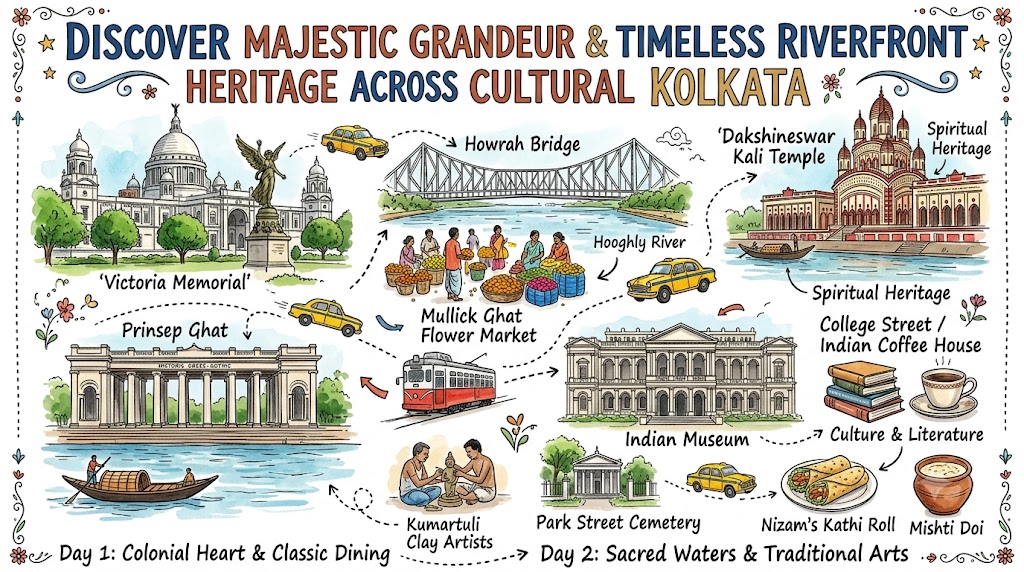
1. Day Quick Dash (Colonial Heart & Riverfront Dash)
- Target Audience: Business travelers, short layover visitors, and fast-paced explorers.
- Routing: Begin early at 6:00 AM observing the sunrise and flower auctions at Mullick Ghat. Head south by 9:30 AM to tour Victoria Memorial Hall and admire St. Paul’s Cathedral. Spend the afternoon lunching on Park Street, explore the Egyptian gallery inside the Indian Museum, and wrap up your evening with a sunset wooden boat ride at Prinsep Ghat.
2. Day Deep-Dive (North-South Heritage Split)
- Day 1 (Imperial Heart & Classic Dining): Spend the morning touring the Victoria Memorial, St. Paul’s Cathedral, and the Indian Museum. Dedicate your afternoon to browsing old book stalls along College Street and sipping coffee at the Indian Coffee House. Dine on classic Continental and Mughlai specialties on Park Street.
- Day 2 (Sacred Waters & Traditional Arts): Rise early for a morning ferry upriver to Dakshineswar Kali Temple. Cross by boat to Belur Math, return to explore the artisan alleys of Kumartuli, and finish with evening tea beside the illuminated pillars of Prinsep Ghat.
3. Complete Weekend Travel Plan (Grand Cultural Loop)
- Friday Evening: Arrive, settle into your hotel, and enjoy a relaxed dinner along the illuminated boulevard of Park Street.
- Saturday: Start with a dawn walk through the Mullick Ghat flower market, cross Howrah Bridge, take an underground metro ride to College Street for book hunting, and spend the afternoon at the Indian Museum and Victoria Memorial gardens.
- Sunday: Take a spiritual morning excursion to Dakshineswar and Belur Math, visit Kumartuli’s clay sculpting studios, browse for authentic Baluchari and Jamdani silk sarees at Gariahat, and conclude with a quiet twilight boat ride at Prinsep Ghat.
Common Tourist Mistakes to Avoid
Geographic Blunders
Attempting to visit Dakshineswar Kali Temple in the far north and Kalighat Temple in the deep south on the same afternoon will leave you exhausted in midday traffic. Keep your daily itineraries grouped by geography.
Commercial Traps
Spending precious weekend hours inside modern glass shopping malls in suburban business districts deprives you of experiencing genuine heritage, vintage lanes, and iconic colonial architecture.
Neglecting Modern/Alternative Zones
Overlooking the leafy residential lanes of South Kolkata means missing out on the city’s vibrant contemporary art galleries, indie coffee shops, and peaceful walking trails around Rabindra Sarobar Lake.
Transport Overpayment
Agreeing to arbitrary flat fares quoted by yellow cab drivers at airport exits or railway stations can be expensive. Always insist on using the official meter, visit the state-run prepaid taxi booths, or book through your rideshare apps.
Luxury Dining Bias
Eating solely inside five-star hotel dining rooms cuts you off from the city’s true culinary soul. Authentic flavors thrive in legendary, high-turnover heritage establishments like Arsalan for biryani, Nizam’s for kathi rolls, and KC Das for sweets.
Frequently Asked Questions
1. What makes a weekend trip to Kolkata distinct from other Indian metro cities?
Kolkata offers a rare blend of living colonial history, accessible heritage architecture, and an active intellectual and literary scene. Unlike fast-paced corporate centers, its classic rhythm allows weekend travelers to explore quiet river ghats, browse second-hand books, and enjoy historic dining at a comfortable, leisurely pace.
2. Which area in Kolkata is best for booking hotel accommodation during a weekend trip?
The Park Street and Camac Street central corridor is the most convenient base for first-time visitors. It places you within easy reach of Victoria Memorial, premier dining, and metro stations, helping minimize cross-city travel times throughout a short weekend stay.
3. Is it possible to see both North and South Kolkata landmarks in two days?
Yes, you can easily cover both by dedicating one full day to the north-riverfront zone and the other to the central-south heritage district. Relying on the underground metro network enables rapid north-south transit without getting caught in peak-hour surface traffic.
4. What is the most convenient way to travel from Howrah Station to Central Kolkata?
The Green Line metro provides a quick underwater transit route beneath the Hooghly River, linking Howrah Station directly to the central Esplanade junction in minutes. Alternatively, yellow taxis and app-based cabs operate around the clock from the station’s official pickup areas.
5. Are traditional wooden boat rides at Prinsep Ghat safe for families and solo travelers?
Yes, the traditional hand-rowed wooden country boats are operated by licensed local boatmen and offer a safe, gentle experience along the riverbank. It is best to take boat rides during daylight hours or at dusk, while avoiding periods of heavy seasonal monsoon downpours.
6. What local Bengali sweet dishes should a weekend traveler try first?
Begin with fresh spongy Rasgulla served warm, followed by caramelized baked Mishti Doi and seasonal Nolen Gur Sandesh during the winter months. For the freshest preparations, visit historic sweet institutions like K.C. Das, Balaram Mullick & Radharaman Mullick, or Girish Chandra Dey.
7. Does the Victoria Memorial Hall remain open to visitors on weekends and public holidays?
The surrounding gardens stay open seven days a week, but the internal museum galleries are closed on national holidays. It is best to purchase entry tickets online in advance to skip the busy ticket counter queues on Saturday and Sunday afternoons.
8. Can visitors photograph the flower auctions at Mullick Ghat without restrictions?
Personal, handheld street photography is widely accepted throughout the flower market lanes, provided you remain courteous to busy porters carrying floral bundles. Avoid setting up large tripods on narrow pathways so you do not disrupt the bustling morning trade.
9. How do travelers reach Belur Math directly from Dakshineswar Kali Temple?
The easiest and most scenic connection is the regular public ferry service that crosses the Hooghly River between the two temple landing ghats. The boat journey takes roughly ten minutes, offering panoramic river views while avoiding the long detour across the roadway bridge.
10. What budget should a traveler allocate for dining across a two-day weekend?
A realistic food budget ranges between ₹800 and ₹1,500 per day for street food and heritage cafes, or ₹2,500 to ₹4,500 per day if dining at historic fine-dining restaurants. Kolkata remains one of the most budget-friendly food capitals in India.
11. What is the dress code for visiting religious temples in Kolkata?
Visitors should wear modest, respectful attire covering shoulders and knees when visiting Dakshineswar, Kalighat, and Belur Math. Shoes and leather articles must be checked at the footwear counters outside the temple courtyards before passing through the sanctum gates.
12. When is the best time of year to plan a weekend trip to Kolkata?
The ideal travel window runs from October through March, when the weather is pleasantly cool and dry. This season coincides with colorful cultural festivals, book fairs, and clear mornings that make exploring the city on foot a comfortable pleasure.
Conclusion
Choosing Kolkata for a weekend journey is an enriching departure from ordinary vacations, trading predictable tourist routes for genuine cultural discovery. As you stand beneath the grand arches of historic monuments, drift along the tranquil waters of the Hooghly at twilight, and share conversations over hot tea in historic cafes, the city reveals its true magic. You depart not just with photographs, but with the lingering warmth, timeless charm, and poetic soul of a city that stays with you long after the trip ends.