Introduction
When modern vacation planning leans toward standard, commercialized shopping hubs and overcrowded, sterile theme parks, the soul craves an anchor. It craves a destination where travel is not merely about ticking off locations but about absorbing a living, breathing culture through its most sacred communal ritual: dining. Kolkata, the cultural capital of India, refuses to give in to superficial tourist traps.
In this city, food is a profound emotion, an artistic heritage, and a foundational pillar of family bonding. Gathering around a table with multiple generations—where children hear tales from grandparents over a grand Thali (platter)—is where the true magic of the region unfolds. If you want to bypass generic itineraries and plunge your family into deep, sensory authenticity, exploring the traditional culinary landmarks of Kolkata is the ultimate cultural voyage.
Why Kolkata is a Must Visit City
Kolkata is a crucial, non-negotiable chapter in global travel, carrying an immense cultural, literary, and historical weight that few cities across the globe can match. As the former capital of the British Raj and the cradle of the 19th-century Bengal Renaissance, its streets are living architectural museums. Geographically resting along the banks of the serene Hooghly River, it acts as the gateway to Eastern India.
For families, the practical accessibility is exceptional: the city is seamlessly tied together by extensive railway networks at Howrah and Sealdah, a highly efficient international airport, and smoothly paved national highways. This structural network allows smooth transit for multi-generational families, elderly travelers, and back-packing explorers alike.
The high-level travel circuit within Kolkata effortlessly bridges the historical charm of North Kolkata’s century-old mansions with the planned, modern sophistication of South Kolkata and Salt Lake. Navigating this circuit takes your family through an evolving timeline of heritage houses, colonial monuments, and vibrant local marketplaces.
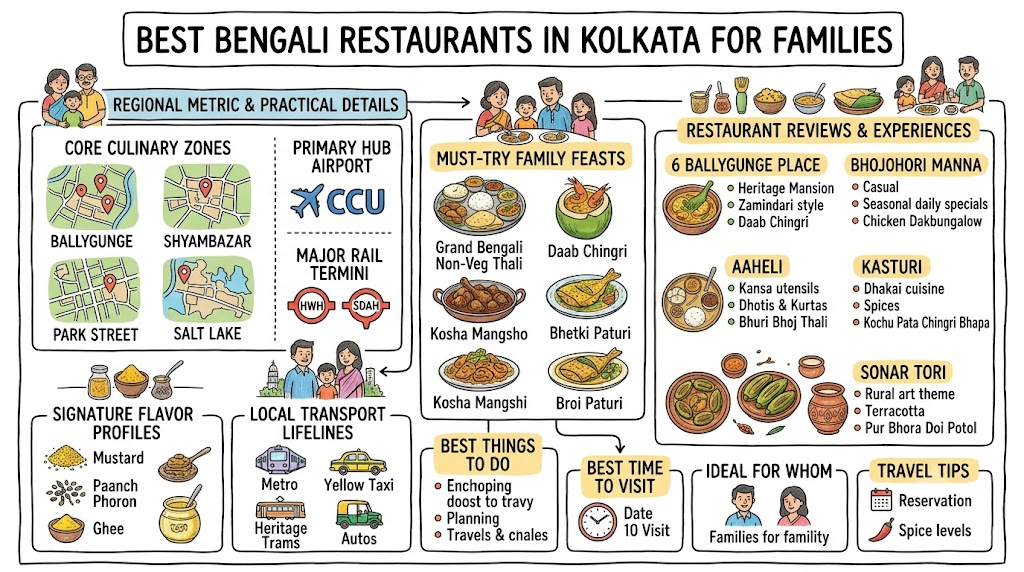
To help you visualize the foundational layout of this culinary and cultural epicentre, here is a macro-level summary of the region:
| Key Category | Regional Metric & Practical Details |
| Primary Hub Airport | Netaji Subhash Chandra Bose International Airport (CCU) |
| Major Rail Termini | Howrah Junction (HWH) & Sealdah Station (SDAH) |
| Core Culinary Zones | Ballygunge, Shyambazar, Park Street, and Salt Lake |
| Signature Flavor Profiles | Mustard paste (Kasundi), Five-spice mix (Paanch Phoron), and Ghee |
| Must-Try Family Feast | Grand Bengali Non-Veg Thali with Daab Chingri & Kosha Mangsho |
| Local Transport Lifelines | Kolkata Metro, Yellow Taxis, and Heritage Electric Trams |
Best Places or Experiences
6 Ballygunge Place
Housed inside a beautifully restored, century-old British colonial mansion in South Kolkata, 6 Ballygunge Place stands as the definitive crown jewel of fine-dining Bengali cuisine. The interior decor transports your family back to the aristocratic Zamindari (landlord) era of Bengal, featuring timeless black-and-white checkered floors, vintage hanging chandeliers, and rare archival photographs on the walls. It is a space where historical grandeur meets immaculate contemporary hospitality, making it the top choice for families looking to celebrate milestones.
The culinary philosophy here focuses heavily on reviving royal, lost recipes of ancient Bengal. Every single dish is presented with artistic precision on traditional dinnerware, maintaining an exact balance of sensory refinement and absolute comfort. The restaurant seamlessly accommodates large family gatherings, ensuring that elders find traditional comfort while younger family members enjoy the upscale, nostalgic atmosphere.
- Location: Ballygunge, South Kolkata (Approximately 12 km from Netaji Subhash Chandra Bose International Airport)
- Why it is worth visiting: It is the first premium, standalone restaurant in Kolkata dedicated entirely to traditional Bengali cuisine, offering a dining experience inside an authentic heritage property.
- Best things to do: Order the legendary Daab Chingri (prawns cooked inside a tender green coconut shell), sample their slow-steamed Bhetki Paturi wrapped in banana leaves, and indulge in the rich baked Mishri Doi.
- Best time to visit: Lunch hours between 12:30 PM and 3:30 PM are best to capture the soft, natural light filtering through the vintage stained-glass windows.
- Ideal for whom: Multi-generational families, culinary history enthusiasts, and travelers looking for an upscale celebration.
- Travel tip: Weekend lunch tables fill up days in advance, so secure a reservation online or over the phone at least 48 hours early to avoid long waiting times with children.
Bhojohori Manna
Named after a popular, retro Bengali song tracking a magical cook who traveled the world, Bhojohori Manna brings the warmth of a traditional family kitchen into a structured restaurant format. The atmosphere is casual, cheerful, and filled with the chatter of local families engaging in intense debates over politics, art, and the quality of the morning’s fresh fish market catch. The decor relies on simple wooden furniture, caricature artwork, and handwritten daily special blackboards that change based on what is fresh in the local bazaars.
The menu mimics the fluid nature of an authentic, everyday Bengali household, showcasing a brilliant execution of seasonal home-style delicacies. It strips away the intimidating formality of fine dining, encouraging families to roll up their sleeves and dig in. It is highly affordable, loud, and bursting with genuine neighborhood energy.
- Location: Ekdalia Road, Gariahat, South Kolkata (Around 6 km from Sealdah Railway Station)
- Why it is worth visiting: It offers an unmatched, highly affordable look into the daily, seasonal eating habits and home-style cooking techniques of local households.
- Best things to do: Check the blackboard for daily seasonal specials, order the perfectly spiced Chicken Dakbungalow (a colonial circuit-house recipe), and mix your rice with their aromatic Mochar Ghonto (banana flower curry).
- Best time to visit: Early evening dinner around 7:30 PM allows you to secure a table easily before the peak local rush begins.
- Ideal for whom: Budget-conscious families, solo food explorers, and travelers looking for a relaxed, casual neighborhood vibe.
- Travel tip: They are famous for their seasonal fruit-infused fish dishes; if visiting during the summer, never miss their mango-infused Aam Kasundi Ilish.
Aaheli
Located inside the iconic Peerless Inn hotel at the bustling heart of Esplanade, Aaheli holds the historic distinction of being Kolkata’s very first fine-dining Bengali restaurant. The waiters are dressed in traditional, spotless white Dhotis and Kurtas, welcoming your family with classical background string music and a royal sprinkle of rose water. The tables are laden with heavy bell-metal (Kansa) utensils, which Bengalis believe enhances the structural purity and flavor profile of the food.
Dining here is a slow, artistic process where food is served course-by-course following strict traditional laws, starting from the bitter starters (Shukto) and moving sequentially toward the rich meats and sweet finishes. The service is incredibly warm, personifying the legendary hospitality of old-world Calcutta.
- Location: Jawaharlal Nehru Road, Esplanade, Central Kolkata (Less than 2 km from Howrah Junction)
- Why it is worth visiting: It provides a luxurious, royal dining experience where food is served entirely on heavy, authentic bell-metal tableware with deep-rooted cultural etiquette.
- Best things to do: Feast on their grand, unlimited Bhuri Bhoj Thali, enjoy the perfectly textured Chhanar Payesh (cottage cheese pudding), and try the Kosha Mangsho (slow-cooked, velvety mutton curry).
- Best time to visit: Sunday afternoon lunch for a relaxed, multi-hour traditional dining experience.
- Ideal for whom: Luxury travelers, couples seeking an elegant cultural date, and families wanting to introduce elders to flawless traditional hospitality.
- Travel tip: The portions in their standalone à la carte items are quite large, so order sequentially rather than all at once to keep the hot food fresh.
Kasturi
Kasturi is the undisputed pioneer of Dhakai cuisine in Kolkata, introducing families to the intense, aromatic, and fiery flavor profiles of undivided Eastern Bengal (modern-day Bangladesh). The ambiance is straightforward, completely unpretentious, and entirely focused on the food, with tightly packed tables that are consistently filled with large families sharing massive platters. It has a high-energy, fast-paced environment where the rich scent of mustard oil and fried fish floats heavily through the air.
The kitchen specializes in complex steaming and mashing methods (Bata and Bhapa), utilizing unique herbs and generous amounts of green chilies. It provides an excellent, budget-friendly culinary education on how regional borders have historically shaped the spices and cooking habits of the Bengali people.
- Location: Mirza Ghalib Street, Park Street Area, Central Kolkata (Approximately 15 km from the airport)
- Why it is worth visiting: It is the most authentic and pocket-friendly destination to experience the specialized, fiery, and pungent flavors of traditional Dhakai and Bangladeshi cuisine.
- Best things to do: Order their multi-award-winning signature dish Kochu Pata Diye Chingri Bhapa (prawns steamed to perfection with taro leaves and mustard paste), try the Kaski Maacher Chorchori, and pair them with steaming hot white rice.
- Best time to visit: Around 1:00 PM for lunch, which ensures you get the freshest batch of steamed fish straight out of the kitchen.
- Ideal for whom: Adventurous eaters, spice lovers, and large families tracking budget-friendly traditional options.
- Travel tip: The mustard-based gravies here carry a strong, sinus-clearing kick; keep a sweet dish or a cold beverage handy if your kids are sensitive to heat.
Sonar Tori
Situated elegantly inside the City Centre 1 complex at Salt Lake, Sonar Tori is a gorgeous tribute to the rural heritage and artistic poetry of Bengal. The restaurant’s interior design is a visual masterpiece, using distressed wooden pillars, terracotta wall plaques, vintage brass keys, and hanging hand-drawn poetry scrolls that reflect the essence of rural Bengal’s art movements. It feels less like a restaurant and more like a high-end cultural gallery, perfect for introducing your family to the artistic side of the state.
The menu carefully balances the rustic, simple flavors of rural village homes with the complex, decadent dishes prepared in royal city palaces. The seating arrangements are spread out and comfortable, offering families plenty of private space to converse and dine comfortably without feeling rushed.
- Location: Salt Lake Sector 1, East Kolkata (Roughly 11 km from Netaji Subhash Chandra Bose International Airport)
- Why it is worth visiting: It provides a deeply poetic, visually stunning environment that combines rural arts, craft heritage, and high-end fine dining under one roof.
- Best things to do: Savor the Pur Bhora Doi Potol (stuffed pointed gourd in yogurt gravy), order the Dhakai Pora Mangsho (smoked roasted meat), and take a slow walk around the property to admire the terracotta installations.
- Best time to visit: Dinner service starting from 7:00 PM onwards, when the warm, artistic lighting completely transforms the mood of the restaurant.
- Ideal for whom: Interior design lovers, families looking for a quiet, spacious environment, and art enthusiasts.
- Travel tip: The restaurant has fantastic, highly photogenic backdrops; dress up in traditional ethnic wear to capture great family photographs against the heritage walls.
Offbeat Exploration: Hidden Gems Tourists Miss
The Traditional Pice Hotels of Bowbazar
Long before modern air-conditioned restaurants emerged, Kolkata’s working-class and traveling families relied on “Pice Hotels”—historic, no-frills eateries that dates back to the early 20th century. In these spaces, you do not pay for a combined menu; instead, every single element, from the fresh banana leaf plate to a single wedge of lime and a bowl of daily clear fish broth, is priced individually.
Visiting places like the iconic Swadhin Bharat Hindu Hotel near College Street gives your family a real look into historical dining, where you sit on wooden floor mats (Asans) and get served ultra-fresh, light curries cooked using zero artificial coloring.
The Early Morning Chinese Breakfast at Tirreta Bazaar
While not strictly a traditional Bengali restaurant, no family culinary journey through Kolkata is complete without witnessing the historic blending of cultures at Tirreta Bazaar (Old Chinatown).
Every morning as the sun rises, the last remaining Chinese-Indian families of the city set up street tables to sell handmade pork baos, steaming chicken noodle soups, fish ball soups, and authentic scallion pancakes. It is a vibrant, chaotic, and sensory-rich cultural ritual that generic travel brochures completely overlook.
The Century-Old Cabin Culture of North Kolkata
Tucked away in the narrow, winding alleys of North Kolkata are the historic “Cabins”—such as Dilkhusha Cabin or Mitra Cafe—which feature private wooden compartments separated by heavy curtains.
Historically, these private cabins were created during the colonial era so that orthodox families and courting couples could dine away from public view. Today, they serve old-school, legendary fusion snacks like the crispy Mutton Kabiraji (a deep-fried cutlet wrapped in an airy, lacy egg nest) and Prawn Cutlets that reveal the deep European culinary influences on traditional Bengali snacking habits.
Detailed Practical Guidance for Travelers
The following logistical summary details the core metrics for the landmark dining spaces discussed above:
| Destination | Standard Entry Fee | General Timings | Best Local Food Options Nearby | Recommended Nearby Attractions |
| 6 Ballygunge Place | No Entry Fee (Avg. Cost: ₹1,600 for family of two) | 12:30 PM – 3:30 PM & 7:00 PM – 10:30 PM | Daab Chingri, Bhetki Paturi, Baked Mihidana | Birla Temple, Lake Market, South City Mall |
| Bhojohori Manna | No Entry Fee (Avg. Cost: ₹900 for family of two) | 11:30 AM – 10:30 PM | Chicken Dakbungalow, Mochar Ghonto, Misti Doi | Gariahat Saree Bazaar, Rabindra Sarobar Lake |
| Aaheli | No Entry Fee (Avg. Cost: ₹2,500 for family of two) | 12:30 PM – 3:30 PM & 7:00 PM – 11:00 PM | Bhuri Bhoj Thali, Chhanar Payesh, Kosha Mangsho | Victoria Memorial, Indian Museum, Maidan Park |
| Kasturi | No Entry Fee (Avg. Cost: ₹1,000 for family of two) | 11:00 AM – 11:00 PM | Kochu Pata Chingri Bhapa, Dhaka Morog Pulao | Park Street Colonial Cemetery, New Market |
| Sonar Tori | No Entry Fee (Avg. Cost: ₹2,200 for family of two) | 12:00 PM – 4:00 PM & 7:00 PM – 11:00 PM | Pur Bhora Doi Potol, Dhakai Pora Mangsho | Salt Lake Central Park, Nicco Amusement Park |
Logistics & On-Ground Navigation
Local Transport Options
- The Underground Metro: The cleanest, fastest, and most time-efficient method to traverse the long north-to-south axis of Kolkata. It connects major dining hubs like Kalighat (near Ballygunge) to Esplanade and Shyambazar seamlessly, helping your family bypass the city’s notorious street-level traffic jams.
- App-Based App Cabs: Services like Uber, Ola, and InDrive operate across the city. They provide a comfortable, air-conditioned environment for families traveling with children or elderly members, especially during hot afternoon hours.
- Classic Yellow Taxis: A cultural icon of Kolkata. Ensure you ask the driver to operate on the official electronic meter, or cross-reference the estimated pricing with a ride-sharing app before stepping inside to maintain complete cost transparency.
- Auto-Richshaws & E-Rickshaws (Totis): These vehicles operate on fixed, highly affordable shared routes within specific residential zones. They are excellent for navigating the last mile from a metro station into narrow, atmospheric restaurant lanes.
Budget Planning
Pro Tip: Keep a decent amount of loose cash notes handy when exploring older neighborhoods; small heritage sweet shops and traditional rickshaws rarely accept digital wallets.
- Budget & Backpacking Tier (₹1,200 to ₹1,800 per day): This structural budget covers travel via underground metro and shared auto-rickshaws, enjoying hearty lunches at historic Pice Hotels or casual cabins, and staying in budget family guesthouses in central zones.
- Mid-Range & Comfort Tier (₹3,500 to ₹6,000 per day): This tier allows for seamless transport in app-based air-conditioned cabs, booking prime tables at heritage locations like 6 Ballygunge Place or Aaheli, and staying in comfortable, well-reviewed 3-star properties or heritage homestays.
Safety and Inclusivity Tips
- For Families: Kolkata is highly regarded as one of the safest metro cities in India. Traditional restaurants are incredibly welcoming to young kids, often going out of their way to customize the heavy spice levels down to a milder profile for children.
- For Couples: The city’s leafier, artistic southern zones, modern cafes, and lakeside walkways at Rabindra Sarobar offer an inclusive, deeply respectful, and highly comfortable atmosphere for couples exploring the city at night.
- General Safety: Street crimes are rare, but standard travel vigilance should be maintained in crowded market spaces like New Market or during peak rush hours inside local trains. Keep your personal belonging secure and stay well-hydrated.
Strategic Travel Planning Guardrails
Travel Planning Tips for Kolkata
- Time Your Seasons Wisely: Plan your main family travel between October and March. This window offers beautiful, breezy weather perfect for walking tours, street food trails, and outdoor sightseeing.
- Embrace the Digital-Cash Balance: While all mid-range and fine-dining restaurants accept digital UPI apps and credit cards, historic street vendors and local transport options require physical cash notes.
- Dress for Comfort and Culture: Pack loose, breathable cotton clothing. When visiting older heritage zones or traditional religious sites, dress modestly to respect local customs.
- Learn Key Local Phrases: Learning a few basic Bengali words like “Kemon achen?” (How are you?) or “Khub bhalo” (Very good) immediately builds a warm, friendly connection with local waiters and cab drivers.
- Reserve Prime Weekend Tables Early: Sunday lunches are a sacred ritual for local families; always call ahead to reserve your spot by Friday evening to avoid long wait times.
Common Mistakes to Avoid
- Over-Packing the Daily Itinerary: Do not try to combine deep North Kolkata exploration and South Kolkata dining on the exact same afternoon; the cross-town traffic will leave your family exhausted.
- Skipping the Street Food Safety: Do not completely skip the street food out of fear. Instead, choose highly crowded, popular stalls where the high turnover ensures the food is prepared fresh right in front of you.
- Assuming All Bengali Food is Spicy: Avoid thinking everything is fiery hot; classic items like Cholar Dal (sweet chana dal) and Basanti Pulao are delightfully sweet and perfectly suited for children.
- Ignoring the Mid-Day Restaurant Closures: Many traditional, authentic kitchens close their doors strictly between 4:00 PM and 7:00 PM to prepare for dinner; plan your meal times carefully.
- Overpaying for Unmetered Taxis: Never board a yellow taxi at major transit stations without confirming the use of the official meter or pre-booking an app cab to avoid price gouging.
Suggested Itinerary Blueprints
1. One-Day Quick Dash (The Heritage Food Loop)
Designed for families on a tight schedule. Start with a heritage breakfast of fluffy Luchi and unskinned potato curry at Adi Haridas Modak in Shyambazar. Spend your morning exploring the magnificent Marble Palace, followed by a grand, royal course-by-course lunch at Aaheli in Esplanade. End your evening taking a peaceful sunset walk around the Victoria Memorial before indulging in dinner at Kasturi near Park Street.
2. Two-Day Deep-Dive (North to South Cultural Convergence)
- Day 1: Dedicate the morning to historic North Kolkata. Visit the ancestral home of Rabindranath Tagore at Jorasanko. Have a casual, budget-friendly lunch at Bhojohori Manna. Spend the evening browsing old books along the iconic College Street, and enjoy a traditional Mutton Kabiraji snack at Dilkhusha Cabin.
- Day 2: Move seamlessly into the sophisticated South. Start your day admiring the architecture of the Birla Temple. Book a premier afternoon table at 6 Ballygunge Place for an authentic Thali feast. Spend your evening shopping for authentic handloom sarees at Gariahat market, and unwind with dessert at Sonar Tori in Salt Lake.
3. Complete Weekend Travel Plan (The Ultimate Gastronomic Circuit)
- Friday: Arrive in the city and check into your hotel. Head straight to the Park Street area for an elegant evening dinner at Kasturi to introduce your family to pungent Dhakai flavors.
- Saturday: Wake up early at 6:00 AM for the legendary Chinese street breakfast at Tirreta Bazaar. Spend the afternoon cooling off inside the Indian Museum. For dinner, experience the artistic, poetic ambiance and rural-themed dishes of Sonar Tori in Salt Lake.
- Sunday: Enjoy a slow morning by the banks of the Hooghly River at Princep Ghat. Head over to 6 Ballygunge Place for their signature Sunday lunch buffet. End your complete weekend journey shopping for authentic sweets like Rosogollas and Sondesh from a heritage sweet shop to pack for home.
Common Tourist Mistakes to Avoid
- Geographic Blunders: Many tourists mistakenly try to plan a visit to Dakshineswar Kali Temple in the far north and a dinner reservation in South Kolkata’s Ballygunge on the exact same afternoon. This requires crossing the entire length of the city during peak office hours, resulting in hours trapped in frustrating gridlocks. Group your activities strictly by geographic zones.
- Commercial Traps: Spending precious vacation evenings inside modern, generic shopping malls rather than exploring atmospheric local spaces like the street markets of Gariahat or the clay artisan quarters of Kumartuli. The malls look identical to those anywhere else in the world, while the old quarters contain the true soul of the city.
- Neglecting Modern/Alternative Zones: Forgetting to explore the quieter, planned expansions of Salt Lake and New Town, which house incredible artistic parks, clean walkways, and spacious experiential restaurants that offer a beautiful, relaxing contrast to the dense chaos of central Calcutta.
- Transport Overpayment: Boarding local yellow taxis without demanding the electronic meter or failing to cross-check rates on ride-sharing apps. Unscrupulous drivers frequently quote inflated flat rates to tourists, especially outside historic railway junctions or major hotels.
- Luxury Dining Bias: Believing that authentic Bengali cuisine can only be experienced inside expensive, high-end fine-dining spaces. Missing out on simple, street-level culinary vendors or century-old cabins deprives your family of tasting the historical foundation of the local palate.
Frequently Asked Questions
1. What makes traditional Bengali cuisine completely unique compared to other North Indian cuisines?
Traditional Bengali food focuses heavily on subtle balances of sweetness and pungent spice, relying on mustard oil as its primary cooking medium rather than ghee or vegetable oil. It also uses a signature five-spice blend called Paanch Phoron (mustard, fennel, fenugreek, cumin, and black seed) and structures meals strictly in sequential courses, whereas North Indian food is generally served all at once.
2. Are there good vegetarian food choices available at authentic Bengali family restaurants?
Yes, absolutely. While Bengal is famous for its fish, its vegetarian repertoire is massive and incredibly complex. Traditional restaurants serve spectacular vegetarian delicacies like Mochar Ghonto (spiced banana flower), Dhokar Dalna (lentil cakes in rich gravy), and Aloo Posto (potatoes cooked in a rich, comforting poppy seed paste).
3. What exactly is a Bengali Thali and how should a family approach ordering it?
A Bengali Thali is a massive, pre-curated platter designed to give you a complete tour of the cuisine in a single sitting. It includes rice, ghee, dal, fried vegetables, multiple vegetarian curries, fish, mutton, chutney, papad, and traditional sweets. For a family, ordering one or two grand Thalis alongside specific standalone à la carte items is the best way to sample everything without wasting food.
4. How do traditional restaurants manage and adjust the heat levels for families traveling with children?
Most mid-range and fine-dining establishments are highly accommodating. When placing your order, simply inform your server that you are dining with children, and the kitchen will happily reduce the number of fresh green chilies or tone down the pungent mustard pastes in items like Paturi or Chingri Malai Curry.
5. Is it culturally acceptable or required to eat with your hands at these traditional dining establishments?
Eating with your hands is the preferred, culturally authentic way to enjoy a Bengali meal, as it allows you to carefully de-bone fish and mix gravies perfectly with rice. However, it is absolutely not required; all modern and traditional restaurants readily provide clean cutlery and spoons if your family feels more comfortable using them.
6. Which signature fish dishes are absolutely mandatory to order for a first-time family traveler?
You should absolutely order Bhetki Paturi (boneless fish fillets coated in mustard paste and steamed inside banana leaves) because it has no bones and is easy for kids to eat. For a richer experience, try the Chingri Malai Curry (prawns in a mild, silky coconut milk gravy) or the legendary Ilish Macher Jhol (Hilsa fish curry) if you want to experience the local favorite.
7. Do these heritage restaurants require prior table reservations, especially during the weekend lines?
Yes, prior reservations are highly recommended, especially for lunch slots on Saturdays and Sundays. Local families treat weekend dining as a major ritual, and waiting times outside popular hubs like 6 Ballygunge Place or Sonar Tori can easily cross an hour, which can be difficult when traveling with young children or elders.
8. What is the historic significance behind the use of bell-metal utensils at premium dining places?
Bell-metal, locally known as Kansa, is an ancient alloy of copper and tin. Historically, the royal families and aristocrats of Bengal dined exclusively on Kansa plates because traditional Ayurveda states that the metal has natural therapeutic properties, purifies the food, and helps retain the optimal temperature of hot rice and ghee.
9. Are these traditional culinary locations easily accessible for elderly family members using wheelchairs?
Modern fine-dining hubs located within hotels or shopping centers like Aaheli and Sonar Tori offer complete wheelchair accessibility with ramps and smooth elevator access. However, older heritage properties in South or North Kolkata may have narrow staircases and vintage layouts; it is always best to call the specific outlet ahead of time to confirm ground-floor seating.
10. What unique sweet dishes should we look for beyond the standard, globally famous Rosogolla?
You must look for Mishti Doi (classic rich, fermented sweet yogurt), Bhapa Sondesh (steamed cottage cheese sweet), Malpua (syrup-soaked pancakes), and during the winter months, anything made with Nolen Gur (date palm jaggery), which has an incredible, smoky caramel flavor profile that cannot be replicated.
11. How much should an average family of four expect to spend on a comfortable lunch at a mid-range hub?
At a mid-range neighborhood restaurant like Bhojohori Manna or Kasturi, a hearty, fulfilling family lunch consisting of rice, starters, two fish dishes, a mutton dish, and desserts will cost approximately ₹1,500 to ₹2,200 in total. At premium heritage locations, the cost will range from ₹3,500 to ₹5,000.
12. Can we safely pack and carry traditional Bengali fish curries or sweets back home on a flight?
Traditional fish curries with rich gravies do not travel well on flights due to airline liquid restrictions and spoilage risks. However, you can easily carry dry sweets like Sondesh or semi-dry Rajbhog. Major heritage sweet shops at the airport provide specialized, vacuum-sealed travel packaging designed to keep sweets fresh for long journeys.
Conclusion
Choosing a culinary and cultural journey through the traditional family restaurants of Kolkata is far more than an ordinary vacation; it is an emotional and intellectual reward that stays with your family for a lifetime.
As you sit together around a table laden with historic delicacies, sharing stories while breaking pieces of steamed fish, you are not just consuming food—you are actively participating in a rich legacy of artistic devotion that has survived for centuries. It provides your family with a genuine, heartfelt connection to the soul of India, proving that the sweetest travel memories are always forged when we slow down, honor tradition, and dine together as one.