Introduction
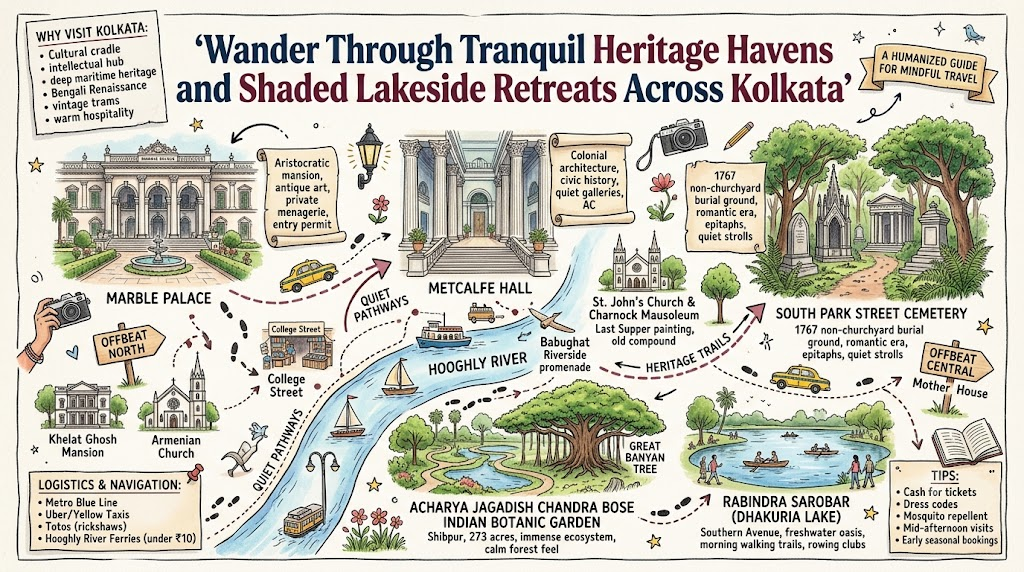
Step away from the cacophony of mainstream holiday destinations where crowds rush between commercial selfie points and ticketed queues. Kolkata possesses a distinct pulse that flourishes away from tourist buses, inviting travelers into quiet colonial corridors, overgrown neoclassical gardens, and serene lakeside embankments.
Here, authenticity is not staged for visitors; it lives in sleepy neighborhoods, timeless library halls, and century-old banyan canopies. For those craving soulful exploration, mindful walks, and genuine cultural immersion, the hidden corners of the City of Joy offer an unmatched sanctuary.
Why Kolkata is a must-visit city
Kolkata is the cultural and intellectual cradle of modern India, carrying monumental weight across literature, political philosophy, and architecture. Positioned along the eastern bank of the Hooghly River, this historic metropolis bridges deep maritime heritage with the vibrant artistic movements of the Bengal Renaissance. Unlike heavily commercialized travel circuits, the city retains its vintage tram tracks, sprawling red-brick mansions, and warm hospitality that welcomes every traveler archetype.
Reaching Kolkata is effortless through Netaji Subhas Chandra Bose International Airport (CCU), major rail terminals like Howrah and Sealdah, and arterial highways linking eastern India. The city’s peaceful travel circuit curves from heritage quarters in the north to lush botanical expanses across the river and tranquil urban lakes in the south.
| Destination Factor | Key Travel Metric |
|---|---|
| Geographic Zone | Lower Gangetic Plain, West Bengal |
| Ideal Seasons | Late October to early March |
| Primary Transit Hubs | Howrah Junction (HWH), Kolkata Airport (CCU) |
| Intra-City Mobility | Metro rail, yellow taxis, app cabs, ferry systems |
| Typical Exploration Pace | 3 to 5 days for relaxed offbeat itineraries |
Best Places or Experiences
South Park Street Cemetery
Hidden behind towering perimeter walls along one of the city’s busiest streets, the South Park Street Cemetery opened in 1767 as one of the world’s earliest non-churchyard burial grounds. Shaded by ancient mahogany trees, ferns, and sprawling moss, its towering Gothic, Indo-Saracenic, and classical urns present a striking stillness.
Walking these secluded gravel trails feels like stepping straight into a forgotten romantic era. The damp earth, calls of songbirds, and intricate stone inscriptions provide a tranquil sanctuary right in the middle of urban Kolkata.
Historic tombs under lush foliage at South Park Street Cemetery.
- Location: Park Street, Mullick Bazar, Central Kolkata (approx. 5 km from Howrah Station).
- Why it is worth visiting: A masterclass in colonial funerary architecture offering complete, verdant silence inside the downtown core.
- Best things to do: Read the poignant epitaphs of historic figures, photograph moss-laden neoclassical obelisks, and sketch under the mahogany canopies.
- Best time to visit: November to February, ideally between 10:00 AM and 1:00 PM for filtered sunlight.
- Ideal for whom: Solitary strollers, photographers, and history enthusiasts.
- Travel tip: Wear mosquito repellent and carry water, as vendors are not permitted inside the gates.
Marble Palace
Tucked deep within the labyrinthine alleyways of North Kolkata, the Marble Palace was built in 1835 by Raja Rajendra Mullick. Constructed from ninety-six artistic varieties of imported Italian marble, this private neoclassical mansion blends European palace layouts with traditional open-air Bengali inner courtyards.
The surrounding grounds host quiet green lawns, Victorian fountains, classical marble statuary, and an antique private menagerie. Inside, dusty chandeliers and original master canvases by Rubens and Reynolds reflect a surreal, peaceful pocket of 19th-century aristocratic life.
Timeless classical courtyard inside North Kolkata’s Marble Palace.
- Location: Muktaram Babu Street, Jorasanko, North Kolkata (approx. 3 km from Howrah Station).
- Why it is worth visiting: An extraordinary private residence preserved in time, featuring global antiques and neoclassical courtyards.
- Best things to do: View private collections of Victorian sculptures, admire original master paintings, and relax beside quiet marble courtyard fountains.
- Best time to visit: Weekday mornings around 10:30 AM before street alleys fill with commercial activity.
- Ideal for whom: Architecture lovers, fine art scholars, and quiet observers.
- Travel tip: Secure a free entry permit from the West Bengal Tourism Information Centre on B.B.D. Bagh at least 24 hours ahead.
Metcalfe Hall
Commanding the intersection of Strand Road and Hare Street, Metcalfe Hall was completed in 1844 inspired by the Temple of the Winds in Athens. Featuring thirty giant Corinthian columns standing over a high podium, it previously housed the Imperial Library before modern restoration converted it into a calm, air-conditioned museum dedicated to the city’s civic history.
The grand staircases, polished teakwood floorings, and lofty ceilings isolate you entirely from riverfront harbor noises outside. It remains one of the quietest indoor public spaces in Kolkata to read, study antique maps, and take in the sheer scale of British classical design.
Grand Corinthian colonnade defining the facade of Metcalfe Hall.
- Location: Hare Street, B.B.D. Bagh, Central Kolkata (approx. 2 km from Howrah Station).
- Why it is worth visiting: An uncrowded architectural jewel showcasing Greek Revival design, vintage photography, and historic exhibits.
- Best things to do: Explore archival photographs of old Calcutta, admire Corinthian colonnades, and rest in quiet, temperature-controlled gallery corridors.
- Best time to visit: Mid-afternoon on weekdays between 1:00 PM and 3:30 PM.
- Ideal for whom: Solo travelers, book lovers, and architectural purists.
- Travel tip: Combine this with a visit to the nearby riverside promenade at Babughat for breezy river views.
Acharya Jagadish Chandra Bose Indian Botanic Garden
Established in 1787 on the western bank of the Hooghly River at Shibpur, this sprawling 273-acre sanctuary was formerly called the Royal Botanic Garden. Shaded avenues curve past tranquil freshwater lakes, rare Amazonian water lilies, and towering mahogany stands that muffle all modern vehicle sounds.
Its crown jewel is the 250-year-old Great Banyan Tree, whose vast canopy spreads across multiple acres supported by thousands of aerial prop roots. Standing beneath this living cathedral feels like resting in an endless, quiet forest far from any human settlement.
The sprawling canopy of the historic Great Banyan Tree at Shibpur.
- Location: Shibpur, Howrah (approx. 8 km from central Kolkata via Vidyasagar Setu).
- Why it is worth visiting: One of Asia’s oldest and largest botanical gardens, home to an immense single-tree ecosystem.
- Best things to do: Walk the silent perimeter trails of the Great Banyan, birdwatch beside artificial lakes, and observe exotic palm species.
- Best time to visit: Early mornings from 8:00 AM to 11:00 AM between October and February.
- Ideal for whom: Nature lovers, botanists, and peaceful morning wanderers.
- Travel tip: Private vehicles are banned inside; rent an electric buggy near the entrance gate if walking long distances is difficult.
Rabindra Sarobar (Dhakuria Lake)
Stretching over 192 acres in South Kolkata, Rabindra Sarobar is a designated national lake surrounded by dense clusters of deciduous trees and quiet paved paths. Early mornings here feature tranquil waters reflecting the sky, rowers gliding in wooden sculls, and local elders immersed in peaceful meditation.
It provides a quiet green buffer zone where traffic hums fade into rustling bamboo leaves and water birds diving for fish. Unlike busier downtown parks, this lake area remains an authentic community sanctuary where visitors read, journal, and relax without commercial intrusion.
Calm waters and morning reflections at Rabindra Sarobar lake.
- Location: Southern Avenue, Ballygunge/Dhakuria, South Kolkata (approx. 9 km from Howrah Station).
- Why it is worth visiting: An expansive freshwater oasis renowned for clean walking trails, vintage rowing clubs, and rich migratory birdlife.
- Best things to do: Watch graceful morning rowing drills, take meditative laps around the lake trail, and photograph winter migratory birds.
- Best time to visit: Sunrise to 9:00 AM, or late afternoon from 4:00 PM to 6:00 PM.
- Ideal for whom: Fitness walkers, mindfulness practitioners, and birdwatchers.
- Travel tip: Plastic bags and loud music are strictly banned within the lake perimeter by green tribunal mandates.
Offbeat Exploration: Hidden Gems Tourists Miss
St. John’s Church and the Job Charnock Mausoleum
Constructed in 1787 using stone taken from the ruins of ancient Gaur, St. John’s Church sits within a quiet, tree-shaded compound in the civic center. Inside rests Johann Zoffany’s famous depiction of the Last Supper painted with 18th-century Calcuttan aristocrats as biblical disciples. Outside on the quiet lawn stands the octagonal Moorish-styled mausoleum of Job Charnock, the traditional founder of British Calcutta.
The Armenian Church of the Holy Nazareth
Hidden off the commercial lanes of Burrabazar, this 1724 church complex belongs to one of Kolkata’s earliest migrant mercantile communities. The courtyard is paved with ancient carved tombstones written in graceful Armenian script, sheltered by tall frangipani trees. Stepping through its heavy iron gates immediately removes you from the surrounding wholesale trade frenzy into centuries-old spiritual quiet.
Khelat Ghosh Mansion and the Pathuriaghata Courtyards
While tourists flock to big public museums, Pathuriaghata in North Kolkata holds forgotten aristocratic mansions that retain stunning private music halls and inner courtyards. Walking through the quiet porticos of Khelat Ghosh Mansion reveals classical Corinthian pillars, antique Belgian glassware, and a peaceful marble courtyard that whispers stories of musical gatherings from centuries past.
Detailed Practical Guidance for Travelers
| Destination | Standard Entry Fee | General Timings | Best Local Food Options Nearby | Recommended Nearby Attractions |
|---|---|---|---|---|
| South Park Street Cemetery | ₹50 per person | 10:00 AM – 5:00 PM | Kathi rolls at Kusum Rolls; tea and snacks on Park Street | South Park Street area heritage cafes, Mother House |
| Marble Palace | Free (Permit required) | 10:00 AM – 4:00 PM (Closed Mon & Thu) | Traditional kachori and sweets at Girish Chandra Dey | Jorasanko Thakur Bari, Tagore House, College Street |
| Metcalfe Hall | ₹20 per person | 10:00 AM – 5:00 PM (Closed Mon) | Classic British club fare and toast at Fairlie Place stalls | General Post Office, St. John’s Church, Babughat |
| Botanical Garden Shibpur | ₹100 per person | 8:00 AM – 5:00 PM (Closed Mon) | Traditional fish-rice meals along Shibpur Main Road | Vidyasagar Setu viewpoints, Howrah Railway Museum |
| Rabindra Sarobar | Free | 5:30 AM – 7:30 PM | Artisanal coffees, sourdough, and tea on Southern Avenue | Lake Kali Bari, Birla Academy of Art and Culture |
Logistics & On-Ground Navigation
Local Transport Options
- Kolkata Metro: Use the North-South Line (Blue Line) to reach quiet heritage pockets in Central and North Kolkata without getting stuck in traffic.
- Yellow Taxis & App Cabs: Yellow metered taxis are everywhere, but Uber and the local Yatri Sathi app give you fixed, reliable upfront rates.
- Electric Rickshaws (Totos): Best for navigating tight neighborhood lanes in residential areas like Shibpur, Jorasanko, and Southern Avenue.
- Hooghly River Ferries: Take the public ferry between Howrah, Fairlie Ghat, and Babughat for a scenic, breeze-filled commute across the water for under ₹10.
Budget Planning
- Budget/Backpacking Tier (₹1,000 – ₹1,800 per day): Stay in guesthouses around central Kolkata, use the metro and municipal ferries, and eat authentic local street food like telebhaja, kachoris, and fish meals.
- Mid-Range/Comfort Tier (₹3,500 – ₹7,000 per day): Choose boutique heritage homestays in South or North Kolkata, rely on app-based air-conditioned cabs, and dine at classic clubs and regional Bengali specialty restaurants.
Safety and Inclusivity Tips
- For Families: The green grounds of the Botanic Garden and the open walkways around Rabindra Sarobar are safe, level, and well-suited for strollers and senior citizens.
- For Couples: Riverside ghats and park benches are relaxed and scenic; stick to well-lit main walking trails during late afternoon visits.
- General Safety: Kolkata is one of India’s safest urban destinations. Exercise standard street sense in crowded transit terminals and keep small money ready for local tickets.
Strategic Travel Planning Guardrails
Travel Planning Tips for Kolkata
- Secure your seasonal bookings early if traveling between November and January, when cultural festivals and cool weather draw heritage enthusiasts.
- Always keep ₹50 to ₹100 in physical cash handy, as historic ticket counters and ferry operators do not always have stable online network connections.
- Respect dress codes and photography restrictions inside functioning heritage places, colonial churches, and private aristocratic homes.
- Pack comfortable cotton walking shoes to easily handle vintage cobblestone paths, cemetery grounds, and dusty botanical trails.
- Schedule your visits around the traditional afternoon lull between 1:00 PM and 3:30 PM, when city streets quiet down and gallery spaces are emptiest.
Common Mistakes to Avoid
- Packing your itinerary with too many distant sites, turning a quiet cultural trip into hours stuck in dense street traffic.
- Assuming heritage sites open daily; many municipal libraries, palaces, and botanical centers close to visitors on Mondays.
- Skipping local neighborhood bakeries and sweetshops in favor of familiar modern food chains.
- Relying exclusively on road vehicles instead of taking the scenic, faster river ferries.
- Skipping North Kolkata’s residential morning walks, where the real heritage and neighborhood life of the city are best experienced.
Suggested Itinerary Blueprints
1. Day Quick Dash (Central Heritage & Riverside Calm)
- Target Audience: Solo wanderers, business travelers, and layover visitors seeking a quiet daytime reset.
- Morning: Start at 9:00 AM walking the shaded trails of South Park Street Cemetery before taking a short taxi ride to Metcalfe Hall.
- Afternoon: Stroll past the courtyard memorials at St. John’s Church and conclude your trip with a quiet sunset boat ride from Babughat across the Hooghly.
2. Day Deep-Dive (Aristocratic North to Southern Waters)
- Day 1 (Northern Leg): Begin with a pre-arranged morning tour of the Marble Palace, explore quiet book stalls around College Street, and visit the serene courtyards of Jorasanko Thakur Bari.
- Day 2 (Southern Leg): Take a peaceful sunrise walk along Rabindra Sarobar, enjoy a relaxed breakfast at a Southern Avenue cafe, and spend your afternoon admiring regional artwork at the Birla Academy.
3. Complete Weekend Travel Plan (The Grand Nature & Heritage Circuit)
- Friday: Arrive, check into a restored heritage guesthouse, and take an evening walk through the illuminated, quiet colonial perimeter of Dalhousie Square.
- Saturday: Take an early morning trip across Vidyasagar Setu to the Shibpur Botanic Garden for a quiet morning beneath the Great Banyan, followed by afternoon tea on Park Street and a sunset cemetery walk.
- Sunday: Wake up early to watch scullers glide across Rabindra Sarobar, visit the Armenian Church in the old quarters, and finish your weekend with traditional Bengali sweets at a heritage confectionery.
Common Tourist Mistakes to Avoid
Geographic Blunders
Attempting to bundle North Kolkata’s narrow heritage lanes with South Kolkata’s lake districts on the same morning wastes precious hours in traffic. Group your visits by distinct zones: North, Central, and South.
Commercial Traps
Spending your evenings in modern shopping malls strips away the real charm of your trip. Instead, spend that time along the open-air riverfronts, peaceful residential avenues, and historic courtyards where the city’s character thrives.
Neglecting Modern/Alternative Zones
Many visitors focus only on colonial landmarks and overlook relaxed residential areas like Hindustan Park and Southern Avenue. These leafy avenues feature quiet lifestyle stores, art galleries, and calm coffee spaces nestled inside retro-art-deco homes.
Transport Overpayment
Unregulated private cab drivers outside railway stations and airports often demand flat inflated fares. Always insist on the official meter or book directly through reliable app platforms like Yatri Sathi or Uber.
Luxury Dining Bias
Limiting your meals to upscale hotel dining rooms means missing the authentic culinary soul of Bengal. Make time for century-old sweetshops, fresh neighborhood kachori stalls, and traditional home-style fish meals served in authentic local eateries.
Frequently Asked Questions
1. What makes Kolkata an ideal destination for travelers seeking peaceful vacations?
Unlike commercial holiday towns that rely on noisy attractions, Kolkata preserves an authentic, slow-paced lifestyle. You can spend tranquil hours under ancient botanical canopies, explore quiet neoclassical libraries, and stroll serene lakeside paths without persistent commercial pushes or heavy tourist crowds.
2. How do I obtain entry permission to visit the historic Marble Palace?
You must secure a free visitor permit at least 24 hours in advance from the West Bengal Tourism Information Centre on B.B.D. Bagh. Bring government-issued identification; remember that the private mansion stays closed to outside visitors on Mondays and Thursdays.
3. When is the best time of year to take quiet outdoor walks in Kolkata?
The most pleasant period spans from late October through early March. Winter mornings and afternoons bring clear blue skies, pleasant humidity, and comfortable temperatures ranging between 14°C and 25°C, creating ideal conditions for scenic photography and relaxed neighborhood walking tours.
4. Are early morning walks at Rabindra Sarobar safe for solo travelers?
Yes, Rabindra Sarobar is exceptionally safe for solo wanderers, fitness enthusiasts, and photographers. The lakeside path is monitored by security personnel, used daily by local rowing clubs and morning walkers, and protected against noisy motor traffic and commercial vehicles.
5. How much time should I plan for exploring the Shibpur Botanic Garden?
Plan for at least three to four hours. The grounds encompass more than 270 acres, so reaching the historic Great Banyan Tree, walking around the freshwater lakes, and exploring the palm groves requires plenty of relaxed, unhurried walking across expansive paved pathways.
6. Can I visit South Park Street Cemetery without an advance ticket booking?
Yes, you can purchase tickets directly at the entrance gate on Park Street for a nominal fee of ₹50. The ticket counter operates smoothly; just ensure you carry small cash notes, as local digital payment terminals occasionally experience temporary network interruptions.
7. Which local transport option is quietest for getting around the city?
The underground Blue Line of the Kolkata Metro is fast, air-conditioned, and cuts through congested central streets with ease. Alternatively, taking the public river ferries along the Hooghly River offers a peaceful commute with wide-open breezes and scenic skyline vistas.
8. What should travelers pack for heritage walking tours through Kolkata?
Pack breathable cotton clothing, comfortable walking sneakers, a refillable water bottle, and reliable mosquito repellent for shaded cemeteries and botanical trails. During December and January, carry a light jacket or wool shawl for cool morning and late evening strolls.
9. Are photography permits required inside restored heritage buildings like Metcalfe Hall?
Non-commercial casual smartphone photography is generally permitted inside common exhibition galleries at Metcalfe Hall. However, professional setups involving tripods, external flash units, or commercial film gear require written authorization from the Archaeological Survey of India or on-site administrators.
10. What authentic vegetarian food options are available near these heritage spots?
Central and North Kolkata feature historic vegetarian food institutions serving traditional hing-kachoris, club kachoris, and samosas. In addition, legacy sweet shops like Girish Chandra Dey and Putiram offer famous handmade Bengali delicacies like sandesh, mishti doi, and rasgullas.
11. Is Kolkata suitable for elderly travelers looking for slow-paced vacations?
Yes, the city’s flat terrain, abundance of shaded public parks, and readily available point-to-point yellow taxis make it very welcoming for seniors. Choosing destinations with paved trails like Metcalfe Hall and Rabindra Sarobar ensures smooth, comfortable mobility throughout the day.
12. Why do seasoned travelers prefer offbeat Kolkata over mainstream heritage circuits?
Offbeat Kolkata lets you connect directly with living culture rather than roped-off commercial exhibits. You can read in vintage libraries, chat with artisans in historic alleys, and unwind beside quiet lakes, discovering deep cultural authenticity that standard tourist itineraries overlook.
Conclusion
Choosing the quiet path through Kolkata transforms an ordinary vacation into an inspiring cultural journey. Away from noisy street junctions and rushed itineraries, the city reveals its true character: thoughtful, poetic, and steeped in history. Wandering among ancient banyan roots, timeless library halls, and calm lakeside waters offers an enriching reminder that the most memorable travel moments unfold when we slow down and listen.