Introduction
While conventional culinary travel often funnels visitors toward sanitized food halls, Michelin-hyped dining rooms, or cookie-cutter tourist avenues, Kolkata offers an entirely unscripted gastronomic encounter. In this historic riverine metropolis, dining is neither a hurried bodily necessity nor an algorithmic social trend; it is a community obsession and an intellectual pursuit woven into everyday urban life. Across narrow 19th-century alleyways, century-old cabin eateries, steaming roadside woks, and smoky Mughlai ovens, cooking techniques remain steadfastly rooted in generational pride.
To taste Kolkata is to consume centuries of layered regional migrations, colonial friction, and regional resourcefulness. From the delicate mustard tang of freshwater carp cooked in cold-pressed oil to fragrant saffron rice cradling a melt-in-the-mouth potato, the city reveals its true identity one bite at a time.
Why Kolkata is a must-visit city
Kolkata is a living, breathing open-air culinary archive shaped by centuries of global cross-currents. As the former capital of British India and a historic trading center on the Hooghly River, the city welcomed Cantonese dockworkers, Baghdadi Jewish bakers, Anglo-Indian cooks, Armenian merchants, and exiled Awadhi royalty. Each community left an indelible imprint on the local palate, resulting in a dining landscape where European chops, Indo-Chinese dumplings, and royal Nizami gravies sit within blocks of one another.
Practical accessibility enhances Kolkata’s appeal for epicurean travelers of every budget. Netaji Subhas Chandra Bose International Airport links the city globally, while the historic Howrah and Sealdah rail hubs serve domestic routes. Inside the city, the extensive underground metro, nostalgic yellow Ambassador cabs, suburban trains, and ferry boats make hopscotching between North Kolkata’s heritage cabin eateries and South Kolkata’s leafy dessert avenues seamless.
The food circuit centers on clear neighborhood hubs: Central Kolkata’s office-hour street alleys, North Kolkata’s nostalgic snacking dens, Bowbazar’s early morning markets, and Park Circus’s rich biryani corridor.
| Dimension | Details |
| Geographic Zone | Lower Gangetic Plain, West Bengal, Eastern India |
| Peak Food Season | October to March (Nolen Gur, winter greens, pleasant walking weather) |
| Primary Transit Gateways | Howrah Station (HWH), Sealdah Station (SDAH), Netaji Subhas Chandra Bose Airport (CCU) |
| Signature Flavor Base | Mustard oil (shorsher tel), five-spice blend (panch phoron), kasundi, kewra water |
| Recommended Stay Duration | 3 to 5 Full Days |
Best Places to Visit in Kolkata at Night
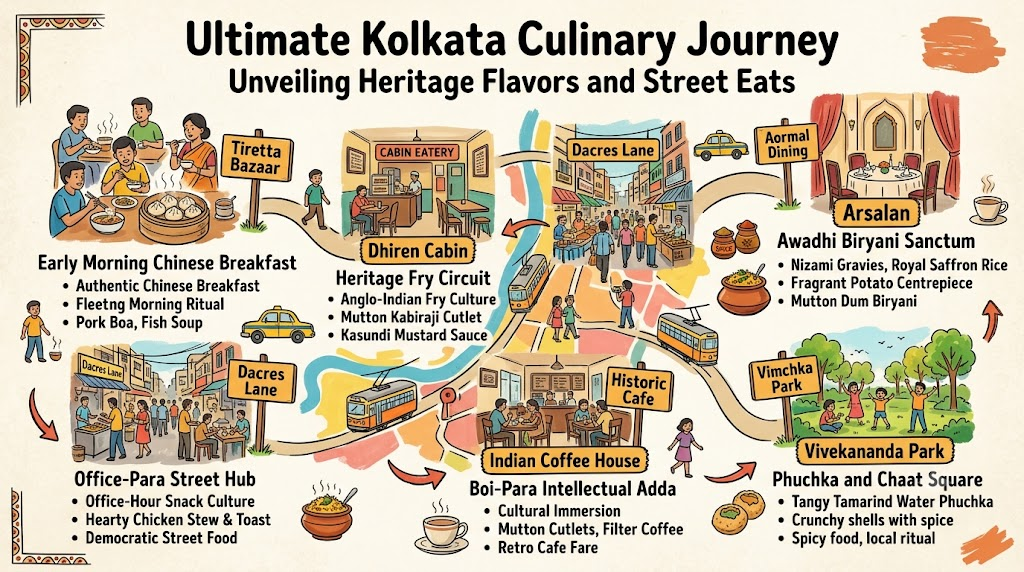
Tiretta Bazaar Early Morning Chinese Breakfast
Tucked away in the tangled lanes of central Kolkata behind Poddar Court lies Tiretta Bazaar, affectionately celebrated as the city’s Old Chinatown. Long before sunrise, generational vendors of Chinese descent set up makeshift tables beneath peeling colonial facades. Large aluminum steamers release fragrant steam into the cool morning air, loaded with pork belly buns, tender fish meatball soup, and pan-fried wontons.
This open-air breakfast market is a fleeting culinary ritual that vanishes almost entirely by the time standard morning office traffic begins. Pulling up a rickety plastic stool here to sip steaming broth laced with scallions and dipping hearty baozi into house-made fermented chili paste connects you to a migrant legacy dating back to the late 18th century.
- Location: Sun Yat Sen Street, Bowbazar, Central Kolkata (approx. 2.5 km east of Howrah Station).
- Why it is worth visiting: One of India’s only authentic open-air Chinese street breakfast markets.
- Best things to do: Sip pork meatball broth, eat freshly steamed chicken dumplings, and buy sweet glutinous sesame balls.
- Best time to visit: 6:15 AM to 7:45 AM on weekends for maximum vendor variety.
- Ideal for whom: Early risers, street-food purists, and cultural photographers.
- Travel tip: Arrive no later than 7:00 AM; the most sought-after pork bao and wonton broths typically sell out completely within 90 minutes.
Dhiren Cabin and the Heritage Fry Circuit of North Kolkata
North Kolkata’s “cabin” eateries emerged during the British colonial era as discreet dining spots with wooden partitions, allowing conservative families, nationalist thinkers, and women to dine away from the public gaze. Established in 1938, Dhiren Cabin in Sovabazar remains a time capsule preserving this dining tradition. The air smells of sizzling oil, breadcrumbs, and pungent kasundi (fermented Bengali mustard sauce).
The star here is the Mutton Kabiraji cutlet—a corruption of the English term “coverage cutlet”—featuring spiced minced meat coated in a crisp, delicate egg-batter web. Dining on marble-topped tables under slow ceiling fans, served on vintage crockery, offers an immersive, nostalgic look into old Calcutta.
- Location: Shobhabazar / Shyambazar junction, North Kolkata (approx. 4 km north of Esplanade).
- Why it is worth visiting: A living museum of mid-20th-century Anglo-Indian fry culture and historic cabin heritage.
- Best things to do: Order the signature Mutton Kabiraji, sample the Kolkata Dimer Devil (breaded deviled egg), and finish with traditional milk pudding.
- Best time to visit: 5:00 PM to 8:30 PM (when fresh frying oil is piping hot for evening snacks).
- Ideal for whom: Meat lovers, retro food history buffs, and solo culinary wanderers.
- Travel tip: Pair every cutlet with their sharp house-made kasundi rather than generic bottled ketchup to taste the dish as originally intended.
Dacres Lane Office-Para Street Culinary Hub
Formally named James Hickey Sarani, Dacres Lane (locally called Deckers Lane) is a narrow, pedestrian-packed passage tucked within the central business district near Esplanade. For decades, it has served as the fuel station for city clerks, lawyers, and writers looking for fast, affordable, flavor-packed meals. Giant aluminum pots bubbling with rich chicken stew sit alongside sizzling iron griddles turning out golden toasts and butter-soaked chowmein.
The legendary stall here is Chitto Babur Dokan, famous across Kolkata for its wholesome chicken stew served with a toasted, buttered paoti (pav bread). The lane represents the democratic soul of Kolkata street food: corporate executives and daily wage earners stand shoulder to shoulder, savoring hearty portions on disposable sal-leaf plates.
- Location: Off Waterloo Street, Esplanade / Dalhousie area, Central Kolkata.
- Why it is worth visiting: The ultimate daytime street-food artery showcasing Kolkata’s office-hour snack culture.
- Best things to do: Feast on Chitto Babu’s chicken stew and toast, try authentic fish roll cutlets, and drink clay-cup kulhad milk tea.
- Best time to visit: 12:30 PM to 3:30 PM on weekdays during peak lunch service.
- Ideal for whom: Street food aficionados, office-crowd observers, and budget travelers.
- Travel tip: The alley is heavily crowded during lunch hours; navigate your way to Chitto Babu’s main counter to pay and secure your coupon first.
Arsalan and the Awadhi Biryani Sanctum of Park Circus
Kolkata biryani is a culinary style born out of royal exile. When Nawab Wajid Ali Shah was exiled from Lucknow to Kolkata’s Metiabruz in 1856, his royal chefs adapted the aromatic Awadhi dum biryani by tucking a large, golden-braised potato into the rice. Over the decades, that fragrant, saffron-stained potato became the beloved centerpiece of the dish.
Arsalan at Park Circus Seven Point represents the pinnacle of this tradition. The dining room fills with the heady perfume of ittar, kewra water, and aged long-grain basmati rice. Each plate arrives with falling-off-the-bone tender mutton, a hard-boiled egg, and a velvety potato that has absorbed all the aromatic stock.
- Location: 191 Park Street, Park Circus 7-Point Crossing, South-Central Kolkata.
- Why it is worth visiting: The definitive destination to experience authentic, fragrant Kolkata-style Awadhi biryani.
- Best things to do: Order the Mutton Special Biryani, pair it with Mutton Chaap (slow-braised rib in poppy-seed paste), and end with Firni.
- Best time to visit: 1:00 PM to 3:00 PM or 8:00 PM to 10:30 PM.
- Ideal for whom: Biryani connoisseurs, families, and lovers of Mughlai cooking.
- Travel tip: Avoid filling up on appetizers; a single full plate of Kolkata biryani with its hefty potato and mutton portion is a substantial meal.
College Street Indian Coffee House and Boi-Para Eateries
College Street, known locally as Boi-Para (the neighborhood of books), is the world’s largest second-hand book market. Towering stacks of hardcovers and paperbacks line both sides of the road. At its heart sits the Indian Coffee House, housed inside the historic Albert Hall. For over a century, this high-ceilinged cafe has served as the gathering place for Kolkata’s poets, revolutionaries, academics, and film directors.
Inside, turban-wearing waiters carry trays of hot infusion coffee, chicken cutlets, and vegetable sandwiches through a hum of conversation known as adda. Eating here is as much about cultural immersion as it is about the retro cafe fare.
- Location: 15 Bankim Chatterjee Street, College Street area, North-Central Kolkata.
- Why it is worth visiting: The intellectual and social cradle of Bengal’s literary and revolutionary culture.
- Best things to do: Order a cup of “Infusion” (black filtered coffee), eat a plate of mutton cutlets, and browse surrounding book stalls.
- Best time to visit: 3:00 PM to 6:00 PM for the liveliest afternoon adda atmosphere.
- Ideal for whom: Writers, historians, book lovers, and curious travelers.
- Travel tip: Climb up to the second-floor balcony railing for an unobstructed, panoramic view of the entire buzzing room.
Vivekananda Park Phuchka and Chaat Square
No food guide to Kolkata is complete without paying homage to the phuchka—Bengal’s fiery, tangy interpretation of the pan-Indian pani puri. While Northern variations lean on sweet yogurts and chickpea fillers, Kolkata’s version uses crisp whole-wheat shells packed with spiced, boiled potatoes mashed with green chilies, boiled black grams, and a bold splash of cumin powder.
At the southern edge of Vivekananda Park, master phuchkawalas craft these treats with precision. They dip each stuffed shell into an earthen vat filled with chilled tamarind water seasoned with crushed mint, roasted coriander, and fragrant gondhoraj lebu (Bengal’s signature king lime). The shell crunches cleanly, releasing a balanced burst of spice and tang.
- Location: Southern Avenue, near Lake Market and Vivekananda Park, South Kolkata.
- Why it is worth visiting: Widely recognized by locals as the gold standard for authentic, hygienic phuchka in the city.
- Best things to do: Eat a round of traditional tamarind water phuchka, try churmur (crushed puffed shells mixed with mashed potato and lime), and sample dahi phuchka.
- Best time to visit: 5:30 PM to 9:00 PM when evening crowds gather along the park promenade.
- Ideal for whom: Chaat enthusiasts, spicy food fans, and evening strollers.
- Travel tip: Always ask the vendor for a dry, spiced shell (fokla) at the end of your round—it is an authentic local ritual.
Offbeat Exploration: Hidden Gems Tourists Miss
Balaram Mullick Radharaman Mullick Artisanal Sweet Laboratory
While sweet shops are everywhere in Bengal, this Bhowanipore institution has taken the art of chhena (fresh curd cheese) confectionery to new creative heights. During winter, they craft delicate seasonal Jolbhora Sandesh filled with liquid date palm jaggery (Nolen Gur). In warmer months, they pioneer contemporary variations like baked rasgulla and mango soufflé sandesh, maintaining high standards of quality and freshness.
Kewpie’s Kitchen Traditional Bangali Thali
Tucked away inside an intimate residential bungalow on Elgin Lane, Kewpie’s serves home-style Bengali dishes served in handcrafted terracotta bowls on banana-leaf mats. Unlike commercial Bengali restaurant chains, dishes like Daab Chingri (prawns cooked in tender coconut cream and mustard) and Chitol Machher Muitha (featherback fish dumplings) are cooked using traditional family recipes passed down across generations.
Nizam’s Authentic Kathi Roll Birthplace
Tucked into the busy New Market shopping complex, Nizam’s is the undisputed birthplace of the Kathi roll. In the early 20th century, British patrons wanted to eat skewered kebabs without greasing their fingers, so the shop wrapped spiced, charred meat inside warm, flaky, pan-fried parathas layered with whisked egg. Eating a mutton roll fresh off the smoking tawa here remains an essential bite of living culinary history.
Detailed Practical Guidance for Travelers
| Destination | Standard Entry Fee | General Timings | Best Local Food Options Nearby | Recommended Nearby Attractions |
| Tiretta Bazaar | Free | 6:00 AM – 8:30 AM | Steamed Pork Dumplings, Fish Meatball Broth, Rice Puddings | Lalbazar Police HQ, Bow Barracks Anglo-Indian Colony |
| Dhiren Cabin | Free | 4:30 PM – 9:00 PM | Mutton Kabiraji, Dimer Devil, Prawn Cutlet | Sovabazar Rajbari, Kumartuli Potters Colony |
| Dacres Lane | Free | 10:00 AM – 7:30 PM | Chitto Babu’s Chicken Stew, Butter Toast, Egg Toast, Fish Roll | Raj Bhavan, Curzon Park, General Post Office |
| Arsalan Park Circus | Free | 11:00 AM – Midnight | Mutton Special Biryani, Mutton Chaap, Shahi Firni | Quest Mall, South Park Street Cemetery |
| Indian Coffee House | Free | 9:00 AM – 8:30 PM | Filter Infusion Coffee, Chicken Afghani Cutlet, French Toast | Presidency University, College Street Book Stalls |
| Vivekananda Park | Free | 4:30 PM – 9:30 PM | Tangy Phuchka, Churmur, Dahi Phuchka | Rabindra Sarobar Lake, Lake Market shopping street |
Logistics & On-Ground Navigation
Local Transport Options
- Kolkata Metro (Blue & Green Lines): The cleanest, fastest transit to avoid peak-hour street bottlenecks; stops at Esplanade, Central, Shyambazar, and Sovabazar place you right beside major food districts.
- Classic Yellow Ambassador Cabs: Abundant at major street intersections; ensure the driver turns on the electronic fare meter or verify prices against standard rate charts.
- Ride-Hailing Apps (Uber, Ola, Yatri Sathi): The most transparent way to secure rides during late-night food runs or early morning market departures.
- Auto-Rickshaws & E-Rickshaws (Totos): Run along fixed, shared neighborhood routes (such as Shyambazar to Kumartuli or Rashbehari to Lake Market) for a flat nominal fare.
- Ferry Services: Highly scenic river ferries connect Howrah Rail Station to Fairlie Place or Babu Ghat in minutes for just ₹6, dropping you within walking distance of central food streets.
Budget Planning
- Budget / Backpacker Tier (₹800 – ₹1,400 per person/day):Covers street snacks at Dacres Lane, market breakfasts at Tiretta Bazaar, local tea shop visits, and travel via the metro and shared auto-rickshaws.
- Mid-Range / Comfort Foodie Tier (₹2,500 – ₹4,500 per person/day):Covers private cab travel, seated dinners at heritage Mughlai restaurants like Arsalan, traditional seafood feasts at Kewpie’s, and artisanal boxes of sandesh from historic sweetshops.
Safety and Inclusivity Tips
- For Families: Stick to established sit-down institutions (e.g., Peter Cat, Mocambo, Arsalan, 6 Ballygunge Place) during peak midday lunch hours to ensure comfortable, air-conditioned seating.
- For Couples: Evening street food walks around Vivekananda Park and coffee dates inside the balcony of College Street Coffee House offer welcoming, safe, and romantic settings.
- General Safety & Hygiene: Stick to busy street vendors where locals gather; high ingredient turnover ensures food is cooked fresh on the spot. Drink bottled or purified water instead of tap water from open roadside vats.
Strategic Travel Planning Guardrails
Travel Planning Tips for Kolkata
- Carry Small Cash Notes: Street-food vendors, tram kiosks, and roadside tea carts often face digital UPI connection dropouts in narrow alleys; keep ₹10, ₹20, and ₹50 notes handy.
- Plan Around Seasonal Windows: The cooler months of November through February showcase fresh Nolen Gur sweets and pleasant walking temperatures.
- Carry a Portable Digestive Kit: Bengali food is rich in mustard oil, fermented spices, and deep-fried textures; carry antacids or digestive lozenges (hajmi) in your bag.
- Embrace the Lunch Rush: Go early for peak dining services—heritage cabin eateries fry in limited batches and often sell out before closing time.
- Pack Hand Sanitizer and Wet Wipes: Street dining in Kolkata is a hands-on experience, from peeling Kathi rolls to tasting spicy phuchkas.
Common Mistakes to Avoid
- Skipping the Potato in the Biryani: Requesting a biryani without its braised potato misses the quintessential hallmark of Kolkata’s royal Awadhi heritage.
- Assuming Cabins Open for Morning Coffee: Most classic North Kolkata cabins only open around 4:30 PM for evening tea and snacks.
- Asking for Spicy Chutney with Moghlai Paratha: Authentic Kolkata Mughlai paratha is served with a light, spiced potato curry and sliced cucumber salad, not mint chutney.
- Overplanning Meals Without Pauses: Packing too many rich meals into one day leads to palate fatigue; space out heavy dishes with light lime water or black tea.
- Dismissing Mustard Oil (Shorsher Tel): Mustard oil is the foundational spirit of authentic Bengali cooking; its pungency mellows into rich flavor once cooked.
Suggested Itinerary Blueprints
1. Day Quick Dash (Central & Heritage Core)
- Target Audience: Short-stay travelers, airport layovers, and first-time culinary explorers.
- Morning (7:00 AM – 10:30 AM): Start with steamed dumplings at Tiretta Bazaar, then walk to Indian Coffee House for filter coffee and toast.
- Afternoon (1:00 PM – 3:30 PM): Head to Dacres Lane for Chitto Babu’s chicken stew, followed by an authentic kathi roll at Nizam’s.
- Evening & Night (6:00 PM – 9:30 PM): Enjoy an authentic Mutton Biryani dinner at Arsalan Park Circus, finishing with mishti doi at a nearby sweetshop.
2. Day Deep-Dive (North-to-South Cultural Split)
- Day 1 (The Heritage North & Colonial Center):
- Morning: Breakfast at Tiretta Bazaar, followed by an architectural and book-hunting walk along College Street.
- Lunch: Savory chicken curry and Mughlai paratha at Anadi Cabin near Esplanade.
- Late Afternoon / Evening: Hop on the metro to Sovabazar for Mutton Kabiraji cutlets at Dhiren Cabin.
- Day 2 (Awadhi Splendor & Southern Boulevards):
- Morning: Classic breakfast of kochuri and cholar dal at an authentic neighborhood sweet shop.
- Lunch: Traditional Bengali seafood thali at Kewpie’s or 6 Ballygunge Place.
- Evening: Tangy phuchka and churmur crawl along Vivekananda Park.
- Night: Rich biryani and mutton chaap dinner at Arsalan Park Circus.
3. Complete Weekend Travel Plan (The Epicurean Loop)
- Friday Evening: Check into your hotel, head straight to Park Street for Chelo Kebabs at Peter Cat, and enjoy late-night pastries at Flurys.
- Saturday:
- 6:30 AM: Tiretta Bazaar street breakfast.
- 1:00 PM: Dacres Lane office lunch crawl.
- 5:00 PM: Cutlets, chops, and tea across North Kolkata’s cabin trail.
- 8:30 PM: Royal Mughlai feast at Aminia or Arsalan.
- Sunday:
- 9:00 AM: Luchi and aloor dom at a historic heritage club.
- 1:30 PM: Traditional homestyle fish thali featuring Ilish or Bhetki in mustard gravy.
- 5:30 PM: Phuchka crawl around Southern Avenue.
- 8:00 PM: Artisanal sweet-tasting tour at Balaram Mullick, sampling baked rasgulla and nolen gur sandesh.
Common Tourist Mistakes to Avoid
Geographic Blunders
Attempting to jump from North Kolkata’s Sovabazar down to South Kolkata’s Ballygunge and then back to Central Dalhousie in a single afternoon will leave you stuck in heavy city traffic. Always group your food stops into distinct geographic clusters (North, Central, or South).
Commercial Traps
Spending entire evenings eating in generic multi-cuisine restaurants inside suburban malls deprives you of Kolkata’s authentic, century-old culinary culture. The real flavors live along curbsides, beneath colonial porticos, and inside heritage cabins.
Neglecting Modern/Alternative Zones
Focusing exclusively on colonial heritage spots means missing out on the thriving independent cafes and modern Bengali bistros across Southern Avenue and Salt Lake, where young chefs are thoughtfully reinterpreting classic regional ingredients.
Transport Overpayment
Hailing unmetered cabs outside major railway stations often leads to inflated quotes. Use the prepaid taxi booth counters at rail terminals, or book your rides via app-based services like Yatri Sathi or Uber to guarantee fair, metered pricing.
Luxury Dining Bias
Eating exclusively in five-star hotel dining rooms cuts you off from the vibrant spirit of Kolkata’s cuisine. The city’s tastiest cutlets, biryanis, rolls, and desserts are made fresh in humble, bustling neighborhood kitchens and street stalls.
Frequently Asked Questions
1. What makes Kolkata biryani so uniquely different from Hyderabad and Lucknow versions?
Kolkata biryani is characterized by its subtle, aromatic profile flavored with kewra water and ittar, rather than fiery spice pastes. Its most famous hallmark is the inclusion of a large, golden-braised potato and boiled egg, which slow-cook in the meat stock during the sealed dum process.
2. Are the street food stalls in Kolkata hygienic for foreign and first-time travelers?
Yes, provided you choose high-turnover stalls where food is freshly cooked in front of you over high heat. Avoid drinking unboiled street water from roadside vats; instead, opt for bottled mineral water and carry hand sanitizer when tasting snacks like phuchka and rolls.
3. What exactly is a “Cabin” restaurant in Kolkata and why are they famous?
Cabins are historic eateries started in the late 19th and early 20th centuries that originally used wooden partitions to offer privacy for women and political activists. Today, they are beloved for their retro atmosphere and Anglo-Indian cutlets, kabiraji patties, and chops.
4. Where can I taste the most authentic phuchka in Kolkata?
The stalls along the edges of Vivekananda Park and Southern Avenue in South Kolkata are widely regarded as the gold standard. Vendors here use clean bottled water and blend fresh gondhoraj lebu lime into tangy tamarind water poured over spiced potato fillings.
5. What is the history behind the famous Kolkata Kathi roll?
The Kathi roll was invented in the 1930s at Nizam’s near New Market to provide British commuters with a convenient, mess-free meal. Skewered kebabs were wrapped directly into hot, flaky parathas layered with fried eggs, creating a portable street-food staple that quickly caught on nationwide.
6. Which season is best for experiencing authentic Bengali sweets?
Winter (November to February) is the best season for sweet lovers, as fresh date-palm jaggery (Nolen Gur) arrives from rural districts. Sweetmakers use it to produce seasonal specialties like Jolbhora Sandesh, Nolen Gur Rosogolla, and rich winter payesh.
7. Can vegetarians find good food on a Kolkata culinary tour?
Kolkata offers plenty of vegetarian options, including radhaballabhi with spicy potato curry, luchi with sweet coconut-laced cholar dal, and paneer kathi rolls. Neighborhood sweet shops also serve hot morning savories like samosas (singaras) alongside sweets.
8. What is the meaning of “Kabiraji Cutlet” served at North Kolkata cabins?
Kabiraji is a Bengali phonetic adaptation of the English phrase “coverage cutlet”. During deep frying, the cook drizzles beaten egg over the hot oil, creating a delicate, crispy lace web that wraps completely around the spiced meat cutlet.
9. How early must I arrive to catch the Tiretta Bazaar Chinese breakfast?
You should aim to arrive between 6:15 AM and 7:00 AM on weekend mornings. The market operates quickly, and signature offerings like steamed pork dumplings, homemade wonton broth, and pork bao are often sold out by 8:00 AM.
10. Do I need to make reservations at popular culinary spots like Peter Cat or Arsalan?
Arsalan and Peter Cat generally operate on a walk-in basis during regular lunch and dinner hours. Expect queues of 20 to 45 minutes on weekend evenings, especially during holiday periods like Durga Puja or the winter festive season.
11. What is Kasundi and how is it used in Kolkata dining?
Kasundi is a pungent, fermented Bengali mustard sauce made with mustard seeds, dried mangoes, and spices. It serves as the traditional condiment for deep-fried fish rolls, crumbed cutlets, and vegetable chops across local snack cabins.
12. Is tipping customary at heritage food joints and street stalls in the city?
At high-turnover street carts and cabin restaurants, rounding up small change or leaving ₹20–₹50 is common practice. In formal, air-conditioned dining establishments, a standard tip of 7% to 10% of the total bill is appreciated if a service charge is not included.
Conclusion
Exploring Kolkata through its food offers far more than a checklist of delicious dishes; it is a warm, sensory journey into the generous heart of a city that lives to eat, converse, and celebrate together. Choosing this path over an ordinary, predictable vacation connects you to generations of passionate cooks, shopkeepers, and street vendors who treat hospitality as an art form. Long after your trip is done, the aroma of crushed coriander, sharp mustard, rich ghee-fried cutlets, and sweet date-palm jaggery will linger warmly in your memory.