Introduction
Most modern tourist destinations have turned into commercialized, velvet-roped assemblies where entry tickets cost a small fortune and every authentic corner is masked by corporate hospitality. Kolkata outright rejects this plastic vacation mold. Known affectionately as the “City of Joy,” it invites you into living history, where centuries-old tram tracks hum under leafy boulevards and literary debates unfold over steaming cups of earthen-pot tea.
Here, culture is not a staged luxury; it is a shared public inheritance. Grand colonial arches, riverside ghats, and open-air intellectual salons welcome every traveler without demanding heavy wallet balances. Visiting Kolkata on a shoe-string budget does not mean cutting corners—it means experiencing the metropolis in its purest, most vibrant, and deeply rooted state.
Why Kolkata is a must-visit city
Kolkata stands as the historical cradle of modern Indian renaissance, intellectual revolution, and monumental trade along the Gangetic delta. Anchored along the majestic Hooghly River, its geographical position forged a rare crossroads of British, French, Portuguese, and indigenous Bengali traditions. For budget explorers, backpackers, and cultural pilgrims, it remains remarkably hospitable, offering India’s most affordable vintage public transit networks alongside clean, affordable colonial-era guesthouses.
The metropolitan travel circuit flows seamlessly between two distinct atmospheric poles: the monumental, bookish avenues of North and Central Kolkata, and the serene, green promenades of the Southern bayous. You can cross the Hooghly on a government-subsidized wooden ferry for less than the cost of bottled water, or ride an air-conditioned metro from northern heritage districts straight to southern art enclaves for pocket change.
| Indicator | Quick Travel Snapshot |
|---|---|
| Best Travel Months | October to March (Crisp breeze, dry weather, cultural festivals) |
| Nearest Transit Hubs | Howrah Junction (HWH), Sealdah (SDAH), Netaji Subhash Chandra Bose Airport (CCU) |
| Local Travel Modes | Metro Rail, Vintage Yellow Taxis, Electric Tramways, Public Ferries |
| Daily Backpacker Budget | ₹800 – ₹1,500 ($10 – $18 USD) including street feasts and dorm stays |
| Signature Local Street Foods | Kolkata Kathi Rolls, Phuchka, Radha Ballavi, Earthen-pot Bharer Cha |
Best Budget-Friendly Places in Kolkata
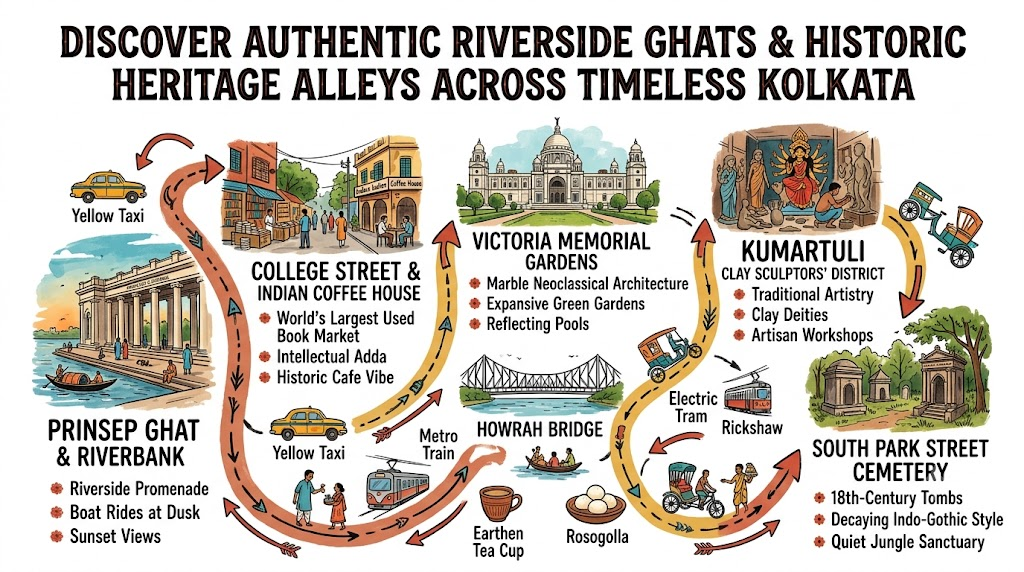
Victoria Memorial Gardens
Rising like an alabaster mirage across the expansive greenery of the Maidan, the Victoria Memorial is constructed from white Makrana marble. Designed by William Emerson and completed in 1921, this colossal monument merges British, Mughal, and Venetian architectural motifs. While museum hall tickets carry standard gallery fees, the vast 64-acre royal gardens can be traversed for a modest pocket-change ticket, granting front-row views of reflecting pools, historic statues, and soaring classical domes.
During golden hour, local artists, college readers, and weary travelers gather on the perimeter lawns as the marble facade reflects soft amber light. Wandering through the ornamental water gardens, you can admire classical colonnades, royal ornamental gates, and sprawling banyan trees without paying steep imperial museum tariffs.
- Location: Queens Way, Maidan, Central Kolkata (Approx. 5 km south of Howrah Station).
- Why it is worth visiting: Unparalleled neoclassical marble architecture set within manicured gardens at an unbeatable budget entry fee.
- Best things to do: Sketch the marble dome reflected in the central pond, walk along the shaded southern promenade, and spot migratory birds around the ornamental water bodies.
- Best time to visit: Late afternoon (3:30 PM to 5:15 PM) to catch golden hour lighting and cooler breezes.
- Ideal for whom: Architecture enthusiasts, couples, budget backpackers, and landscape photographers.
- Travel tip: Purchase garden-only entry via online digital QR boards stationed near the South Gate to skip long ticket counter lines.
Prinsep Ghat and Strand Road Promenade
Erected in 1841 along the banks of the Hooghly River to honor Anglo-Indian scholar James Prinsep, this restored Greek-Gothic monument features towering Palladian columns. Prinsep Ghat opens straight onto a stone-paved riverside promenade flanked by landscaped gardens and historic river staircases. Directly above the white monument rises the monumental cable-stayed Vidyasagar Setu, creating a dramatic visual contrast between 19th-century colonial masonry and modern civil engineering.
As dusk settles, wooden country boats glide along the river current while temple bells ring out from nearby bank shrines. The promenade serves as an open-air community salon where river breezes relieve tropical heat, all completely free of admission fees.
- Location: Strand Road, Hastings, Western Waterfront (Approx. 4.5 km from Esplanade).
- Why it is worth visiting: Free riverside public access offering sweeping river views, historic Palladian architecture, and peaceful sunset panoramas.
- Best things to do: Sit on the historic stone steps watching river barges drift by, stroll the paved pedestrian promenade toward Babughat, and take twilight photos of Vidyasagar Setu.
- Best time to visit: 5:00 PM to 7:30 PM for sunset hues and the evening illumination of the bridge cables.
- Ideal for whom: Sunset chasers, budget couples, solitary writers, and street photographers.
- Travel tip: Skip private tourist motorboats; negotiate directly with traditional wooden dinghy boatmen for a shared 20-minute rowboat ride at twilight.
College Street “Boi Para” and Indian Coffee House
College Street is the world’s largest secondhand book market, stretching across nearly a mile of central Kolkata. Nicknamed “Boi Para” (Book Town), this bustling academic corridor is lined with thousands of makeshift wooden stalls overflowing with rare manuscripts, vintage paperbacks, out-of-print classics, and academic treatises. The entire street smells of cedar, aged paper, and fresh printing ink, creating a paradise for readers and thrifty collectors.
Tucked into this labyrinth stands the historic Indian Coffee House on Bankim Chatterjee Street, an intellectual sanctuary with vaulted ceilings and vintage paddle fans. For decades, legendary directors, poets, and Nobel laureates sat at these scuffed wooden tables, engaging in passionate Adda (intellectual banter) over plates of hot buttered toast, mutton cutlets, and cups of black infusion coffee.
- Location: College Street, Central Kolkata (Approx. 2.5 km north of Esplanade Metro Station).
- Why it is worth visiting: The sensory experience of exploring the world’s most famous literary street bazaar paired with a vintage heritage cafe.
- Best things to do: Hunt down first-edition paperbacks inside wooden roadside stalls, order an Infusion Black Coffee at the Indian Coffee House, and photograph the iconic facade of the University of Calcutta.
- Best time to visit: 11:30 AM to 4:00 PM on weekdays when all academic bookstalls are open.
- Ideal for whom: Bookworms, solo explorers, cultural historians, and vintage cafe lovers.
- Travel tip: Bargaining is expected at secondhand kiosks; offering 30% below the quoted price is standard etiquette for used volumes.
St. Paul’s Cathedral
Completed in 1847 under Bishop Daniel Wilson, St. Paul’s Cathedral is recognized as the first episcopal church established in Asia. Showcasing Indo-Gothic architecture, its soaring spire mirrors the Bell Harry tower of Canterbury Cathedral, engineered with adaptations to withstand Bengal’s monsoon climate. The interior features sweeping barrel-vaulted naves, intricate stained-glass rose windows, and hand-carved Florentine walnut reredos that create an atmosphere of quiet reverence.
Stepping from the noisy streets into the cathedral’s cool, shadowy nave provides an immediate sense of sanctuary. The surrounding grounds, framed by manicured lawns and towering palm trees, cost nothing to enter and offer a rare quiet haven in the center of the city.
- Location: Cathedral Road, Maidan Complex (Directly adjacent to the Victoria Memorial South Gate).
- Why it is worth visiting: Asia’s premier Gothic revival cathedral, featuring pristine stained glass and peaceful, free-to-access grounds.
- Best things to do: View the historic Sir Edward Burne-Jones stained-glass west window, relax on the quiet church benches, and admire the Gothic exterior from the perimeter gardens.
- Best time to visit: 9:00 AM to 11:30 AM for quiet contemplation and morning light shining through the stained glass.
- Ideal for whom: Solitude seekers, architectural researchers, spiritual travelers, and colonial history students.
- Travel tip: Photography is strictly prohibited inside the main nave; switch off phone ringers before entering the sanctuary out of respect.
Kumartuli Clay Sculptors’ District
Kumartuli is a traditional potters’ quarter in North Kolkata that dates back nearly three centuries. Along its narrow, labyrinthine alleys, generational artisans use alluvial clay dredged from the Hooghly River to sculpt intricate, life-sized idols of Goddess Durga and other deities. Walking through these rustic workshops offers an unvarnished, behind-the-scenes look at Bengal’s craftsmanship as raw bamboo frames, straw, and clay are transformed into world-renowned art.
The earthen scent of river mud mixes with incense and drying paint as you watch sculptors carefully paint almond eyes on sacred clay faces. Visiting Kumartuli is like stepping into an open-air, public living studio where access is free and rooted in shared craft rather than museum admission fees.
- Location: North Kolkata, along the banks of the Hooghly River near Sovabazar (Near Sovabazar Metro Station).
- Why it is worth visiting: A rare opportunity to observe traditional clay sculptors handcrafting monumental Hindu temple idols from scratch.
- Best things to do: Walk through Banamali Sarkar Street’s sculptor shacks, watch the delicate final painting of idol eyes, and capture candid street portraits.
- Best time to visit: August to October (leading up to Durga Puja), especially between 10:00 AM and 1:00 PM for natural window lighting.
- Ideal for whom: Visual artists, cultural anthropologists, portrait photographers, and curious budget wanderers.
- Travel tip: Always ask for permission before pointing your camera lens inside narrow workshops, and consider buying small, painted terracotta souvenirs directly from artists.
Offbeat Exploration: Hidden Gems Tourists Miss
South Park Street Cemetery
Hidden behind high mossy stone walls on busy Park Street lies this 18th-century burial ground, established in 1767. Filled with grand, decaying Indo-Gothic tombs, towering Roman obelisks, and moss-draped sarcophagi, it serves as the resting place for British colonial administrators, soldiers, and writers. For a nominal entrance fee, visitors can escape urban traffic into a quiet jungle sanctuary shaded by broad banyans and creeping ferns.
The Marble Palace Grounds and Menagerie
Tucked away in the dense, narrow lanes of Chorbagan, this 1835 neoclassical mansion was built by wealthy merchant Raja Rajendra Mullick. While entering the private museum requires a free advance permit from the West Bengal Tourism office, the outer courtyards, marble lion statues, Chinese pagodas, and vintage bird aviaries can often be visited on short notice. The palace remains one of the best-preserved family residences in North Kolkata.
Mullick Ghat Flower Market at Sunrise
Located directly beneath the soaring steel arches of Howrah Bridge, this bustling riverside flower market is one of the largest in Asia. Beginning before dawn around 4:30 AM, thousands of flower vendors gather to sell bright marigold garlands, blue lotuses, and fragrant tuberoses. The sensory wave of colors, scents, and riverside activity offers a quintessential local experience—entirely free to witness.
Detailed Practical Guidance for Travelers
| Destination | Standard Entry Fee | General Timings | Best Local Food Options Nearby | Recommended Nearby Attractions |
|---|---|---|---|---|
| Victoria Memorial Gardens | ₹50 (Gardens only) | 6:00 AM – 6:00 PM | Nizam’s Kathi Rolls, Haldiram’s Maidan Kiosk | St. Paul’s Cathedral, Birla Planetarium |
| Prinsep Ghat | Free Public Access | Open 24 Hours | Babu Ghat Street Phuchka, Jhalmuri vendors | Vidyasagar Setu, Millennium Park |
| College Street & Coffee House | Free (Coffee House ~₹40–120 per dish) | 9:00 AM – 8:30 PM | Paramount Sherbets, Dilkhusha Cabin Mutton Cutlet | Presidency University, Calcutta Medical College |
| St. Paul’s Cathedral | Free Public Access | 9:00 AM – 5:00 PM | Camac Street roadside momos and toast stalls | Academy of Fine Arts, Nandan Cultural Center |
| Kumartuli Artisan Enclave | Free Public Access | 8:30 AM – 8:00 PM | Mitra Cafe Sovabazar (Brain Chops, Mutton Kabiraji) | Sovabazar Rajbari, Bagbazar Ghat |
| South Park Street Cemetery | ₹20 | 10:00 AM – 5:00 PM | Peter Cat (Chelo Kebab), Kusums Famous Kathi Roll | Mother Teresa House, Mullick Bazar |
| Mullick Ghat Flower Market | Free Public Access | 4:30 AM – 8:00 PM | Ramcharan Rabri Bhandar, Jagannath Ghat Chai | Howrah Bridge, Armenian Ghat |
Logistics & On-Ground Navigation
Local Transport Options
- Kolkata Metro Rail: India’s pioneer underground rail system remains the fastest and cheapest way to navigate North-South corridors, with fares running from ₹5 to ₹25.
- Government River Ferries: Run by the state transport corporation, these wooden ferries connect Howrah, Babughat, and Fairlie Ghat across the river for as little as ₹6 per trip.
- Iconic Yellow Ambassador Cabs: Available throughout the city; insist on using the official meter, or check the state government-backed Yatri Sathi app to guarantee fair local prices.
- Blue and Green Suburban Buses: An extensive network of private and state minibuses blankets every corner of the metro area for ₹8 to ₹15 per ride.
- Hand-Pulled & Cycle Rickshaws: Best suited for navigating narrow North Kolkata lanes and neighborhood bazaars, typically costing ₹20 to ₹40 for short trips.
Budget Planning
- Backpacker / Shoestring Tier (₹800 to ₹1,400 per day): Stay in budget dormitory bunks near Sudder Street or Salt Lake; eat street food classics like egg rolls, fish fry, and kachoris; rely exclusively on metro and ferry transit.
- Mid-Range / Comfort Tier (₹2,500 to ₹5,000 per day): Stay in heritage guesthouses or vintage hotels around central Park Street; dine at classic institutions like Mocambo, Peter Cat, and 6 Ballygunge Place; mix walking with air-conditioned app cabs.
Safety and Inclusivity Tips
- Families: Kolkata is widely recognized as one of India’s safest major metros. When traveling with children or elders, use the underground metro to easily bypass midday road congestion.
- Couples: The riverfront promenades, botanical reserves, and Victoria Memorial gardens are welcoming to couples; practice respectful public decorum to avoid unwanted attention.
- General Travelers: Exercise standard urban awareness at crowded transit hubs like Sealdah and Howrah stations; keep smartphones secured in front pockets when boarding local suburban buses.
Strategic Travel Planning Guardrails
Travel Planning Tips for Kolkata
- Carry cash notes in small denominations (₹10, ₹20, and ₹50); roadside street food vendors, tea kiosks, and boatmen often face digital network issues.
- Pack breathable, loose cotton clothing and durable walking shoes to comfortably navigate ancient brick lanes and stone stairs.
- Schedule your trip around late autumn or winter (November to February) to enjoy mild 18°C evenings and avoid humid monsoon rains.
- Embrace the local tradition of Adda—take unhurried breaks at roadside tea stalls to chat with shopkeepers and residents.
- Carry a personal, refillable filtered water bottle; clean drinking water refill kiosks are available across major metro platforms.
Common Mistakes to Avoid
- Assuming all yellow taxi drivers use meters without asking; always confirm the meter is on or use the Yatri Sathi app before stepping inside.
- Planning visits to state museums, the Marble Palace, or the Victoria Memorial gallery halls on Mondays, when they are closed to visitors.
- Rushing your itinerary by cramming North and South Kolkata into the same morning; road transit can be slow, so plan your days by neighborhood.
- Skipping street food out of hygiene concerns; instead, eat at busy street food stalls with high customer turnover where snacks are made fresh to order.
- Treating the city as a quick transit hub; Kolkata takes a few days of unhurried wandering to reveal its true cultural character.
Suggested Itinerary Blueprints
1. Day Quick Dash (Colonial & Cultural Core)
Designed for travelers on a 24-hour layover looking for a budget-friendly heritage introduction:
- Morning: Arrive at Victoria Memorial Gardens at opening; explore the marble colonnades and walk next door to view St. Paul’s Cathedral.
- Afternoon: Board the underground metro north to Central Station; explore the secondhand book stalls of College Street and enjoy lunch at Indian Coffee House.
- Late Afternoon & Sunset: Ride an auto-rickshaw to Babughat; board the ₹6 public ferry across the Hooghly River to Howrah and back.
- Evening: Walk south along Strand Road to Prinsep Ghat; enjoy a hot cup of earthen-pot chai under the illuminated columns of Vidyasagar Setu.
2. Day Deep-Dive (North-South Heritage Split)
- Day 1 (The Aristocratic & Colonial North): Begin at 5:00 AM at the bustling Mullick Ghat Flower Market; admire the morning view of Howrah Bridge; wander through the Kumartuli artisan quarters watching sculptors craft clay idols; savor lunch at Mitra Cafe; tour the sprawling courtyards of Sovabazar Rajbari; take a twilight tram or metro ride back south.
- Day 2 (Literary Enclaves, Parks & Waterfronts): Spend your morning browsing book stalls along College Street; walk through the tranquil South Park Street Cemetery; enjoy a kathi roll lunch along Camac Street; spend your afternoon relaxing on the grass at Maidan; end the day watching the sunset from the steps of Prinsep Ghat.
3. Complete Weekend Travel Plan (Comprehensive 72-Hour Loop)
- Friday Evening: Arrive, check into your heritage hostel or guest house, and head directly to Park Street for street rolls and live music near Allen Park.
- Saturday (Full North Heritage Trail): Wake early for dawn photography at Howrah Bridge and Mullick Ghat; ride a wooden ferry across to explore the artisan quarters of Kumartuli; walk through College Street’s book kiosks; stop for lunch at the Indian Coffee House; wind down your evening with a cultural performance at Nandan or the Academy of Fine Arts.
- Sunday (Colonial Splendors & Quiet Waterfronts): Walk through the shaded trails of South Park Street Cemetery; stroll the open gardens of Victoria Memorial and St. Paul’s Cathedral; spend the afternoon enjoying street food along New Market; watch the sunset over the river from Prinsep Ghat; take an evening stroll under the streetlights along Southern Avenue.
Common Tourist Mistakes to Avoid
Geographic Blunders
Attempting to jump back and forth between North Kolkata (like Kumartuli or Sovabazar) and South Kolkata (like Jadavpur or Kalighat) on the same afternoon will leave you stuck in street traffic. Group your visits by zone—dedicate entire days to the North, Central, or South heritage districts.
Commercial Traps
Spending long afternoons inside new, air-conditioned shopping malls in Salt Lake or Rajarhat cuts you off from the city’s character. Traditional open-air markets like New Market, Gariahat, and Hatibagan offer more authentic handicrafts, handloom sarees, and local street culture at a fraction of the cost.
Neglecting Modern/Alternative Zones
Don’t focus exclusively on colonial heritage monuments while skipping the vibrant cultural life of South Kolkata. Neighborhoods like Hindustan Park, Southern Avenue, and Golpark are home to independent art galleries, quiet lakeside paths, and creative community cafes.
Transport Overpayment
Accepting flat, unmetered cash rates from taxi drivers waiting directly outside major railway stations often results in paying double the actual fare. Head directly to the official prepaid taxi counter, or book through the state-run Yatri Sathi app for fair, monitored prices.
Luxury Dining Bias
Eating every meal in upscale, five-star hotel dining rooms misses the heart of Bengali culinary culture. True local flavor lives in century-old heritage eateries, neighborhood cabins, and roadside street stalls where secret spice blends have been passed down for generations.
Local Street Food Wisdom: If you see a crowd of local college students and office workers gathered around a street stall waiting for fresh parathas, cutlets, or phuchkas, join the line. High turnover guarantees fresh ingredients, authentic spices, and rock-bottom local prices.
Frequently Asked Questions
1. Is Kolkata an affordable destination for solo budget travelers?
Kolkata is widely considered one of the most budget-friendly metropolitan destinations in India. With cheap metro fares starting at just ₹5, plenty of street meals available under ₹60, and affordable heritage guesthouses, a solo backpacker can travel comfortably on ₹1,000 to ₹1,500 per day.
2. Which month offers the best weather for budget walking tours in Kolkata?
The best months to explore on foot are November through February. Winter brings pleasant daytime temperatures ranging from 15°C to 25°C, with little to no rain. This allows you to spend long, comfortable days exploring open-air ghats, markets, and monuments without the heavy heat and humidity of summer.
3. What is the cheapest way to cross the Hooghly River in Kolkata?
The most affordable way to cross is by taking the state-run public commuter ferries. Fares range between ₹6 and ₹10 per ticket, departing regularly from jetties like Babughat, Fairlie Ghat, and Bagbazar to connect directly with Howrah Junction, providing great river views along the way.
4. Can you visit Victoria Memorial without paying the full museum hall fee?
Yes, you can buy a garden-only entry ticket for just ₹50. This gives you full access to the expansive 64-acre grounds, reflecting pools, and scenic walking trails, letting you admire the marble exterior, monuments, and gardens without paying the higher museum gallery admission fee.
5. How much does an average meal cost at the famous Indian Coffee House?
A meal at the Indian Coffee House is very affordable. A plate of vegetable or mutton patties, chicken cutlets, and a cup of their signature infusion black coffee typically costs between ₹80 and ₹180 per person, making it an accessible stop for budget travelers.
6. Are budget accommodations in Kolkata located in safe, central neighborhoods?
Safe and reasonably priced accommodations, including hostels and family-run guesthouses, are easily found around central areas like Sudder Street, Park Circus, and Salt Lake. These neighborhoods offer good street lighting, easy access to police kiosks, and convenient proximity to central metro stations.
7. How should tourists avoid paying extra for yellow taxis in Kolkata?
To avoid overpaying, always insist that the driver flag down the official meter before starting your trip. Alternatively, walk to an official Kolkata Traffic Police prepaid taxi booth outside railway stations, or book your ride through the state-supported Yatri Sathi mobile app for verified rates.
8. Are credit cards and UPI digital payments accepted everywhere in Kolkata?
UPI payments are widely accepted across small grocery shops, cafes, and restaurants. However, carrying some cash notes is still essential when buying from roadside tea stalls, small secondhand book kiosks on College Street, riding local cycle rickshaws, or boarding public river ferries.
9. Is the Kumartuli potters’ village open to visitors year-round without entry tickets?
Yes, Kumartuli is a living residential and artisanal neighborhood that remains open to the public free of charge throughout the year. The best time to visit is from August to October, when sculptors are actively shaping and painting clay idols of Goddess Durga for the annual festival.
10. What are the best authentic souvenirs to purchase on a budget in Kolkata?
Great budget souvenirs include traditional terracotta jewelry, handmade clay tea cups (bhar), wooden handicrafts from government-run Manjusha emporiums, Bengal handloom cotton scarves from Gariahat market stalls, and packaged Bengali sweets like sandesh bought directly from neighborhood sweet shops.
11. Is street food safe to eat for budget travelers visiting Kolkata?
Street food is generally safe, provided you follow simple local guidelines: choose busy stalls with high customer turnover, ensure fried snacks and cutlets are made fresh to order, avoid pre-cut raw fruits left sitting in the open, and drink packaged or boiled water.
12. Does Kolkata’s metro rail system connect all major budget tourist attractions?
The North-South and East-West Metro lines connect many key attractions, including the Indian Museum, Victoria Memorial (via Rabindra Sadan or Maidan stations), College Street, and the artisan lanes of Kumartuli (via Sovabazar Sutanuti station), making it easy to bypass city traffic on a budget.
Conclusion
Traveling through Kolkata on a budget is an enriching journey into a city that values art, conversation, and community far above commercial spectacle. When you skip pricey tourist traps to walk across historic ghats, browse weathered books along bustling avenues, and share a fresh roll beside local students, you discover the city’s true heartbeat. It leaves you with something rare in modern travel: genuine human connections, timeless memories, and a deep appreciation for a grand metropolis that opens its heart to every curious wanderer.