Introduction
Modern travel often funnels visitors into identical highway interchanges and airport corridors, stripping destinations of their kinetic rhythm and authentic textures. Kolkata, affectionately called the City of Joy, defies this sterile uniformity by treating everyday transit as a living museum of movement. Here, commuting is not merely a logistical necessity between sights; it is a sensory immersion where century-old wooden streetcars glide alongside high-frequency underground trains. Navigating this metropolis by its storied wheels and river vessels allows travelers to connect with local culture, history, and urban resilience far beyond conventional sightseeing trails.
Why Kolkata is a must-visit city
Kolkata is a captivating chapter in global travel because its transport geography mirrors over three centuries of human enterprise, colonial engineering, and post-independence ingenuity. Anchored along the wide curves of the Hooghly River, the city serves as the primary cultural and economic gateway to Eastern and North-Eastern India. It is connected through Netaji Subhas Chandra Bose International Airport, continental railway powerhouses at Howrah and Sealdah, and expanding expressway links. Whether you are a backpacker seeking budget connectivity or an architectural scholar mapping urban evolution, the city provides an accessible, layered transit circuit.
The metropolitan transit grid links archaic river ferry ghats, suburban circular railways, classic tram tracks, and modern underground metro lines in a dynamic urban web.
| Transit Aspect | Key Indicator Details |
|---|---|
| Primary Geographic Anchor | Hooghly River Basin, Kolkata Metropolitan Area |
| Pioneering Transport Milestones | India’s First Metro (1984), Asia’s Oldest Operating Electric Tramway (1873/1902), India’s First Underwater Metro (Green Line) |
| Key Railway Hubs | Howrah Junction (HWH), Sealdah Junction (SDAH), Kolkata Railway Station (KOAA) |
| Core Commuter Network | Kolkata Metro (Blue & Green Lines), River Ferries, Classic Trams, Yellow Ambassador Cabs, Auto-Rickshaws |
| Average Daily Transit Expense | ₹50 to ₹150 (Public Transit); ₹400 to ₹900 (Cabs and Hired Autos) |
Best Local Transport Options in Kolkata
The Kolkata Tramway Network
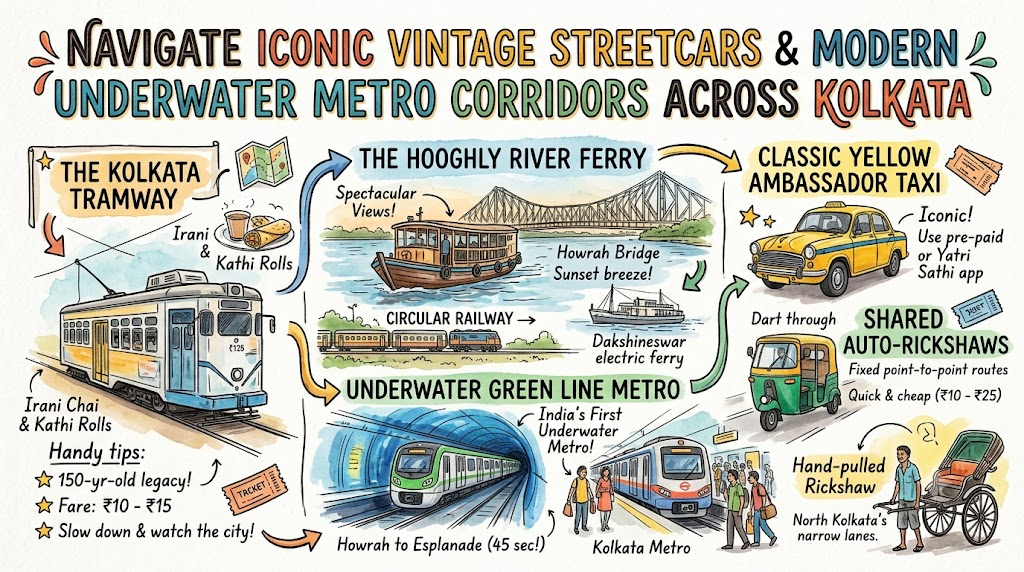
The Kolkata Tramway is Asia’s oldest continuously operating electric tram network, introduced on city streets in 1873 using horse power before electrification in 1902. Trundling along vintage iron tracks with a comforting metallic rattle and distinct foot-pedal chime, these wooden and steel cars cut directly through the living pulse of older neighbourhoods. Riding a tram slows the world down to an observational crawl, offering panoramic views of colonial-era shopfronts, bustling bazaars, and tree-lined boulevards.
MagicBricks
While many legacy corridors have evolved, the surviving operational stretches—such as the evocative journey cutting across the lush expanse of the Maidan or rolling towards Shyambazar—remain iconic cultural institutions. Inside, vintage wooden shutters, overhead rotational fans, and manually punched paper tickets recall an era when transport was leisurely and contemplative.
Historic electric tram trundling through Kolkata.
- Location: Central Kolkata hub centered at Esplanade Terminus, operating towards Maidan, Khidirpur, and North Kolkata corridors.
- Why it is worth visiting: The only functioning streetcar system in India, offering a 150-year-old sustainable, atmospheric travel experience. MagicBricks
- Best things to do: Board route 36 across the Maidan greenery, watch conductors operate legacy bell chimes, and visit the Tram World heritage museum at Gariahat Depot.
- Best time to visit: Early morning (7:00 AM – 9:00 AM) or gentle winter afternoons for quiet carriages and soft light.
- Ideal for whom: Vintage transport buffs, slow-travel advocates, street photographers, and curious couples.
- Travel tip: Carry exact coin change of ₹10 to ₹15; services run at relaxed frequencies, so prioritize the ride as an experience rather than a hurried transit link.
The Underwater Green Line Metro
Kolkata made transport history in 1984 with India’s first underground metro, and it repeated history by launching India’s first underwater metro line beneath the bed of the Hooghly River. The East-West Green Line links the colossal passenger terminal of Howrah with Esplanade and the IT hub of Salt Lake Sector V, plunging travelers 33 meters beneath ground level into India’s deepest railway station at Howrah.
The technological marvel reaches its pinnacle along a 520-meter subaqueous passage beneath the riverbed. The tunnel walls are bathed in luminous blue LED lighting as trains dash across the river in just 45 seconds, transforming what was once a congested bridge crossing into an effortless, modern journey.
Underwater Green Line underwater tunnel route.
- Location: Subterranean corridor running from Howrah Maidan across the Hooghly to Esplanade and Salt Lake Sector V. Wikipedia
- Why it is worth visiting: A landmark of civil engineering marking India’s deepest station and first sub-river tunnel transit.
- Best things to do: Spot the illuminated blue tunnel light indicating passage under the riverbed, admire the expansive Howrah station concourse, and interchange seamlessly to the Blue Line at Esplanade. Wikipedia
- Best time to visit: Mid-day non-peak hours (11:30 AM – 3:30 PM) to avoid morning and evening office rushes.
- Ideal for whom: Modern architecture admirers, daily transit enthusiasts, tech aficionados, and rapid cross-river commuters.
- Travel tip: Purchase smart tokens or use UPI-based ticketing at automated vending machines to bypass platform counter queues during peak hours.
The Hooghly River Ferry Fleet
Long before iron bridges and subterranean tunnels spanned the waterway, the sacred Hooghly River served as Kolkata’s primary trade artery. Today, the West Bengal Transport Corporation’s twin-deck wooden and steel passenger ferries offer one of the most scenic public transits in Asia. These vessels crisscross churning tidal waters between prominent ghats, bridging the twin cities of Kolkata and Howrah against expansive horizons.
Boarding a commuter ferry at Babughat or Fairlie Place treats passengers to panoramic views of maritime activity. Salt barges, country dinghies, and international container ships glide past while the majestic cantilever silhouette of Howrah Bridge and the sleek cables of Vidyasagar Setu dominate the sky.
Public river ferry navigating the Hooghly.
- Location: Multiple riverfront terminals along Strand Road (Babughat, Fairlie Place, Bagbazar) connecting to Howrah Station Ghat.
- Why it is worth visiting: Spectacular riverside vistas of iconic bridges for less than the cost of a cup of tea.
- Best things to do: Catch the sunset breeze on the open top deck, photograph the underbelly of Howrah Bridge from water level, and watch riverfront evening aarti rituals at Bagbazar.
- Best time to visit: Late afternoon (4:30 PM – 6:00 PM) to catch golden hour river reflections and bridge lighting.
- Ideal for whom: Landscape photographers, romantic couples, and budget-conscious backpackers.
- Travel tip: Keep a firm grip on mobile phones and cameras when leaning over deck railings; board carefully during tidal gangway shifts.
The Classic Yellow Ambassador Taxi
No visual depiction of Kolkata is complete without its fleets of sunshine-yellow Hindustan Ambassador taxis navigating city streets. With their retro bulbous curves, chromium grilles, roomy rear bench seats, and heavy steel doors, these vehicles remain indelible emblems of the city’s twentieth-century identity. Originating from the British Morris Oxford series and manufactured for decades at Uttarpara nearby, they provide a ride experience found nowhere else on earth.
Riding inside an Ambassador is an exercise in vintage character. Rolling down broad manual windows lets the city’s sights, aromas, and acoustic rhythms flood the cabin as drivers skillfully navigate dense roundabouts, colonial avenues, and old market intersections.
Iconic yellow taxi passing landmark boulevards.
- Location: Stationed across every street intersection, railway terminal, hospital gate, and landmark zone citywide.
- Why it is worth visiting: A quintessential rolling vintage automotive experience and the ultimate local street photography subject.
- Best things to do: Take an evening cruise around the Victoria Memorial outer ring, hail a cab at Howrah Station’s famous pre-paid taxi queue, and enjoy genuine chatty banter with veteran drivers.
- Best time to visit: Twilight hours (6:00 PM – 9:00 PM) when illuminated colonial streetlights reflect against polished yellow bonnets.
- Ideal for whom: Vintage car collectors, cinematic content creators, and travelers carrying heavy luggage.
- Travel tip: Ensure drivers agree to charge by the official meter, or alternatively utilize the government-monitored Yatri Sathi app to book yellow cabs with fixed, transparent pricing.
Shared Auto-Rickshaws on Fixed Radial Routes
While auto-rickshaws in most Indian cities operate on hired private meters, Kolkata’s auto network functions as a unique shared micro-transit system. Operating along designated point-to-point routes, these four-passenger motorized vehicles serve as essential neighborhood connectors. They ferry students, office workers, and market shoppers swiftly between major metro stations and interior residential lanes.
Jumping into a shared auto is a masterclass in grassroots urban agility. Drivers navigate through intricate alleyways, crowded junctions, and residential bazaars with precision, all while handling cash transactions on the move.
- Location: Stationed outside every major Blue Line and Green Line metro station (notably Gariahat, Shyambazar, Rashbehari, and Sovabazar).
- Why it is worth visiting: The quickest, cheapest window into everyday Kolkata commuter life, street geography, and rapid transit logic.
- Best things to do: Travel the bustling Rashbehari Avenue to Gariahat crossing route, observe seamless driver change-making skills, and disembark directly at local neighborhood shopping hubs.
- Best time to visit: Morning (9:00 AM – 11:00 AM) and early evening (5:00 PM – 7:30 PM) to observe peak neighborhood buzz.
- Ideal for whom: Solo explorers, adventurous cultural documentarians, and fast-paced market shoppers.
- Travel tip: Kolkata autos run strictly point-to-point with set fares (₹10 to ₹25); never attempt to hire one as a private metered taxi unless explicitly negotiated at designated junctions.
Offbeat Exploration: Hidden Gems Tourists Miss
The Circular Railway Riverbank Run
The Kolkata Circular Railway runs along the eastern shoreline of the Hooghly River on single and double suburban tracks. Boarding an open-window local train between Princep Ghat and Bagbazar stations offers river views through lush tree canopies, revealing historical warehouse docks and bathing ghats unseen from city roads.
Hand-Pulled Rickshaws of North Kolkata
Centred around College Street, Bowbazar, and Burrabazar, two-wheeled hand-pulled wooden rickshaws remain operational within tight, waterlogged, or pedestrian-only lanes. While ethically debated, these vehicles represent a fragile urban history and provide crucial mobility during monsoon downpours where motor vehicles cannot tread.
The Electric Ferry Crossings of Dakshineswar
Few tourists realize that the sacred temple hubs of Dakshineswar and Belur Math are directly linked by swift government-run river ferries across the Hooghly. Bypassing road congestion on the Vivekananda Setu, this brief water journey lets travelers view both riverside temple compounds simultaneously from the water.
Detailed Practical Guidance for Travelers
| Destination | Standard Entry Fee | General Timings | Best Local Food Options Nearby | Recommended Nearby Attractions |
|---|---|---|---|---|
| Tramway Network | ₹10 – ₹20 (Flat fare) | 6:30 AM – 10:00 PM | Nizam’s Kathi Rolls, KC Das Rosogollas | Shaheed Minar, Indian Museum, Maidan |
| Underwater Metro | ₹5 – ₹30 (Distance based) | 6:30 AM – 10:20 PM | Street Chaat outside Howrah, Bhojohori Manna | Howrah Railway Station, Bank of Hooghly River |
| Hooghly Ferry | ₹6 – ₹12 (Per crossing) | 6:00 AM – 9:30 PM | Telebhaja (fritters), Dacres Lane Street Food | Millennium Park, Princep Ghat, Armenian Ghat |
| Yellow Taxi Ride | ₹30 (Base meter minimum) | 24 Hours Daily | Balwant Singh Dhaba, Shiraz Golden Restaurant | Victoria Memorial, Park Street, St. Paul’s |
| Shared Auto Circuit | ₹10 – ₹25 (Fixed route) | 6:00 AM – 11:00 PM | Bedouin Rolls, Campari Fish Fry at Gariahat | Kalighat Kali Temple, South Kolkata Cafes |
Logistics & On-Ground Navigation
Local Transport Options
- Suburban & Circular Railways: High-capacity rail grids radiating from Howrah and Sealdah connecting outer cultural suburbs and riverside terminals.
- Kolkata Metro (Blue, Green, Purple Lines): The cleanest, fastest transit spine running north-to-south and west-to-east. Wikipedia
- State & Private Buses: Blue-and-yellow private buses along with air-conditioned WBTC electric buses serve every major artery at low fares.
- Ride-Hailing & Aggregators: Uber, Ola, and the state-backed Yatri Sathi app provide predictable digital bookings for cars and two-wheelers.
Budget Planning
- Backpacker / Budget Tier (₹250 – ₹450 / day): Rely exclusively on Metro transit (₹20–₹30), river ferries (₹8–₹12), shared autos (₹15), and the occasional tram ride (₹10), sampling roadside snacks along the way.
- Mid-Range / Comfort Tier (₹1,200 – ₹2,500 / day): Combine AC metro rides with app-booked yellow cabs, dedicated auto hops, and pre-booked river cruise experiences without queuing.
Safety and Inclusivity Tips
- For Families: The Kolkata Metro remains the most comfortable choice with strollers and elderly travelers, featuring elevators, escalators, and reserved seating. Wikipedia
- For Couples: Riverside ferries and peaceful tram routes around the Maidan offer scenic, comfortable, and harassment-free commutes.
- General Safety: Kolkata consistently ranks among India’s safest metros; however, avoid stepping on or off moving private buses, which often slow down rather than coming to a complete stop.
Strategic Travel Planning Guardrails
Travel Planning Tips for Kolkata
- Download the official Kolkata Metro and Yatri Sathi apps prior to arrival for accurate real-time transit pricing.
- Maintain a dedicated pocket of physical cash containing ₹10, ₹20, and ₹50 notes for quick bus and auto transactions.
- Schedule cross-city north-south commutes via the underground Blue Line to skip severe surface-level traffic jams.
- Keep your footwear light and water-resistant if visiting between July and September, when localized monsoon showers can cause street-level puddling.
- Respect local transit queues; boarding shared autos and metro doors is generally disciplined and orderly.
Common Mistakes to Avoid
- Attempting to hire a shared auto-rickshaw for custom, private journeys outside its designated route.
- Trusting unregistered taxi drivers offering flat rates at Howrah Station exits instead of using the prepaid booth or apps.
- Discarding paper transit tokens or magnetic smartcards before clearing exit turnstiles.
- Packing tight, hour-by-hour schedules that underestimate midday road traffic across narrow heritage districts.
- Forgetting to confirm whether your bus route is ordinary or air-conditioned before stepping aboard.
Suggested Itinerary Blueprints
1. Day Quick Dash (Classic Wheels & Water Route)
- Target Audience: Short-stay travelers, transit enthusiasts, and layover visitors.
- Routing: Begin at 8:30 AM with an iconic tram ride across the Maidan from Esplanade. Head to Babughat and catch the scenic river ferry across to Howrah Station. Dive underground into the Howrah Green Line station to experience the underwater metro back to Esplanade in the afternoon. Conclude with an evening yellow taxi ride along the illuminated Park Street boulevard.
2. Day Deep-Dive (Heritage Rails & Modern Lines)
- Day 1 (Old Calcutta by Road & Rail): Dedicate the morning to North Kolkata using shared auto hops from Sovabazar to College Street book market. Take an afternoon tram toward Shyambazar, followed by an evening boat ride along the Ghats from Bagbazar.
- Day 2 (Subterranean Wonders & South Riverfront): Start with the Green Line underwater metro beneath the Hooghly. Transfer to the Blue Line heading south to Kalighat, ride an Ambassador cab to Victoria Memorial, and finish with a peaceful river cruise from Princep Ghat at sunset. Wikipedia
3. Complete Weekend Travel Plan (Metropolitan Transit Loop)
- Friday Evening: Arrive via Howrah or Sealdah, checking into your hotel via an authentic yellow Ambassador cab; dine at a classic Park Street restaurant.
- Saturday: Explore the entire length of the Kolkata Metro system from Dakshineswar Temple down to Kalighat. Transition to the riverfront at Fairlie Place for cross-river ferry crossings, catching evening street food near Dalhousie square.
- Sunday: Wake up early for the Circular Railway scenic run along Strand Road. Ride the heritage tramway system, visit the Tram World depot museum, and end the weekend with a relaxed shared auto ride along the cafe-lined avenues of South Kolkata. MagicBricks
Common Tourist Mistakes to Avoid
Geographic Blunders
Attempting to visit Dakshineswar in the far north and Jadavpur or Gariahat in the deep south on the same afternoon via surface road taxis will leave you trapped in gridlock. Group your explorations strictly into Northern, Central, and Southern geographic zones.
Commercial Traps
Spending precious leisure time stuck inside generic suburban shopping malls in New Town or Salt Lake bypasses the city’s living transport history. Choose open ferry decks and charming tram carriages over air-conditioned shopping plazas.
Neglecting Modern/Alternative Zones
While old North Kolkata holds cinematic charm, skipping modern developments like the automated Green Line metro leaves you with an incomplete picture of Kolkata’s 21st-century engineering.
Wikipedia
Transport Overpayment
Accepting arbitrary cash demands from street cabbies at transit stations leads to unnecessary spending. Always request the physical meter or book through the state-supported Yatri Sathi application to ensure transparent pricing.
Luxury Dining Bias
Eating exclusively inside star-rated hotel dining rooms deprives you of Kolkata’s authentic culinary soul. Pair your transit adventures with legendary street-side treats like Nizam’s Kathi rolls, spicy jhalmuri, and hot clay-cup (bharer) chai served at transit terminuses.
Frequently Asked Questions
1. How does one purchase tickets for the underwater Green Line Metro?
Tickets for the underwater Green Line Metro can be acquired directly at automated Smart Card/Token Vending Machines inside stations like Howrah and Esplanade using cash or UPI payments. Commuters can also utilize the official Kolkata Metro mobile ticketing application to generate paperless QR codes, skipping busy physical ticketing windows during morning and evening rush hours.
2. Are the historic trams in Kolkata still operational across the city?
Yes, heritage trams continue to operate on designated heritage routes, primarily centered around Esplanade, Maidan, and select northern corridors. While road modernization projects have reduced the historical footprint of the system, surviving cars remain active daily, providing one of the most nostalgic and environmentally conscious slow-travel commutes in modern India.
3. What is the standard fare structure for Kolkata public river ferries?
Hooghly river commuter ferries run by the West Bengal Transport Corporation are among the most economical passenger transits globally, with one-way crossings typically costing between ₹6 and ₹12. Passengers purchase small paper tokens directly from ticketing windows at ghat entry points before walking down gangways to board the scheduled vessels.
4. How do shared auto-rickshaws differ from regular metered autos in other cities?
Unlike auto-rickshaws in Mumbai or Delhi that operate on private hired meters, Kolkata auto-rickshaws run exclusively along fixed, predetermined neighborhood routes carrying four passengers. Fares are standardized per passenger (typically ranging from ₹10 to ₹25 based on distance), making them efficient feeder services connecting metro stations to residential corners.
5. Is the yellow taxi meter system reliable for foreign and domestic visitors?
Yellow taxi drivers are legally mandated to run official mechanical or digital meters, but some may attempt to quote arbitrary flat prices during stormy weather or late nights. Travelers should either insist on using the meter or utilize the government-monitored Yatri Sathi app, which ensures accurate fares and direct driver accountability.
6. Which transit option is best for traveling between Howrah Railway Station and Central Kolkata?
The fastest and most modern method is the East-West Green Line Metro, which dives beneath the Hooghly River to connect Howrah directly with Esplanade in roughly ten minutes. Alternatively, the passenger ferry from Howrah Ghat across to Fairlie Place or Babughat offers a scenic, breezy crossing avoiding bridge traffic.
7. Can tourists use a single smart card across all public transit systems in Kolkata?
Currently, integrated single-card transit ticketing across disparate agencies like the Indian Railways-run Metro, WBTC buses, river ferries, and municipal auto-rickshaws is still being unified. Metro lines require specialized Kolkata Metro Smart Cards or QR tokens, while state buses and river ferries rely on independent digital passes, UPI apps, or cash tickets.
8. Are local transport options in Kolkata accessible for senior citizens and disabled travelers?
The modern Kolkata Metro—especially newer stations on the Green Line—is equipped with elevators, tactile paths, escalators, and reserved passenger coaches. Conversely, legacy transport such as vintage trams, older blue buses, and floating river ghat gangways feature steep steps and uneven approaches that require caution and assistance for mobility-impaired visitors.
9. What is the safest transit mode for solo female travelers at night?
The underground Kolkata Metro is exceptionally safe, heavily monitored by security personnel, and features dedicated women’s coach reservations during operating hours. For late-night travel beyond metro schedules, app-tracked cabs via Uber or Yatri Sathi are recommended over hailing unverified street vehicles in poorly lit suburban corners.
10. How early in the morning do local transport networks begin service?
Most transport modes commence early: river ferries start operations around 6:00 AM, shared auto-rickshaws and public buses begin moving by 6:00 AM, and Metro rail networks start running around 6:30 AM to 7:00 AM depending on lines and weekdays. This accommodates early commuters, morning walkers, and temple-goers.
Wikipedia
11. Is photography permitted on Kolkata’s public transport systems?
Casual mobile phone photography is generally welcomed inside heritage trams, on open-air river ferry decks, and inside yellow cabs. However, photography inside Kolkata Metro stations, platform tunnels, and military security zones around the Howrah Bridge perimeter is strictly restricted by rail and port authorities.
12. What is the best way to travel from Kolkata Airport to the city center?
Travelers landing at Netaji Subhas Chandra Bose International Airport can utilize pre-paid taxi booths directly outside arrival gates, book app cabs via dedicated pickup bays, or board air-conditioned WBTC Volvo electric buses that connect the airport terminal to Esplanade, Howrah Station, and South Kolkata at economical rates.
Conclusion
Navigating Kolkata through its diverse transit modes is ultimately an emotional and cultural journey through time. When you step onto the wooden deck of a trundling tramcar, feel the river breeze atop a commuter ferry, or dive through the futuristic underwater metro tunnel, you step directly into the living heartbeat of the city. Choosing these genuine urban journeys over sterile tour buses rewards the curious traveler with true cultural perspective, unforgettable street encounters, and a deep appreciation for the spirit of the City of Joy.