Introduction
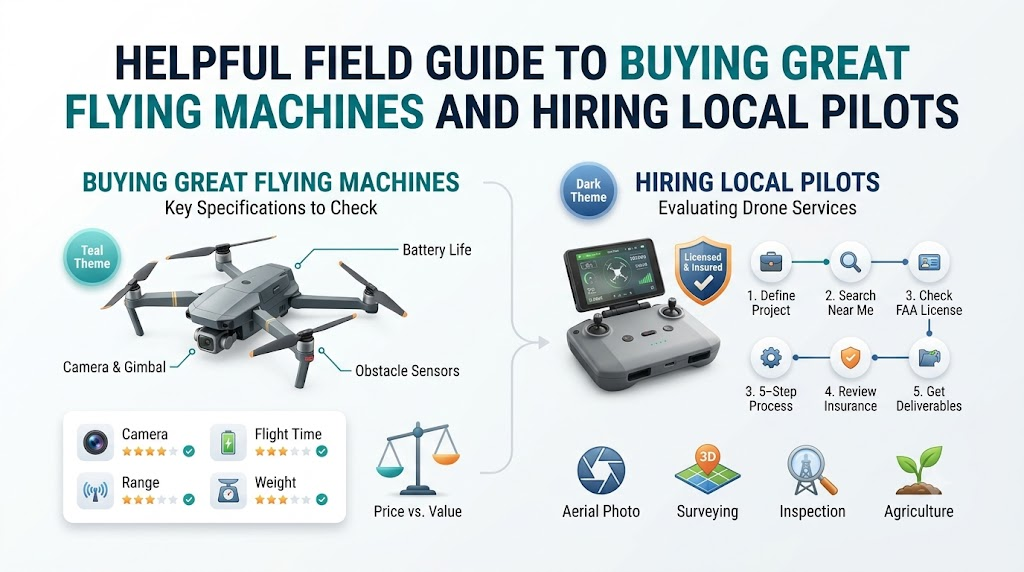
Shoppers face dozens of choices when looking at modern flying copters. Every design features different wings, battery cells, and camera lenses. Small quadcopters let children practice fun maneuvers in backyards. Heavy multi-rotor craft carry liquid pesticide across green farm acres. Therefore, your specific daily job dictates which machine works best. Shoppers study independent drone reviews to observe actual flight endurance. Next, a detailed drone comparison clarifies motor power and signal limits. Checking official drone specifications prevents buyers from wasting money on the wrong tool. Yet many business owners never buy flight gear. Instead, they hire commercial drone services to finish projects fast. The online discovery website DronesBee.com provides deep product data and links project owners with qualified operators nationwide.
Start With Your Main Drone Goal
Name your primary airborne task before spending your hard-earned money. No single flying frame tackles every job with equal success. Light folding frames cannot carry heavy thermal cameras through gusty winds. Huge industrial copters crash easily inside narrow building hallways.
Common Drone Jobs
- Photography: Capture still snapshots of luxury homes and landscapes.
- Video: Record cinematic 4K footage for commercials and travel ads.
- Mapping: Shoot matching ground frames to assemble accurate land maps.
- Surveying: Calculate boundary lines and land slopes across commercial parcels.
- Inspection: Examine tall radio masts and steep roof lines safely.
- Agriculture: Scan crop fields and spray liquid plant food.
- Construction: Document site excavation progress for remote investors every week.
- Recreation: Pilot small craft in open athletic fields for pure fun.
- Business use: Guard fenced storage yards or transport urgent blood samples.
Lock in your core objective today to protect your wallet.
What to Check in Drone Reviews
Unbiased drone reviews reveal how aircraft behave outside clean test labs. Real operators fly models through strong gusts and winter chill. They expose hidden software flaws and report honest flight minutes.
What Readers Should Check
- Camera: Verify true pixel counts and physical sensor dimensions.
- Flight time: Count actual minutes aloft on a single charge.
- Weight: Track gram weight to obey government registration rules.
- Range: Test how far radio signals travel without losing video.
- Safety features: Check for obstacle sensors that stop tree collisions.
- Software: Confirm that mobile flight applications launch without crashes.
- Battery: Note recharge speeds and replacement battery costs.
- Spare parts: Verify that stores stock cheap replacement blades.
- Manufacturer support: Make sure support teams answer help tickets quickly.
- Real-world use: Watch how the gimbal levels footage in choppy air.
Weigh positive highlights against negative flaws before buying.
Make a Simple Drone Comparison
Place two or three aircraft side by side on paper. Direct side-by-side checks reveal true value for your budget.
| Factor | What to Check | Why It Matters |
| Camera | Sensor size and video resolution | Sharp images deliver professional results for clients. |
| Flight time | Real air minutes per full charge | Longer flights mean fewer battery swaps. |
| Weight | Total frame weight in grams | Ultralight frames bypass strict government licensing rules. |
| Range | Reliable radio control perimeter | Strong radio links prevent sudden video dropouts. |
| Safety | Crash detection sensors and auto-land | Smart sensors prevent expensive tree crashes. |
| Support | Readily available propellers and motors | Fast fixes keep your business flying on schedule. |
| Price | Complete bundle cost with extras | Spare batteries and cases raise the final bill. |
Looking Beyond Sticker Prices
Bargain prices fool many first-time flyers. Inexpensive aircraft often lack hover sensors and smash into walls. Add up the total cost of cases, chargers, and backup batteries.
Finding the Best Drones for Your Job
The best drones fit your specific flight needs and experience level. Professional movie studios require large cameras with swappable glass lenses. Outdoor hikers prefer pocket drones that slip into backpacks.
| Drone Category | Key Feature | Best Match |
| Beginner drones | Low prices with blade bumpers | First-time hobbyists and children |
| Travel drones | Folding arms with tiny carry cases | Hikers, backpackers, and vacationers |
| Camera drones | Smooth gimbal cameras with 4K video | Real estate brokers and marketers |
| Professional drones | Dual controllers and heavy lift motors | Film directors and production crews |
| Survey drones | High-accuracy satellite receivers | Civil engineers and land surveyors |
| Inspection drones | High-power zoom and thermal sensors | Bridge inspectors and utility crews |
| Agricultural drones | Spray tanks with wide spray nozzles | Large farm managers and agronomists |
Match aircraft specs to your real duties instead of paying for unused buttons.
When You Need Drone Services
Many companies skip the heavy costs of aviation ownership. Hiring turnkey drone services saves substantial money and effort.
Why Hiring Makes Sense
- Occasional projects: Annual facility photos never justify expensive equipment purchases.
- No trained crew: Training current workers to fly eats up valuable office hours.
- Costly tools: Thermal lenses and laser mapping units cost thousands of dollars.
- Tight deadlines: Licensed commercial flyers finish assignments correctly on day one.
- Maintenance costs: Flying robots demand continuous propeller swaps and motor checks.
- Training needs: Studying for official pilot exams takes months of classroom work.
- Insurance needs: High-risk commercial flights require expensive liability policies.
Online directories like DronesBee help managers find certified flight contractors quickly.
How to Find Drone Pilots Near Me
Search engines display local flyers when you search drone pilots near me. Screen every potential pilot thoroughly before signing a contract.
Pilot Checklist
- Experience: Confirm logged flight hours on similar client projects.
- Equipment: Verify they fly the correct sensors for your deliverables.
- Insurance: Demand an active insurance paper covering ground property damage.
- Project history: Examine sample images, 3D models, or video reels.
- Location: Hire nearby pilots to reduce travel and hotel fees.
- Safety plan: Ask how the crew secures ground perimeters during flights.
- Deliverables: Agree on image resolutions and delivery deadlines in writing.
- Pricing: Collect itemized written bids covering every expense.
- Local rules: Confirm your pilot obeys all national aviation laws.
A certified pilot protects your business from safety liabilities and legal fines.
Aerial Photography Services
Skilled aerial photography services capture gorgeous viewpoints from high above. Real estate agents display sprawling acreage and luxury pools to attract qualified buyers. Luxury resorts showcase pristine beaches to fill guest rooms.
Builders share high-angle foundation views with out-of-town project backers. Tourism boards film mountain canyons to entice summer campers. Concert planners film lively outdoor crowds from dramatic angles.
Film studios shoot high-speed highway chases from the clouds. Great aerial footage requires modern cameras and steady pilot hands. An expert flyer steers straight flight lines through tricky wind currents.
Drone Surveying Services
Modern drone surveying services measure wide acreage in record time. A survey drone flies automated grid paths back and forth across the sky. The camera snaps hundreds of overlapping vertical photos. Next, specialized computers assemble these photos into dense 3D terrain models.
Civil planners lay out new bypass roads and large subdivisions using this data. Earthmoving crews measure dirt stockpile volumes in minutes instead of days. Drones finish land maps much faster than surveyors walking on foot.
However, survey work demands rigorous accuracy. Teams combine satellite correction units with dedicated mapping tools to produce millimeter-grade precision.
Drone Inspection Services
Advanced drone inspection services keep maintenance crews safe on the ground. A technician flies a camera drone close to a church steeple. The pilot inspects cracked slate tiles on a bright handheld monitor.
Inspectors also examine tall communications towers and offshore wind blades. Drones check road bridges and spot hot cells across solar farms. However, flying sensors cannot physically patch holes. They spot hidden structural flaws so engineers can plan ground repairs safely.
Agricultural Drone Services
Modern agricultural drone services help farmers care for vast crop fields. Farm aircraft carry specialized light sensors. These lenses detect plant stress and fungus days before human eyes spot yellowing leaves.
Heavy spray drones lift large liquid tanks over soggy fields without compacting soil. They spray fertilizer and pest protection directly onto troubled plants. This targeted care cuts chemical waste and protects ground water. However, large farm drones require heavy generator trailers for field battery charging. Operators must also earn special state permits to disperse agricultural chemicals.
Real-Life Scenarios / Experiences
- A broker lists a large ranch: A broker hires an aerial operator to film a five-acre estate. The resulting video tour earns five cash offers within forty-eight hours.
- A contractor assesses storm damage: High winds tear tin sheets from an industrial warehouse roof. A pilot photographs the damage in thirty minutes, saving workers from climbing wet ladders.
- A farmer stops a pest outbreak: A multispectral drone flight spots an insect infestation in field five. The grower dispatches a spray copter to treat that spot alone, cutting chemical costs by eighty percent.
Common Mistakes to Avoid When Choosing Delhi Events
- Buying without clear targets: Shoppers purchase gear without matching it to a job. Solution: Write down your exact output needs before buying.
- Ignoring battery limits: Beginners assume drone batteries last for hours. Solution: Carry four fully charged battery packs for every flight job.
- Violating airspace rules: Flying inside airport flight corridors triggers huge police fines. Solution: Consult official aviation maps before turning on your motors.
- Ignoring high winds: Operators launch into storms and lose their machines. Solution: Track local weather apps for wind speeds before leaving home.
- Choosing by price alone: Bargain hunters buy toy drones that blow away in light breezes. Solution: Read verified user reviews to check build quality.
- Hiring uninsured flyers: Business owners hire amateur friends who crash into vehicles. Solution: Require written proof of commercial liability insurance.
- Leaving extra propellers behind: A tiny pebble chips a plastic blade during takeoff. Solution: Store two replacement blade sets inside your gear case.
- Forgetting storage cards: Pilots reach the flight field without memory cards. Solution: Keep two high-speed memory cards inside your controller case permanently.
How DronesBee Can Help
DronesBee organizes the entire drone industry into one user-friendly space. Visitors consult detailed drone reviews and construct an informative drone comparison between top brands. The database provides precise drone specifications to help users select the right machine.
Buyers find the best drones for hobby flights or corporate tasks. When purchasing gear costs too much, the platform links users with commercial drone services. Anyone can search for verified drone pilots near me to handle tough aerial work.
The service directory covers aerial photography services, drone surveying services, and drone inspection services. It also lists experienced providers for agricultural drone services. Furthermore, visitors read clear educational guides and track changing flight laws. The platform guides you from early product research to booking flights.
Frequently Asked Questions
1. What does UAV stand for?
UAV stands for Unmanned Aerial Vehicle. This name describes any flying aircraft that operates without a human pilot sitting inside. Computers and ground operators steer these craft using handheld radio remotes or preset flight paths. Most people call these machines drones.
2. Can camera drones fly safely in the rain?
Most consumer drones do not have waterproof bodies. Rain drops seep into motor vents and destroy internal circuit boards. Wet flights usually end in sudden power failure and crashes. Always wait for sunny, dry skies before taking off outdoors.
3. How long do drone batteries last during flights?
Most consumer camera drones fly for twenty to thirty-five minutes per battery pack. Cold winter weather and fast winds drain battery power much quicker. Smart pilots always pack three or four extra charged batteries inside their travel bags for full-day shoots.
4. Do commercial drone flyers need special licenses?
Pilots who fly drones for business income must earn an official remote pilot certificate. Hobby flyers who fly purely for recreation must still follow basic airspace safety laws. Always register your flying aircraft through official government aviation websites before flying outdoors.
5. Why do drone prices vary so much?
Toy drones use cheap plastic frames and basic fixed lenses. Commercial platforms cost thousands of dollars because they feature carbon fiber arms, thermal sensors, laser scanners, and advanced collision sensors. You pay extra money for commercial durability, imaging power, and flight reliability.
6. Can drones handle strong winds?
Lightweight camera drones struggle when wind speeds climb above fifteen miles per hour. Heavy enterprise drones stay stable in stiffer breezes. However, fighting strong winds shakes your video footage and drains batteries rapidly. Always review wind forecasts before packing your bags.
7. What is a drone gimbal?
A gimbal is a tiny motorized cradle that holds the camera steady. It tilts and pans automatically to balance out bumpy aircraft movements. This mechanical mount keeps your video clips level and smooth even when the aircraft tilts during sharp turns.
8. How do obstacle sensors protect aircraft?
Obstacle sensors use miniature cameras, infrared beams, or sound waves placed around the body. They detect trees, light posts, and walls before impact happens. The drone software hits the brakes automatically to prevent expensive damage.
9. Should businesses buy drones or hire pilots?
Buy your own aircraft if your crew plans to fly weekly. Hire an outside professional if you only need aerial photos occasionally. Hiring eliminates the need for expensive pilot certifications, equipment maintenance, software fees, and commercial insurance policies.
10. How does the return-to-home function work?
Return-to-home uses satellite positioning to record your takeoff spot. The aircraft stores the launch coordinates in memory. If your controller loses radio contact, the drone climbs to a safe altitude and flies straight back to the landing pad automatically.
11. What is the legal altitude ceiling for drones?
Aviation agencies limit civilian drone flights to four hundred feet above the ground. Flying higher creates serious collision dangers with low-flying airplanes and emergency rescue helicopters. Always keep your flying aircraft in clear visual sight with your naked eyes.
12. How do drones check farm field health?
Farm drones carry specialized multispectral cameras that capture reflected light bands from crops. Healthy leaves reflect plenty of near-infrared light, while stressed crops absorb it. The pilot stitches these photos into visual maps that show weak crop zones.
Conclusion
Choose the drone for the job, not just the drone with the biggest feature list. Start by defining your actual project needs and confirming local flight rules. Read candid user reviews and verify technical limits before placing an order. Budget for extra batteries, replacement blades, and sturdy travel cases. When tasks demand advanced sensors, hiring a licensed flyer saves time and prevents headaches. Visit DronesBee to study aircraft specifications, compare models, and connect with trusted local pilots today.