Introduction
Most modern travel destinations cater to packaged, fast-paced commercial itineraries that blur together behind glass tour buses. Kolkata rejects this rush entirely, offering instead a deeply grounded encounter with living history, peeling colonial stucco, and authentic neighborhood warmth.
Walking through its historic quarters, the air smells of roasted cumin, wet river silt, and rain-soaked red brick. This three-day journey invites you to slow down, listen to street-corner intellectual debates, and experience a historic city that wears its timeless soul proudly.
Why Kolkata is a must-visit city
Kolkata stands as the cultural and intellectual powerhouse of India, carrying the profound weight of the Bengal Renaissance and British imperial history. Flanking the eastern banks of the Hooghly River, it offers an architectural tapestry where grand Victorian civic edifices share space with centuries-old terracotta mansions and bustling street bazaars. The metropolis remains remarkably accessible to diverse travel archetypes, connected via Netaji Subhas Chandra Bose International Airport (CCU), historic rail terminuses at Howrah and Sealdah, and an expansive underground metro network.
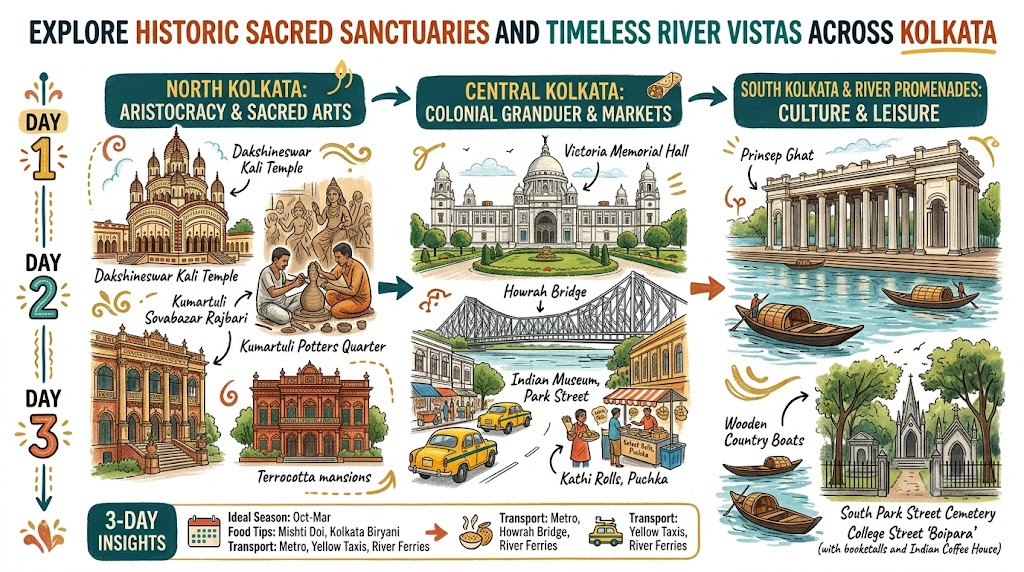
The city’s travel circuit unfolds naturally across three primary geographical corridors: the aristocratic lanes of North Kolkata, the monumental colonial core of Central Kolkata, and the refined artistic districts of South Kolkata. Over three days, travelers transition effortlessly from evocative clay artisan colonies to vibrant culinary avenues and tranquil riverside promenades.
| Metric | Details |
| Geographic Coordinates | Eastern Bank of the Hooghly River, West Bengal |
| Ideal Travel Season | October to March (Pleasantly cool, dry weather) |
| Primary Transit Gateways | Howrah Junction (HWH), Sealdah Station (SDAH), Kolkata Airport (CCU) |
| Signature Local Foods | Kosha Mangsho, Kolkata Biryani, Kathi Rolls, Mishti Doi |
| Recommended Stay Zones | Park Street (Central), Salt Lake Sector V (Modern), Ballygunge (South) |
Best Places or Experiences
Victoria Memorial Hall
Commissioned in 1906 to commemorate Queen Victoria and opened to the public in 1921, the Victoria Memorial Hall remains Kolkata’s most recognizable architectural jewel. Designed by Sir William Emerson in the Indo-Saracenic revivalist style, this imposing monument is constructed entirely from white Makrana marble quarried from Rajasthan. Its central dome is crowned by a sixteen-foot-tall bronze Angel of Victory that rotates gracefully with the shifting direction of the wind.
Inside, the grand rotunda opens into sweeping gallery corridors displaying royal oil paintings, imperial historical documents, and delicate archival artifacts chronicling the British Raj. Outside, the monument is framed by sixty-four acres of immaculate lawns, reflecting pools, and manicured floral gardens where morning walkers, sketching artists, and visitors gather beneath tranquil shade trees.
- Location: Queens Way, Maidan, Central Kolkata (approx. 4 km south of Howrah Station).
- Why it is worth visiting: The definitive symbol of colonial British-Indian architecture housing India’s finest collection of European paintings and historical memorabilia.
- Best things to do: Admire the Royal Gallery oil paintings, stroll around the ornamental reflecting ponds, and witness the evening sound-and-light show on the open lawns.
- Best time to visit: November to February; arrive at 10:00 AM for soft morning light across the marble facade.
- Ideal for whom: Architecture enthusiasts, history buffs, landscape photographers, and families.
- Travel tip: Purchase museum entry tickets online via government cultural ticketing portals to skip long weekend ticket queues at the north gate.
Howrah Bridge across River Hooghly
Spanning the wide expanse of the Hooghly River, the Howrah Bridge (officially renamed Rabindra Setu) is an engineering masterpiece completed in 1943 without a single rivet or bolt in its central suspended span. As one of the longest cantilever bridges of its kind in the world, it connects the twin cities of Howrah and Kolkata, bearing the collective weight of over one hundred thousand vehicles and millions of pedestrians every day.
Standing beneath its massive crisscrossing steel girders reveals the raw pulse of Kolkata’s daily momentum. Cool river breezes carry the distinct fragrance of wet clay and temple flowers, while yellow ambassador cabs rumble continuously across the metal road deck against the wide, timeless sky.
- Location: Connecting Howrah Station to Central Kolkata over the Hooghly River (approx. 1 km from Bara Bazar).
- Why it is worth visiting: An unbolted, all-steel cantilever icon that forms the vibrant lifeline and visual heartbeat of Kolkata.
- Best things to do: Walk the pedestrian footpath from the Howrah railway end at dawn, observe the river ferry departures, and view the lit trusses from an evening boat.
- Best time to visit: 5:30 AM to 7:00 AM to beat severe afternoon vehicle exhaust and capture soft morning sunrise reflections over the water.
- Ideal for whom: Documentary street photographers, urban explorers, civil engineering admirers, and sunrise chasers.
- Travel tip: Security strictly prohibits setting up tripods or lingering with professional telephoto cameras on the bridge footpath; keep hand-held camera shots discreet.
Kumartuli Potters Quarter
Tucked away beside the riverbanks of North Kolkata lies Kumartuli, an ancestral artisans’ enclave dating back more than three hundred years to the founding of early Calcutta. Within this dense labyrinth of narrow, unpaved alleyways, generations of master sculptors fashion sacred Hindu deities out of river clay, bamboo armatures, and rice straw. The air inside the open-front workshops smells rich with fresh damp earth, drying grass, and wood varnish.
Visiting Kumartuli provides an intimate look into sacred craftsmanship, where raw river silt from the Hooghly is transformed into divine figures of Goddess Durga, Saraswati, and Kali. Observing artisans painstakingly paint the eyes of newly dried idols offers one of the most hypnotic cultural experiences anywhere in South Asia.
- Location: Kumartuli, Sovabazar, North Kolkata (approx. 6 km north of Esplanade).
- Why it is worth visiting: The world’s largest traditional clay-idol manufacturing district, offering unmatched insight into sacred living art.
- Best things to do: Watch artisans weave straw frames, observe the delicate hand-painting of deity eyes, and photograph atmospheric timber-framed studios.
- Best time to visit: August through October during peak Durga Puja preparation; plan your walk between 9:00 AM and 1:00 PM for open studio access.
- Ideal for whom: Cultural storytellers, art historians, documentary photographers, and curious solo explorers.
- Travel tip: Always ask permission politely before taking close-up portraits of working artisans, and consider purchasing a small terracotta souvenir directly from the potter.
Prinsep Ghat on Strand Road
Erected in 1841 along the banks of the Hooghly River to honor scholar and antiquarian James Prinsep, this pristine Palladian monument features tall Corinthian columns supporting a classical white porch. Nestled directly beneath the modern, cable-stayed Vidyasagar Setu, it bridges two distinct centuries of architectural design in a single breathtaking vantage point.
The riverfront promenade is lined with manicured lawns, green cast-iron benches, and lamp-lit walkways that provide a peaceful contrast to the city’s lively commercial centers. In the evening, traditional hand-carved wooden country boats bob along the river steps, ready to row passengers past gently drifting cargo barges on the shimmering water.
- Location: Strand Road, Hastings, South-Central Kolkata (approx. 3.5 km southwest of Park Street).
- Why it is worth visiting: Elegant Palladian riverfront architecture paired with sweeping views of the river and Vidyasagar Setu.
- Best things to do: Take a 30-minute wooden hand-rowed boat ride on the Hooghly, walk the landscaped river promenade, and sip spiced milk tea from clay cups.
- Best time to visit: 5:00 PM to 7:30 PM for sunset river colors and the illumination of the suspension bridge.
- Ideal for whom: Couples, slow-travel walkers, poets, and dusk landscape photographers.
- Travel tip: Negotiate boat-ride rates directly with the boatmen at the ghat steps rather than engaging middleman touts standing along the road.
Indian Museum on Jawaharlal Nehru Road
Founded in 1814 by the Asiatic Society of Bengal, the Indian Museum in Kolkata is the oldest and largest multipurpose museum in the Asia-Pacific region. Housed in a grand, neoclassical Italianate building surrounding an open central courtyard, the museum features thirty-five galleries organized across art, archaeology, anthropology, geology, zoology, and economic botany.
Its storied halls contain priceless cultural relics, including the polished sandstone capital of the Ashoka pillar, ancient Gandhara sculptures, fossilized dinosaur skeletons, and a four-thousand-year-old Egyptian mummy. Walking through its soaring colonnades feels like stepping back into an earlier golden era of scientific discovery and antiquarian scholarship.
- Location: 27 Jawaharlal Nehru Road, Colootola, New Market Area, Central Kolkata (approx. 500 meters from Park Street Metro).
- Why it is worth visiting: The ninth oldest regular museum in the world, holding irreplaceable cultural, archaeological, and natural treasures.
- Best things to do: View the 4,000-year-old Egyptian mummy, admire ancient Gandharan Buddhist stone sculptures, and examine prehistoric fossils in the Siwalik Gallery.
- Best time to visit: Weekday mornings around 10:30 AM right when doors open to explore the expansive galleries before school crowds arrive.
- Ideal for whom: History students, families with children, archaeologists, and antique book enthusiasts.
- Travel tip: The museum complex is vast and can easily take three to four hours to explore; wear comfortable walking shoes and bring your own sealed water bottle.
Dakshineswar Kali Temple
Perched on the eastern bank of the Hooghly River north of Kolkata, the Dakshineswar Kali Temple is a monumental spiritual complex built in 1855 by the visionary philanthropist Rani Rashmoni. Designed in the traditional Bengal Navaratna (nine-spired) architectural style, the three-storied sanctum is dedicated to Bhavatarini, an auspicious form of the Goddess Kali. The surrounding courtyard features twelve identical shrines dedicated to Lord Shiva alongside a dedicated temple for Radha and Krishna.
The temple complex holds immense historical and spiritual reverence as the sacred home of the nineteenth-century mystic Sri Ramakrishna Paramahamsa. Visitors can sit along the stone bathing ghats, watch the broad river drift southward, and listen to the rhythmic chiming of evening prayer bells echoing across the water.
- Location: Dakshineswar, North 24 Parganas (approx. 14 km north of Esplanade, easily accessed via Blue Line Metro).
- Why it is worth visiting: A masterpiece of traditional nine-spired Bengal temple architecture and the spiritual center of the modern Ramakrishna movement.
- Best things to do: Offer prayers at the Bhavatarini sanctum, visit Sri Ramakrishna’s historic living quarters, and take a local river ferry across to Belur Math.
- Best time to visit: 6:00 AM to 8:30 AM to attend peaceful morning arati before heavy midday pilgrim queues form.
- Ideal for whom: Spiritual seekers, architecture buffs, religious historians, and cultural travelers.
- Travel tip: Cellphones, smartwatches, and leather goods must be stored in secure lockers outside the inner security gate before entering the temple compound.
Offbeat Exploration: Hidden Gems Tourists Miss
South Park Street Cemetery
Opened in 1767 on what was then the wild, marshy fringe of colonial Calcutta, this quiet cemetery is one of the earliest non-church cemeteries in the world. Shaded by dense banyan canopies, fern growths, and moss-draped palms, the grounds feature massive Gothic, Classical, and Indo-Saracenic stone mausoleums. Walking along its quiet gravel paths reveals the weathered tombs of prominent eighteenth-century figures, including orientalist Sir William Jones and poet Henry Derozio.
Magen David and Beth El Synagogues
Hidden behind the bustling street vendors of Canning Street in the old commercial district stand the majestic nineteenth-century Magen David and Beth El Synagogues. Built by the once-thriving Baghdadi Jewish community of Calcutta, these Italian Renaissance-style structures boast red-brick towers, stained-glass rose windows, checkered marble floors, and glittering crystal chandeliers. Maintained today with care by local Muslim caretakers, they stand as an inspiring testament to Kolkata’s historical religious harmony.
Boipara Book Market on College Street
Stretching for nearly a mile around the historic Presidency University and Calcutta University, College Street—known locally as Boipara—is the world’s largest second-hand book market. Thousands of small wooden stalls overflow onto the pavements with rare out-of-print titles, academic texts, Bengali literary classics, and antique manuscripts. Drop into the historic 1942 Indian Coffee House nearby to listen to fiery intellectual debates over black coffee and mutton cutlets.
Detailed Practical Guidance for Travelers
| Destination | Standard Entry Fee | General Timings | Best Local Food Options Nearby | Recommended Nearby Attractions |
| Victoria Memorial | ₹50 (Indians), ₹500 (Foreigners) | 10:00 AM – 5:00 PM (Gardens 5:30 AM – 6:00 PM) | Street Puchka and Jhalmuri on Queens Way | St. Paul’s Cathedral, Kolkata Maidan |
| Howrah Bridge | Free (Public thoroughfare) | Open 24 Hours | Kachori and hot chai at Howrah Station stands | Mullick Ghat Flower Market, Rail Museum |
| Kumartuli Potters Quarter | Free (Donations welcome) | 8:00 AM – 7:00 PM | Kochuri and Mishti at Sovabazar Sweet Shops | Sovabazar Rajbari, Bagbazar Ghat |
| Prinsep Ghat | Free (Boat ride ₹300–₹500) | Open 24 Hours | Pav Bhaji and Ice cream at Strand Road stalls | Vidyasagar Setu, Eden Gardens |
| Indian Museum | ₹50 (Indians), ₹500 (Foreigners) | 10:00 AM – 5:00 PM (Closed Mondays) | Kathi rolls at Nizam’s or Aminia New Market | New Market, Park Street Dining Strip |
| Dakshineswar Kali Temple | Free (Special Puja extra) | 6:00 AM – 12:30 PM, 3:30 PM – 8:30 PM | Bengali vegetarian meals near Temple Plaza | Belur Math (via Hooghly river ferry) |
Logistics & On-Ground Navigation
Local Transport Options
- Kolkata Metro: The fastest, cleanest way to avoid street-level traffic jams; the Blue Line runs north-south connecting Dakshineswar to New Garia, while the Green Line connects Howrah to Salt Lake beneath the river.
- Iconic Yellow Ambassador Taxis: Plentiful outside major railway hubs; always insist on the government electronic fare meter or check the official prepaid taxi booth inside rail terminals.
- Ride-Hailing Apps (Uber and Yatri Sathi): Widely available, convenient, and reliable; Yatri Sathi is the government-supported local app with transparent rates and minimal cancellations.
- Hooghly River Ferries: The cheapest scenic commute in the city (averaging ₹6 to ₹10 per trip); easily connects Howrah, Fairlie Place, Prinsep Ghat, and Belur Math.
- Heritage Trams: Asia’s oldest operating electric tram network; running selectively along designated heritage routes like the Maidan corridor for a nostalgic ride.
Budget Planning
- Budget/Backpacking Tier (₹1,500 – ₹2,500 / day):
- Stay in backpacker guest houses or heritage hostels around Sudder Street or northern heritage bed-and-breakfasts.
- Rely on the Kolkata Metro, public buses, and river ferry rides for transit.
- Dine on street-side egg rolls, fish fry, and local meals at traditional neighborhood canteens.
- Mid-Range/Comfort Tier (₹5,500 – ₹9,500 / day):
- Stay in boutique heritage mansions or well-appointed hotels around Park Street, Ballygunge, or Salt Lake.
- Travel using app-based air-conditioned cabs for day-long point-to-point transit.
- Enjoy classic multi-course dinners at historic dining spots like Peter Cat, Mocambo, 6 Ballygunge Place, and Oh! Calcutta.
Safety and Inclusivity Tips
- For Families: Kolkata is exceptionally welcoming and safe for multigenerational families; stick to the metro for easy transit and carry bottled water during midday walking tours.
- For Couples: Couples will find quiet, respectful spaces in parks and along riverfront ghats; avoid poorly lit, deserted sections of the Maidan after dark.
- General Safety: Kolkata consistently ranks among India’s safest metropolitan centers in national crime statistics. Keep an eye on your personal belongings in dense markets like New Market and Burrabazar, and use crosswalks carefully on busy city thoroughfares.
Strategic Travel Planning Guardrails
Travel Planning Tips for Kolkata
- Target the Winter Window: Plan your visit between November and February to enjoy mild temperatures, low humidity, and pleasant daytime walking conditions.
- Carry Cash for Local Markets: While digital UPI payments work across restaurants and retail stores, small street vendors, bookstalls, and ferry counters rely entirely on cash.
- Dress for Cultural Visits: When visiting traditional Hindu shrines, historic mosques, or synagogues, wear modest attire that covers your shoulders and knees.
- Pack Sturdy Footwear: Navigating uneven flagstone pavements, bustling market lanes, and historic stairs requires comfortable walking shoes.
- Start Early to Beat Traffic: Historic colonial avenues and morning flower markets are best explored before 9:00 AM, before peak vehicular traffic builds up.
Common Mistakes to Avoid
- Overpacking the Daily Schedule: Trying to combine more than three distant landmarks on the same day leads to long delays in dense city traffic.
- Relying Only on Malls for Food: Skipping neighborhood street counters means missing the authentic culinary heart of the city.
- Assuming All Cabs Take UPI: Always confirm payment preferences before boarding unmetered yellow taxis to avoid misunderstandings upon arrival.
- Skipping the River Ferries: Taking only highway bridges leaves you without the best perspective of the city’s iconic river skyline.
- Missing Historic Tea Stalls: Passing by rustic neighborhood tea stalls deprives you of experiencing authentic local conversation over hot clay cups of cha.
Suggested Itinerary Blueprints
1. Day Quick Dash (Colonial & Cultural Highlights)
- Target Audience: Business travelers, short layover visitors, and fast-paced tourists.
- Morning: Arrive at Victoria Memorial by 10:00 AM to explore the galleries and gardens; walk over to admire the Gothic architecture of neighboring St. Paul’s Cathedral.
- Afternoon: Head north to College Street; browse the bookstalls and enjoy a quick lunch of fish cutlets and black coffee at the Indian Coffee House.
- Evening: Catch the sunset at Prinsep Ghat; take a peaceful 30-minute wooden boat ride on the Hooghly River followed by dinner along Park Street.
2. Day Deep-Dive (North-South Heritage Circuit)
- Day 1 (Colonial Core & Intellectual South):
- Morning: Tour the Indian Museum, followed by a walk through the colonial courtyards around the New Market area.
- Afternoon: Explore the lush lawns of South Park Street Cemetery and stop for a late lunch at Peter Cat on Park Street.
- Evening: Drive south to Southern Avenue for coffee at an open-air cafe and take a quiet stroll around the Rabindra Sarobar lake promenade.
- Day 2 (North Kolkata Aristocracy & Artisans):
- Morning: Visit the clay workshops of Kumartuli, followed by an architectural photo walk through the ornate courtyards of Sovabazar Rajbari.
- Afternoon: Explore the rare book collections of Boipara and have an authentic Bengali fish thali at a traditional neighborhood dining hotel.
- Evening: Cross over to the Mullick Ghat Flower Market at dusk to view the evening lights framing the massive trusses of Howrah Bridge.
3. Complete Weekend Travel Plan (Comprehensive 3-Day Journey)
- Friday (The River & The Raj):
- Check into your hotel; visit the Victoria Memorial and St. Paul’s Cathedral in the afternoon.
- Walk to Prinsep Ghat for sunset views, then head to Park Street for classic Continental cuisine, live music, and dessert.
- Saturday (Spiritual Centers & Artisan Roots):
- Ride the Blue Line Metro north to Dakshineswar Kali Temple for morning prayers; take a scenic river ferry across to Belur Math.
- Head down to Kumartuli to observe local sculptors at work, followed by a heritage walk through the aristocratic mansions of North Kolkata.
- Wrap up with an authentic Bengali dinner at 6 Ballygunge Place.
- Sunday (Markets, Literature & Heritage Alleys):
- Wake up early for sunrise photography at the lively Mullick Ghat Flower Market beside Howrah Bridge.
- Spend midday browsing books along College Street and visiting the historic synagogues in Canning Street.
- Finish your journey with a twilight walk through the South Park Street Cemetery, followed by delicious Kathi rolls at Nizam’s.
Common Tourist Mistakes to Avoid
Geographic Blunders
Attempting to jump from Dakshineswar Temple in the far north to Kalighat Temple in the deep south on the same afternoon wastes precious hours in traffic. Always group your itinerary by clear north, central, and south geographical zones.
Commercial Traps
Spending long vacation afternoons inside modern shopping malls like South City or Quest Mall wastes your time on international brands you can find anywhere. Direct your time instead toward historic hubs like New Market, Dakshinapan, and the traditional silk stores of Gariahat.
Neglecting Modern/Alternative Zones
Ignoring South Kolkata’s quieter, residential neighborhoods means missing out on the city’s thriving contemporary art galleries, indie coffee roasters, and serene leafy avenues around Hindustan Park and Southern Avenue.
Transport Overpayment
Hiring unmetered street taxis without confirming fares upfront often leads to inflated tourist prices. Always cross-check estimated fares using ride-hailing apps or stick to the affordable, efficient Kolkata Metro system.
Luxury Dining Bias
Eating exclusively at high-end hotel buffets cuts you off from Kolkata’s real culinary magic. The true essence of the city’s food culture lives at street-side stalls serving fresh Kati rolls, steaming momos, crispy puchkas, and hand-churned mishti doi.
Frequently Asked Questions
1. How do I travel efficiently between North and South Kolkata?
The Kolkata Metro Blue Line is the fastest and most cost-effective way to travel between the north and south corridors of the city. It connects major hubs from Dakshineswar and Dum Dum in the north directly down through Esplanade, Park Street, and Kalighat to Kavi Subhash in the south, bypassing city traffic jams.
2. What is the best month to plan a three-day trip to Kolkata?
The best window to visit Kolkata is between October and March. During these months, the weather is pleasant and dry, with daily temperatures ranging between 15°C and 28°C. This makes exploring outdoor monuments, open river ghats, and neighborhood heritage streets very comfortable compared to the hot and humid summer months.
3. Are ride-hailing services like Uber and local apps reliable in Kolkata?
Yes, app-based cab services operate reliably throughout Kolkata, including late-night hours. Uber is widely used, along with Yatri Sathi, a local government-backed platform with clear pricing and quick pickups. They offer a transparent, hassle-free alternative to negotiating flat rates with street taxis.
4. Can I explore all major Kolkata tourist spots in three days?
Three full days are ideal to explore the city’s key landmarks without feeling rushed. By grouping your days into North Kolkata heritage, Central colonial architecture, and South culinary and artistic spots, you will experience the highlights and local character of the city comfortably.
5. Is the street food in Kolkata safe for international travelers?
Kolkata street food is delicious and freshly prepared, but visitors should choose stalls with high turnover where food is cooked hot to order. Stick to piping-hot items like freshly cooked Kathi rolls, roasted samosas, and boiled tea served in disposable earthen clay cups, while avoiding raw garnishes and tap water.
6. Do I need special permission to take photographs inside Kumartuli?
Walking through the open artisan lanes of Kumartuli is free and open to everyone, but individual workshops are working studios. Always ask the artisans for permission before taking close-up portraits. If you are using professional equipment or tripods, offering a small tip to the studio is customary.
7. How do I get to Belur Math from Dakshineswar Kali Temple?
The quickest, most scenic way to travel between Dakshineswar Temple and Belur Math is by taking the local government river ferry across the Hooghly River. The boat ride takes about ten to fifteen minutes, costs around ₹10 per ticket, and offers lovely open views of the riverfront ghats.
8. Are credit cards and digital mobile wallets accepted everywhere?
Major hotels, established restaurants, and shopping complexes accept domestic and international cards, and digital UPI payments work almost everywhere. However, you will definitely need cash in smaller bills for yellow taxis, street tea stalls, historic book kiosks, and river ferries.
9. What should I wear when visiting religious and heritage sites in Kolkata?
When visiting temples like Dakshineswar, Kalighat, or historic synagogues and mosques, wear modest clothes that cover your shoulders and knees. Lightweight cotton pants, long skirts, and breathable shirts work well in the climate and keep you comfortable throughout the day.
10. What is the most famous souvenir to bring home from Kolkata?
Popular local souvenirs include traditional handloom sarees (such as Baluchari, Jamdani, and Tant), terracotta decorative art from Bankura, Dokra brass crafts, handcrafted leather goods from local markets, and sealed tins of traditional sweets like Rossogolla and Sandesh from heritage sweet shops.
11. Is Kolkata safe for solo female travelers?
Kolkata is widely considered one of the safest metropolitan cities in India, known for its helpful locals and active street life late into the evening. Solo female travelers should take standard precautions: use trusted app cabs at night, stay in well-rated central neighborhoods like Park Street, and avoid poorly lit alleys.
12. How much does a three-day mid-range trip to Kolkata typically cost?
A comfortable mid-range trip for an individual traveler typically costs between ₹16,000 and ₹25,000 for three days. This budget includes a comfortable three-star or heritage hotel room, app-based cab travel, admission tickets to monuments, and meals at well-known heritage cafes and classic restaurants.
Conclusion
Choosing Kolkata for a three-day journey means stepping away from predictable tourist tracks to experience a city with a living, poetic heart. Whether you are watching golden morning light break through the steel beams of Howrah Bridge, listening to quiet river waters from the marble steps of Prinsep Ghat, or losing track of time in the bustling book stalls of College Street, Kolkata leaves an indelible impression. It is a city that invites you to slow down, notice the finer details, and leave with memories of genuine warmth and enduring cultural heritage.