Introduction
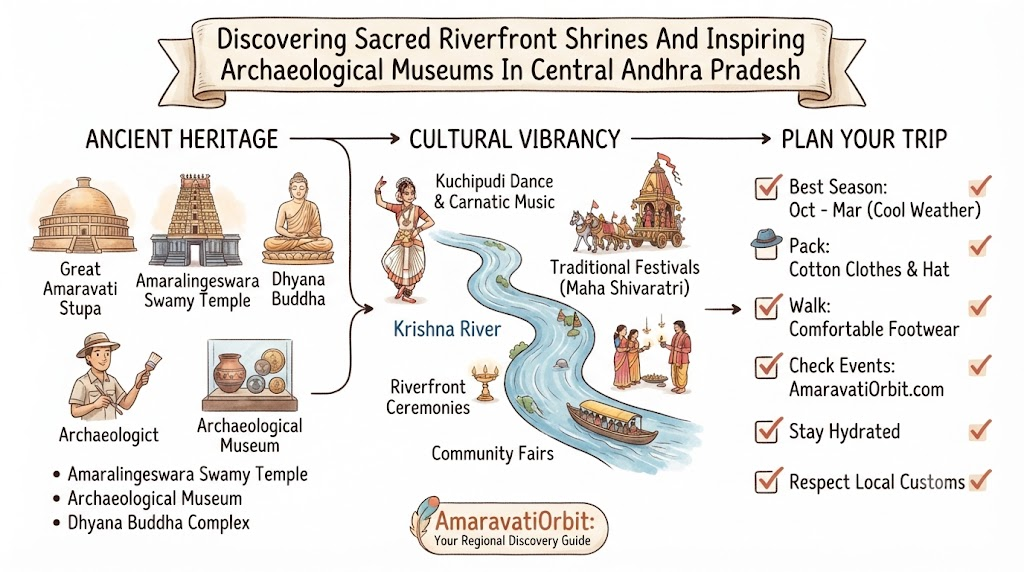
Amaravati, Andhra Pradesh, presents an exceptional destination where visitors encounter ancient Buddhist heritage, remarkable archaeology, sacred temples, living culture, and peaceful Krishna River surroundings. Most travelers arriving in the region generally share two related objectives: discovering iconic historical attractions and locating current events that showcase local community life. Exploring centuries-old monuments provides deep cultural enrichment, yet participating in ongoing workshops or celebrations delivers a truly immersive travel experience. Using trusted local discovery resources like AmaravatiOrbit allows travelers and residents to track region-wide happenings effortlessly. When you balance heritage exploration with timely local activities, your journey transforms from basic sightseeing into an authentic engagement with the heart of Andhra Pradesh.
Amaravati at a Glance
Positioned along the banks of the Krishna River in the Palnadu district of Andhra Pradesh, Amaravati stands as a cornerstone of Indian art and religious history. The settlement served as the grand imperial capital of the Satavahana dynasty, evolving into a celebrated international center for Buddhist learning and classical architecture. Beyond its archaeological significance, the surrounding area holds deep religious roots, celebrated as a sacred pilgrimage center home to traditional Shaivite worship and historic landmarks. The region sits adjacent to the developing capital territory, bridging its classical antiquities with modern regional aspirations, making it accessible for travelers moving through neighboring urban hubs.
- Geographic Location: Situated on the southern bank of the Krishna River in coastal Andhra Pradesh, near Vijayawada and Guntur.
- Core Heritage: Renowned internationally for ancient Buddhist monuments, Satavahana archaeology, and Amaravati school limestone sculptures.
- Spiritual Prominence: Houses major regional pilgrimage sites along with historically preserved sacred river bathing ghats.
- Regional Connectivity: Easily reached via nearby road transit networks, regional railway hubs, and domestic flight connections.
Amaravati Events: What Can You Expect?
Visiting the capital region offers a surprising variety of organized activities that complement traditional outdoor sightseeing. Throughout the calendar, local organizers conduct cultural dance recitals, classical music concerts, regional festivals, academic symposiums, art showcases, trade exhibitions, and community sports tournaments. Educational gatherings frequently attract students and researchers, while weekend craft bazaars provide family-friendly recreation. Because event schedules in developing regions fluctuate due to regional holidays, administrative changes, or shifting venue availability, visitors must actively verify operational dates, entry prerequisites, ticketing policies, and exact timings prior to arrival. Confirming these critical logistical details ensures your planned itinerary remains smooth and prevents unexpected arrival delays.
Events in Amaravati for Different Interests
Cultural and Traditional Events
Cultural celebrations and traditional programs across the region center on classic Andhra performing arts, sacred river rituals, temple commemorations, and traditional dance forms like Kuchipudi. These gatherings typically attract spiritual pilgrims, heritage enthusiasts, and international travelers seeking a direct connection with indigenous creative traditions. Attendees can observe classical instrumental recitals, watch vibrant stage reenactments of epic historical narratives, and enjoy community harvest celebrations. Visiting these authentic cultural performances introduces travelers directly to local customs, community hospitality, and time-honored artistic expressions that standard guidebooks rarely showcase.
Educational and Academic Events
Academic gatherings, archaeological seminars, and heritage preservation workshops regularly take place across institutional venues, catering primarily to college students, history scholars, and curious educators. These structured forums analyze regional art history, historical trade routes, ancient preservation techniques, and excavation discoveries from the Krishna River basin. Participants gain rare intellectual access to seasoned historians, field curators, and research specialists who provide critical academic perspective on regional artifacts. Engaging with these educational initiatives grants deep intellectual context, turning everyday monument tours into profound, fact-based learning experiences.
Business and Professional Events
Business forums, regional investor meetups, planning symposiums, and professional conferences take place across specialized commercial and institutional facilities within the broader capital region. These formal sessions draw corporate executives, startup founders, infrastructure specialists, and regional entrepreneurs discussing sustainable development, modern public administration, and emerging regional economic investments. Professionals attending these structured business events secure valuable regional industry connections while analyzing commercial developments shaping modern Andhra Pradesh. Participating in these gatherings enables career-oriented travelers to blend practical corporate objectives with cultural weekend sightseeing.
Family-Friendly Events
Family-oriented gatherings emphasize interactive recreation, open-air craft bazaars, storytelling workshops, community carnivals, and holiday festivities tailored specifically for parents traveling with young children. When selecting suitable family activities, visitors should deliberately evaluate stroller accessibility, shaded rest areas, sanitary facilities, age-appropriate entertainment, and immediate access to clean dining options. These cheerful public events provide relaxed environments where multiple generations can unwind together safely after completing intensive historical sightseeing. Taking your family to safe community spaces guarantees that children stay engaged, well-entertained, and culturally educated throughout the journey.
Art, Exhibitions and Workshops
Regional exhibitions, photography showcases, pottery demonstrations, and traditional art workshops give travelers hands-on access to the renowned sculptural craftsmanship of coastal Andhra Pradesh. These creative events attract design professionals, creative artisans, and curious tourists seeking authentic tactile experiences beyond passive display viewing. Visitors observe masters carving regional stone, inspect intricate handloom textiles, practice traditional painting techniques, and purchase authentic crafts directly from local artisans. Attending an art exhibit offers distinct souvenirs, artistic appreciation, and interactive educational value that deepens your overall cultural understanding.
Community and Entertainment Events
Weekend sports matches, food street markets, musical concerts, and local neighborhood assemblies bring dynamic vitality to modern public parks and regional auditoriums. These dynamic entertainment gatherings invite casual weekend travelers, curious domestic tourists, and resident families eager to experience regional socialization firsthand. Experiencing an evening food festival or public music gathering introduces travelers to popular local culinary treats, regional cinema music, and vibrant neighborhood conversations. Adding a lively entertainment showcase to your schedule provides a refreshing contrast to rigorous daytime historical and archaeological monument exploration.
Amaravati Events Today: How to Find Current Activities
Pinpointing immediate, daily activities across the region requires careful navigation because last-minute schedule adjustments, weather conditions, and venue changes happen frequently without formal public notices. Rather than relying on outdated promotional posters, travelers must consult active regional discovery platforms, examine current community message boards, and cross-reference official social channels. Always verify exact operational hours, formal registration protocols, ticket fee requirements, and age admission restrictions before leaving your hotel room. Contacting facility management directly prevents unwanted detours caused by regional holidays or maintenance closures. Maintaining a flexible backup itinerary ensures an unforeseen venue cancellation never disrupts your daily sightseeing plans.
What Is AmaravatiOrbit and What Does It Help Visitors Do?
The regional web platform serves as an accessible digital discovery portal designed to assist travelers and residents tracking local programs across the capital region. Operating as an organized online resource, the site gathers information covering cultural presentations, trade exhibitions, artisan workshops, professional gatherings, regional festivals, and general entertainment activities. Independent tourists mapping their travel agendas can review current regional happenings, locate family-friendly programs, and uncover specialized neighborhood celebrations that typical guidebooks overlook. Checking the portal clarifies dates, venue parameters, and general admission details, enabling travelers to coordinate monument visits alongside authentic cultural activities without tedious searching.
Why Use AmaravatiOrbit When Planning an Amaravati Visit?
Relying on a dedicated regional discovery directory streamlines your travel planning by consolidating disparate local announcements into a clean, searchable format. Without a targeted community resource, visitors waste precious hours scanning scattered social feeds or tracking physical notices across separate municipal districts. The platform bridges the gap between classic monument sightseeing and contemporary public activities, helping tourists incorporate interactive workshops or traditional performances into their itineraries. Whether you are a resident looking for weekend entertainment or a visiting professional seeking industry seminars, centralized event discovery saves logistical time and reveals authentic regional experiences.
How to Use AmaravatiOrbit for Event Discovery
Navigating the event discovery platform follows a straightforward process that integrates effortlessly into your standard trip preparation workflow. Start by exploring the primary directory listings to review the schedule of scheduled activities matching your travel dates and personal interests. Once you locate an appealing program, carefully inspect the specified calendar dates, opening times, precise venue addresses, entry conditions, and ticketing requirements. Confirm every administrative detail independently through venue management before traveling, ensuring that unexpected schedule adjustments do not compromise your trip. Finally, incorporate the confirmed event seamlessly into your daily sightseeing itinerary between temple and museum stops.
Things to Do in Amaravati
The destination provides an extensive variety of historical, cultural, and recreational pursuits suited for thoughtful travelers seeking a diverse itinerary. Visitors can spend quiet hours examining classic Buddhist architectural motifs, marveling at sculpted limestone friezes, and exploring extensive outdoor excavation trenches holding centuries of history. Regional archaeological museums feature expansive collections of ancient coins, restored statues, and decorative pottery fragments that illuminate the trade prosperity of coastal Andhra Pradesh. Spiritual travelers find peaceful reflection inside revered riverbank temples, while nature lovers can enjoy gentle walks along the sweeping Krishna River embankments. Savoring spicy regional cuisine, photographing architectural details, and wandering through rural artisan markets round out a memorable journey.
Places to Visit in Amaravati
Tourists must distinguish between landmarks positioned directly within historic Amaravati and prominent attractions situated across the wider capital region and neighboring districts. Within the central heritage zone, visitors can tour the celebrated Mahachaitya excavation grounds, explore the Amaravati Archaeological Museum, and visit the renowned Amareswara Swamy Temple honoring Lord Shiva along the river. Just a short drive outward, travelers encounter the towering Dhyana Buddha statue featuring an expansive meditation park overlooking the river waters. Neighboring regional destinations across the river, such as the ancient rock-cut Undavalli Caves, Bhavani Island, and regional hills, lie in the neighboring Guntur and Vijayawada districts and should be planned as complementary day-trip extensions rather than direct town landmarks.
Amaravati Tourist Places for Different Travelers
For History Lovers
History enthusiasts will appreciate the ancient excavation trenches surrounding the historic Great Stupa, where foundational brick layouts reveal centuries of changing architectural styles. The regional archaeological museum houses recovered limestone railings, intricate lifestyle carvings, and classical inscriptions, offering hours of deep study. Walking among these preserved remnants allows historians to visualize the thriving Buddhist intellectual center that once traded with ancient Mediterranean empires. Examining ancient script engravings and sculptural friezes firsthand provides researchers with unmatched historical clarity and physical connection to ancient Indian civilization.
For Spiritual Travelers
Pilgrims seeking spiritual quietude and religious devotion can spend serene mornings participating in traditional rituals at the historic Amareswara Swamy Temple near the riverfront. The sacred river bathing ghats offer a tranquil atmosphere for prayer, contemplation, and traditional ceremonial observances along the moving waters of the Krishna. Nearby, the expansive Dhyana Buddha site provides a spacious, open meditation area set beneath a monumental seated figure, welcoming seekers of all philosophical paths. These distinct religious landmarks offer restful spaces for peaceful contemplation away from crowded travel schedules.
For Families
Families traveling with children will discover a welcoming mix of spacious landscaped parks, open-air historical spaces, and educational heritage exhibits across the town. The manicured green lawns surrounding the Dhyana Buddha complex provide safe, expansive spaces where children can walk freely while parents enjoy scenic river panoramas. The indoor archaeological galleries showcase ancient artifacts, historical models, and decorative figures that spark curious questions from young minds. Selecting sites with flat walking paths, accessible restrooms, and shaded resting spots ensures that every family member enjoys an entertaining, stress-free educational excursion.
For Students
Undergraduate students, research fellows, and educational tour groups can treat the entire heritage district as an open-air historical and archaeological textbook. Inspecting preserved Satavahana brickwork, structural foundations, and stone carving techniques helps design, architecture, and history students grasp ancient craftsmanship. Informational panels placed across the central excavation zones and museum collections explain the evolution of Buddhist stupa architecture in exceptional technical detail. Visiting these archaeological reserves provides students with real-world context that enhances academic classroom learning and brings dry historical chapters to vibrant life.
For Photography Enthusiasts
Visual creators and photography enthusiasts will find abundant artistic inspiration within the region’s interplay of aged stonework, scenic waterways, and rural textures. Morning golden hours provide dramatic lighting across the weathered limestone reliefs and deep excavation pits at the archaeological grounds. Along the broad banks of the Krishna River, photographers can capture atmospheric landscapes, traditional wooden fishing boats, and colorful skies at sundown. Respectful travel photographers can also photograph living culture, expressive temple architecture, and bustling village markets that frame daily life along coastal Andhra Pradesh.
For Weekend Travelers
Working professionals and weekend explorers from nearby cities can escape urban congestion by taking a relaxing short break centered on slow heritage exploration. The town’s compact geographic footprint enables travelers to tour primary archaeological sites, admire river vistas, and enjoy traditional meals without feeling rushed. Combining a morning monument tour with a peaceful afternoon river walk creates a balanced, revitalizing itinerary that fits neatly into a standard two-day weekend. Returning travelers often schedule their visits around weekend cultural performances, turning a simple mini-vacation into an engaging community experience.
Amaravati Tourism: Heritage Meets Modern Development
Regional tourism in this unique territory reflects an engaging coexistence of ancient history, spiritual heritage, and emerging regional infrastructure. The historic town preserves centuries of Buddhist scholarship and trade, while the surrounding capital zone develops modern connectivity, wider roadways, and improved visitor services. This deliberate balance allows international travelers and domestic pilgrims to navigate timeless archaeological spaces backed by increasingly efficient transit networks. Because development across the wider district remains an ongoing, multi-year process, tourists can witness ancient Indian history coexisting alongside modern urban planning. The expanding visitor interest reflects a shared desire to preserve classical cultural foundations while embracing future economic and educational possibilities.
Amaravati Travel Guide: Planning Your Visit
A comprehensive visit requires smart planning regarding transit logistics, seasonal climate patterns, accommodation locations, and daily site sequences. A single dedicated day covers core monuments efficiently, but spending a full weekend allows you to explore surrounding river landscapes, regional caves, and local cultural performances without travel fatigue. Winters bring mild, pleasant temperatures perfect for open-air walking, whereas summer months demand early morning sightseeing, sun protection, and continuous hydration. When entering active temples, remember to dress modestly, remove footwear, and strictly observe posted photography rules. Planning your transit route between river ghats and museum galleries guarantees an enjoyable, culturally respectful visit.
Amaravati Experience Planner
| Experience | Best For | Suggested Time | Planning Tip |
| Great Stupa Archaeological Site | History buffs, researchers, solo travelers | 2 to 3 hours | Arrive early morning to avoid strong midday heat and sun glare. |
| Archaeological Museum Galleries | Students, academic groups, families | 1.5 to 2 hours | Check weekly museum operating schedules and photography rules in advance. |
| Amareswara Swamy Temple | Pilgrims, cultural travelers, spiritual seekers | 1 to 2 hours | Dress modestly according to local temple norms; remove shoes at entry. |
| Dhyana Buddha Complex | Families, photographers, meditation seekers | 1 to 2 hours | Visit during late afternoon to catch scenic sunset views across the Krishna River. |
| Krishna Riverbank Strolls | Nature lovers, weekend explorers, couples | 1 hour | Wear comfortable walking footwear and carry personal insect repellent. |
| Regional Craft Workshops | Art collectors, creative tourists, families | 2 to 3 hours | Verify workshop dates and pre-register online when attendance is capped. |
One-Day Amaravati Itinerary
A single-day trip through the historic heritage town requires an early start to maximize outdoor sightseeing before the afternoon sun peaks. Begin your morning tour around eight o’clock at the Great Stupa, exploring ancient brick foundations and sculpted limestone friezes during the coolest hours. Transition around mid-morning to the nearby Archaeological Museum to inspect preserved stone artifacts, coins, and educational exhibits in shaded comfort. By afternoon, visit the historic Amareswara Swamy Temple to experience traditional coastal Andhra temple architecture and observe peaceful riverfront worship rituals. Conclude your day around the expansive Dhyana Buddha complex, enjoying relaxing river views and catching any scheduled evening cultural performances.
- Morning: Explore the Great Stupa excavation site and outdoor archaeological remnants.
- Late Morning: Tour the Archaeological Museum to view ancient sculptures and relics.
- Afternoon: Visit the riverside Amareswara Swamy Temple and savor a traditional Andhra thali.
- Evening: Relax at the Dhyana Buddha park and catch an evening cultural program.
Weekend Amaravati Itinerary
A full weekend getaway provides ample time to combine the core historical sights of the heritage town with scenic destinations across the wider region. Dedicate your first day exclusively to historical immersion by touring the Great Stupa, the Archaeological Museum, and the local temple, followed by a relaxed riverside dinner featuring authentic local dishes. On your second day, branch outward into the surrounding district to explore the rock-cut architectural marvels of the Undavalli Caves near the Krishna River. Conclude your afternoon by attending a verified local cultural program, craft workshop, or community event in the surrounding capital region before beginning your return journey home.
- Day 1 (Core Heritage & Archaeology):
- Morning visit to the Great Stupa ruins and Buddhist excavation trenches.
- Midday exploration of the central Archaeological Museum collection.
- Traditional coastal Andhra vegetarian lunch at a local restaurant.
- Afternoon darshan at the historic Amareswara Swamy Temple.
- Sunset relaxation and landscape photography along the Krishna Riverbanks.
- Day 2 (Regional Landmarks & Local Culture):
- Morning excursion to the ancient multi-tiered Undavalli Caves nearby.
- Midday visit to the Dhyana Buddha complex and meditation center.
- Afternoon participation in a local craft workshop or community gathering.
- Evening shopping for regional handlooms and traditional brassware before departure.
Real-Life Scenarios: How Different Visitors Can Experience Amaravati
A university research fellow traveling alone might spend hours documenting brick layouts at the Great Stupa before spending the afternoon cross-referencing inscriptions at the museum, prioritizing academic study over leisure activities. Conversely, an urban family visiting for the weekend might prefer a relaxed morning stroll around the Dhyana Buddha park, followed by an educational walk through the museum, and an early evening community performance where children can play safely. Meanwhile, a working professional taking a short road trip from Hyderabad or Visakhapatnam might balance a focused morning monument tour with an afternoon business meetup in the capital territory, proving that the region accommodates diverse travel styles.
- Solo Academic Researcher: Focuses on detailed site analysis, sculptural photography, catalog reading, and quiet historical contemplation.
- Traveling Family with Children: Balances shaded educational museum stops, open park walks, predictable meal times, and kid-friendly entertainment.
- Regional Weekend Professional: Combines rapid monument sightseeing, regional culinary exploration, and participation in scheduled trade or community events.
Event Planning Checklist
| What to Check | Why It Matters | What the Traveler Should Do |
| Event Date | Community programs may shift dates due to administrative decisions or holidays. | Cross-check the published schedule 24 hours before your departure. |
| Operational Timing | Sessions may run strictly on schedule or experience seasonal delays. | Plan to arrive at least fifteen minutes prior to the scheduled start time. |
| Specific Venue Address | Venues across the capital district share similar institutional titles. | Confirm exact GPS coordinates and landmark references on your map. |
| Registration Requirements | Specialized workshops and academic lectures frequently cap audience capacity. | Complete digital registrations and secure booking receipts ahead of arrival. |
| Ticketing Costs | Certain cultural festivals charge entrance fees while others offer free admission. | Carry local cash alongside digital payment apps for ticket counters. |
| Age Suitability | Certain technical lectures or quiet performances are unsuitable for active toddlers. | Review program descriptions to confirm family-friendly admission policies. |
| Parking Facilities | Heritage locations may have restricted vehicle zones or limited parking stalls. | Verify designated public parking areas to avoid traffic congestion. |
| Schedule Changes | Inclement weather or unexpected issues can trigger sudden venue relocations. | Check digital event updates or call venue management directly before leaving. |
Common Mistakes to Avoid When Visiting Amaravati
- Underestimating Midday Heat: Walking through unshaded archaeological excavation pits during peak afternoon hours leads quickly to heat exhaustion and dehydration.
- Confusing Landmark Locations: Mistakenly assuming that regional attractions like the Undavalli Caves or Bhavani Island sit inside Amaravati town limits leads to travel delays.
- Ignoring Museum Holiday Closures: Showing up at the regional archaeological museum without confirming weekly public holiday closures leaves you standing outside closed gates.
- Overlooking Dress Codes: Wearing inappropriate casual attire to active sacred temples leads to denied entry at primary inner sanctums.
- Neglecting Event Verification: Traveling to attend a community workshop without verifying the latest schedule updates risks encountering unexpected cancellations.
- Failing to Carry Cash: Relying exclusively on mobile digital payment apps in smaller riverfront shops can cause inconvenience during spot transactions.
- Rushing the Itinerary: Squeezing too many scattered regional attractions into a single afternoon leaves insufficient time to appreciate the intricate stupa carvings.
- Forgetting Sun Protection: Neglecting to bring broad-brimmed hats, protective umbrellas, quality sunglasses, and sunscreen makes open-air monument exploration uncomfortable.
Practical Tips for a Better Amaravati Visit
- Schedule Early Departures: Begin your outdoor monument sightseeing by eight o’clock in the morning to enjoy mild breezes and pleasant natural lighting.
- Carry Ample Water: Keep reusable, insulated water bottles filled throughout your journey to stay properly hydrated during outdoor walking tours.
- Wear Slip-On Footwear: Choose comfortable, sturdy walking shoes that can be removed quickly when entering active temple courtyards and religious sanctuaries.
- Verify Cultural Programs: Check active online community event listings before setting out to coordinate your historical sightseeing with regional performances.
- Respect Sacred Boundaries: Always request verbal permission before photographing temple worshippers, ritual practitioners, or local community members.
- Hire Certified Local Guides: Engaging an authorized archaeological guide at the Great Stupa illuminates subtle sculptural narratives that casual glances miss.
- Keep Travel Plans Flexible: Build 30-minute buffers into your daily travel plan to accommodate scenic river views, tea breaks, or spontaneous artisan stops.
- Pack Light Daypacks: Carry lightweight backpacks containing personal medications, wet wipes, mobile power banks, and sun protection gear for effortless daily movement.
How AmaravatiOrbit Fits Into a Travel Plan
Integrating a trusted regional discovery platform into your overall travel workflow ensures you experience both iconic heritage landmarks and contemporary community life. Weeks before departing, you can explore the directory to discover scheduled festivals, music performances, or art workshops taking place during your travel window. As you assemble your daily schedule, you can easily arrange monument stops, museum hours, and dining breaks around confirmed event timings. Before setting out each morning, a quick check lets you confirm venue locations and program timings, avoiding unexpected schedule conflicts. Combining historical monument exploration with vibrant local events turns a conventional sightseeing trip into a well-rounded, memorable cultural journey.
Frequently Asked Questions
1. Where is historic Amaravati located within Andhra Pradesh?
Historic Amaravati sits along the southern banks of the Krishna River within the Palnadu district of coastal Andhra Pradesh. It is located roughly thirty-five kilometers from Guntur and approximately forty kilometers from Vijayawada, making it easily accessible via regional highways, bus routes, and nearby railway junctions.
2. What is the historic Amaravati Stupa famous for?
The Amaravati Stupa, or Mahachaitya, is internationally celebrated as a masterpiece of ancient Buddhist architecture and early sculptural art. Dating back to the Satavahana era, its intricate limestone carvings, decorative medallions, and narrative relief panels significantly influenced Buddhist art across South and Southeast Asia.
3. Which railway station and airport provide the closest access?
Vijayawada Junction serves as the primary major railway hub, providing extensive express train connections across India. For air travelers, Vijayawada International Airport at Gannavaram sits approximately fifty-five kilometers away, offering frequent domestic flights to major metropolitan centers like Hyderabad, Bengaluru, and Chennai.
4. What are the operating hours for the Archaeological Museum?
The Amaravati Archaeological Museum generally opens its exhibition galleries from 10:00 AM to 5:00 PM, operating six days a week while remaining closed on Fridays. Because official holiday schedules can shift, visitors should confirm operating hours before finalizing their morning itineraries.
5. Are there good accommodation options directly in Amaravati?
The town provides modest guesthouses, pilgrim accommodations, and boutique lodges suited for short overnight visits. Travelers looking for upscale business hotels, premium dining, and comprehensive resort amenities typically stay in nearby Vijayawada or Guntur, making the easy daily commute by car.
6. What should visitors wear when touring religious sites?
Modest attire that covers shoulders, upper arms, and knees is required when entering active shrines like the Amareswara Swamy Temple. Loose cotton clothing works best for the regional climate, and easy-to-remove slip-on shoes save time at temple entrances where footwear is prohibited.
7. Which months offer the best weather for sightseeing?
The winter season from October through March delivers the most comfortable weather, with mild daytime temperatures and cool breezes off the Krishna River. Summer months bring intense heat and humidity, making mid-afternoon outdoor walking across exposed excavation pits physically taxing.
8. Is Amaravati suitable for a single-day family excursion?
Yes, the compact layout of central heritage landmarks makes the town ideal for a well-paced day trip with family. Children enjoy the open green lawns around the Dhyana Buddha and the intriguing museum exhibits, provided the day is planned with shaded midday breaks.
9. How can tourists find current cultural events in Amaravati?
Visitors can track active regional programs by checking trusted local discovery portals like AmaravatiOrbit alongside community cultural boards. Cross-referencing online listings with venue management helps confirm performance times, seat availability, and ticketing terms before you leave your hotel.
10. Can visitors take photographs inside the heritage sites?
Outdoor photography for personal use is widely permitted across the Great Stupa excavation grounds and the Dhyana Buddha park. However, indoor museum galleries and the inner sanctum of the Amareswara Swamy Temple enforce strict photography bans that visitors must honor.
11. What regional dishes should travelers try during their visit?
Visitors should sample an authentic Andhra vegetarian thali, renowned for flavorful steamed rice, tangy gongura pachadi, spiced podis, fragrant rasam, and fresh curd. Local street vendors and sweet shops also sell regional delicacies, freshly fried snacks, and strong filter coffee near the main bus stands.
12. Are the Undavalli Caves located inside Amaravati town?
No, the Undavalli Caves are situated near the banks of the Krishna River closer to Vijayawada, approximately thirty kilometers east of historic Amaravati. While frequently included in regional tour packages, they represent a distinct historical site that requires its own dedicated travel time.
Conclusion
Amaravati brings together ancient Buddhist architecture, deep spiritual traditions, fascinating archaeological discoveries, peaceful riverfront scenery, and a growing calendar of community gatherings. Exploring the region beyond a quick photo stop reveals how centuries of creative history continue to inspire coastal Andhra Pradesh today. By balancing morning walks among ancient stupa ruins with afternoon museum visits, scenic sunset river strolls, and vibrant local events, travelers can craft an exceptionally rewarding day trip or weekend getaway. Checking trusted local discovery resources like AmaravatiOrbit helps you stay updated on regional programs, ensuring you experience the very best heritage, community culture, and warm hospitality this historic destination has to offer.