Introduction
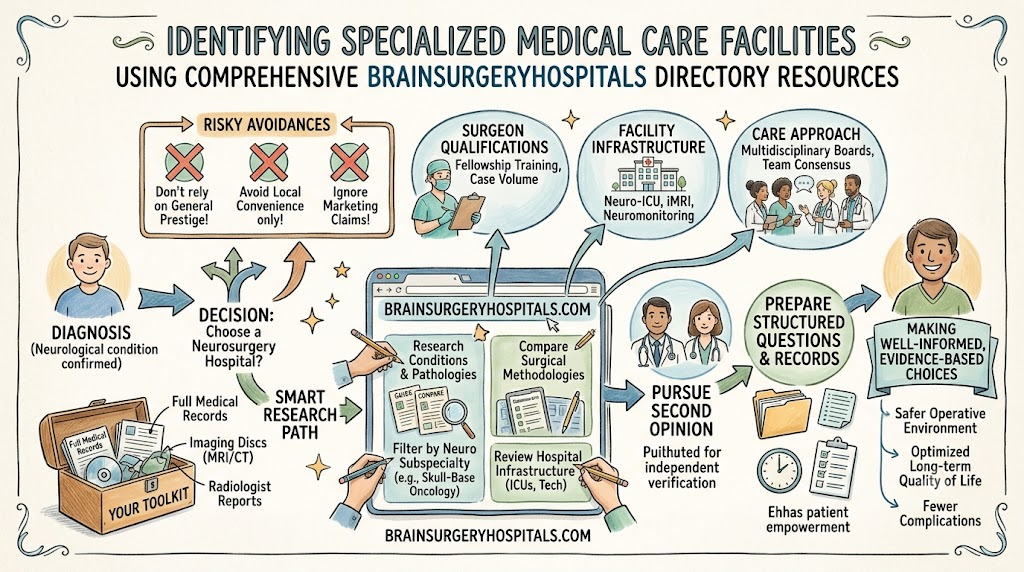
Navigating a complex neurological diagnosis can feel overwhelming, especially when surgical intervention becomes a potential part of your care plan. Understanding your specific diagnosis, exploring modern treatment options, and evaluating specialized medical facilities are essential steps before making critical healthcare decisions. Patients and caregivers often face significant challenges when searching for accurate, objective medical information amidst conflicting online sources. Making well-informed choices requires evaluating medical centers based on their specific clinical expertise, technological capabilities, and multidisciplinary care models rather than relying solely on general reputation. Exploring second opinions further empowers families to confirm diagnoses, understand alternative therapies, and approach major medical decisions with clarity and confidence. Platforms like BrainSurgeryHospitals help bridge this information gap by offering structured research resources to support your journey toward optimal neurological health.
What Are Brain Surgery Hospitals?
Brain surgery hospitals are specialized medical institutions that offer comprehensive diagnostic, surgical, and therapeutic care for complex conditions affecting the brain, spine, and central nervous system. These facilities bring together multidisciplinary medical teams, including experienced neurosurgeons, neurologists, neuro-oncologists, neuroradiologists, and specialized critical care nurses. A dedicated hospital provides advanced infrastructure, such as intraoperative imaging suites, neuro-intensive care units, and specialized rehabilitation facilities tailored to recovery. Different facilities often specialize in specific areas, such as pediatric neurosurgery, cerebrovascular interventions, or complex neuro-oncology. Selecting a facility that aligns with a patient’s specific medical diagnosis ensures access to targeted clinical expertise and equipment tailored for optimal outcomes.
Why Choosing the Right Neurosurgery Hospital Matters
Selecting the appropriate medical facility for neurological care directly influences the safety, accuracy, and overall success of surgical and non-surgical interventions. Complex neurological conditions demand a high level of specialist expertise, integrated diagnostic technologies, and immediate access to neuro-intensive care units. Multidisciplinary medical teams work together to evaluate intricate cases, ensuring that surgical planning accounts for functional preservation and overall patient health. Advanced hospitals also provide tailored post-operative rehabilitation programs, which are essential for long-term recovery and regaining physical or cognitive functions. Relying solely on general hospital reputations or superficial rankings can be misleading, as individual medical centers possess varying levels of specialized expertise across specific conditions.
What Does BrainSurgeryHospitals.com Do?
BrainSurgeryHospitals serves as an educational research platform designed to help patients and families navigate complex neurological healthcare decisions with confidence and clarity. The platform provides structured information regarding brain conditions, potential surgical treatments, specialized diagnostic procedures, and location-based medical directory research. By consolidating verified resources, it allows individuals to explore various treatment approaches, understand doctor qualifications, and review second-opinion guidelines. The website maintains a strict informational role, helping users prepare for clinical appointments without offering direct medical diagnoses, treatment decisions, or unverified provider ratings. Users can leverage these educational tools to organize their health records, formulate intelligent questions, and participate actively in medical consultations.
How to Research Brain Surgery Hospitals
- Understand the diagnosis: Review pathology reports, imaging results, and physician explanations to clarify the exact neurological condition.
- Identify appropriate specialties: Seek out centers with sub-specialists who routinely treat your specific condition.
- Review hospital facilities: Confirm the presence of specialized neuro-intensive care units, advanced operating rooms, and modern diagnostic imaging.
- Research medical specialists: Check credentials, board certifications, surgical volumes, and clinical focus areas of individual surgeons.
- Compare treatment approaches: Evaluate all available surgical options, non-invasive therapies, and conservative management plans.
- Consider a second opinion: Consult additional specialists to validate diagnostic accuracy and confirm proposed treatment pathways.
- Prepare records and questions: Gather complete imaging files, lab results, and structured questions prior to medical consultations.
Common Brain Surgery and Neurosurgical Treatment Options
| Condition or Situation | Possible Treatment Categories | Important Considerations |
| Brain Tumors | Surgical resection, biopsy, radiation, chemotherapy | Tumor location, histology, preservation of motor and cognitive functions. |
| Cerebral Aneurysms | Microvascular clipping, endovascular coiling, flow diversion | Aneurysm size, shape, rupture status, patient overall vascular health. |
| Drug-Resistant Epilepsy | Surgical resection, laser ablation, neuromodulation | Precise identification of seizure foci through detailed EEG monitoring. |
| Structural Lesions | Minimally invasive endoscopic or keyhole surgery | Pre-operative imaging, anatomical access, surgeon technical expertise. |
Understanding different medical options helps patients evaluate how surgical interventions align with their specific health needs. Treatment categories vary widely depending on the underlying pathology, ranging from open microsurgical procedures to minimally invasive techniques. Every clinical approach carries specific benefits, risks, and recovery profiles that require careful evaluation alongside a medical team. Diagnostic testing, precise lesion localization, and patient health status play pivotal roles in determining surgical viability. Engaging in open discussions regarding procedural goals ensures patients remain fully informed throughout their care journey.
Brain Tumor Treatment
Brain tumor management relies on a personalized approach determined by the tumor’s type, grade, size, and anatomical location within the brain tissue. Surgical resection remains a primary intervention aimed at removing as much tumor tissue as possible while protecting critical neurological functions. When complete removal carries excessive risk, surgeons may perform a diagnostic biopsy to guide subsequent therapies like radiation or chemotherapy. Observation strategies may be recommended for slow-growing, benign lesions that cause no immediate symptoms. A multidisciplinary tumor board routinely reviews complex cases to blend surgical expertise with targeted medical oncology. Preserving quality of life and cognitive ability remains the central priority when planning any brain tumor intervention.
Brain Aneurysm Surgery
A cerebral aneurysm involves a weakened, bulging area in the wall of a brain artery that carries risks of leakage or rupture. Unruptured aneurysms are often monitored or treated preemptively, whereas ruptured aneurysms represent immediate medical emergencies requiring rapid intervention. Surgical clipping involves placing a tiny metal clip across the neck of the aneurysm to block blood flow. Endovascular procedures, such as coiling or flow diversion, offer less invasive internal approaches through the vascular system. Treatment choices depend heavily on the aneurysm’s size, shape, location, and the patient’s general health status. Emergency symptoms like sudden, severe headaches demand instant medical evaluation rather than online research.
Epilepsy Surgery
Epilepsy surgery offers an effective option for individuals living with drug-resistant epilepsy, where anti-seizure medications fail to provide adequate symptom control. Candidates undergo a comprehensive evaluation, including prolonged electroencephalogram monitoring, functional MRI scans, and neuropsychological testing to pinpoint the exact origin of seizures. Surgical approaches range from resecting localized brain tissue responsible for seizures to implanting neuromodulation devices or performing minimally invasive thermal ablation. Surgery is not suitable for every individual, particularly if seizure activity originates near vital areas controlling speech or movement. A specialized epilepsy team thoroughly evaluates each candidate to determine if surgical intervention can safely reduce seizure frequency.
Minimally Invasive Brain Surgery
Minimally invasive neurosurgery utilizes specialized tools, endoscopes, and intraoperative guidance systems to access brain tissue through tiny incisions or natural openings. Techniques such as neuroendoscopy allow surgeons to remove select tumors or treat hydrocephalus with minimal disruption to surrounding healthy brain structures. These approaches can reduce post-operative pain, shorten hospital stays, and accelerate initial recovery periods compared to traditional open craniotomies. However, minimally invasive approaches have clear clinical limitations and are not technically feasible for all tumor types or complex vascular conditions. Suitability depends entirely on precise lesion location, patient anatomy, and the specific expertise of the attending neurosurgical team.
What Should You Compare Between Hospitals?
| Comparison Factor | Questions Patients Should Ask |
| Specialist Expertise | How many procedures of this specific type does the surgical team perform annually? |
| Diagnostic Capabilities | Does the facility feature intraoperative MRI, advanced CT imaging, and functional mapping? |
| Care Multidisciplinary | Will my case be reviewed by a panel including neurologists, surgeons, and oncologists? |
| Emergency Facilities | Is there a dedicated neuro-intensive care unit staffed by certified neuro-intensivists? |
| Rehabilitation Services | Are specialized physical, speech, and occupational therapies integrated into post-op care? |
| Second-Opinion Support | Does the hospital offer streamlined processes for reviewing external scans and medical files? |
Comparing healthcare providers across these critical parameters enables patients to make well-informed healthcare decisions. Evaluating facility infrastructure alongside surgical experience ensures the chosen hospital is fully equipped to handle both planned procedures and unexpected complications. Open lines of communication with administrative and clinical staff reflect a patient-centered approach to care. Additionally, access to comprehensive rehabilitation services right after surgery supports smoother physical and functional recovery. Asking targeted questions during initial consultations provides clear insights into the hospital’s operational standards and patient support systems.
How BrainSurgeryHospitals.com Can Help With Research
BrainSurgeryHospitals.com helps patients systematically navigate healthcare information following a new diagnosis or recommendation for surgery. The platform simplifies complex medical concepts, helping users learn about diagnostic imaging, potential treatment paths, and surgical terminology before meeting with specialists. Patients can utilize the site directory to explore hospitals and neurosurgeons based on specialized care areas, location, and facility capabilities. It also offers structured guidance on gathering medical records and seeking second opinions to ensure treatment plans are thoroughly vetted. While the platform provides extensive educational insights, it operates as a complementary research resource and does not replace professional medical evaluations.
Real-Life Scenario: Researching a Brain Tumor
A patient receiving an initial brain tumor diagnosis often experiences confusion and urgency, making systematic research critical. Instead of selecting the nearest hospital based purely on general reputation, the individual gathers complete MRI records and pathology reports. The patient uses educational resources to understand the specific tumor classification and identifies surgical specialists who handle similar cases. By preparing a targeted list of questions regarding surgical approach, functional preservation, and recovery expectations, the patient approaches initial consultations with confidence. Seeking a second opinion from an established neuro-oncology center confirms the treatment pathway, ensuring the patient and family feel fully supported before proceeding with care.
How to Use BrainSurgeryHospitals.com Responsibly
Using an online healthcare platform responsibly requires treating content as an educational foundation rather than personal medical advice. Patients should begin by learning key terminology related to their official diagnosis and reviewing common treatment categories. Utilizing the platform to organize medical records and formulate thoughtful questions enhances the quality of face-to-face physician consultations. Provider directory information should serve as an initial screening tool, followed by direct verification of credentials and clinical experience. Users must refrain from changing prescribed treatment regimens or ignoring medical advice based on online research. Qualified healthcare professionals remain the sole source for accurate medical diagnosis and individualized treatment plans.
What, Why and How Framework
| Stage | Focus Area | Primary Objective |
| WHAT | Information Gathering | Learn specific facts about the diagnosis, surgical terminology, and core treatment options. |
| WHY | Understanding Rationale | Recognize why specific surgical or non-surgical strategies are recommended for your condition. |
| HOW | Provider Comparison | Evaluate medical centers based on specialist experience, technology, and support care. |
| REVIEW | Second Opinion | Validate diagnostic findings and explore alternative treatment recommendations. |
| DECIDE | Physician Consultation | Partner with qualified neurosurgeons to finalize an individualized clinical treatment plan. |
| FOLLOW-UP | Recovery & Rehabilitation | Engage in post-operative monitoring, therapy, and long-term neurological care management. |
Adopting this structured framework ensures that patients navigate their healthcare journey with clarity and logical progression. Moving systematically from initial research to clinician-guided decisions minimizes anxiety and prevents information overload. Each stage emphasizes patient empowerment, balanced education, and clear communication with specialized healthcare providers. Understanding the rationale behind clinical decisions fosters trust between patients and their surgical care teams. Ultimately, combining thorough independent research with professional clinical guidance establishes a solid foundation for achieving the best possible health outcomes.
Final Checklist Before Choosing a Neurosurgery Provider
- Confirm diagnosis accuracy: Ensure all imaging, pathology, and lab reports have been reviewed by sub-specialists.
- Verify doctor credentials: Check board certifications, surgical experience, and sub-specialty expertise related to your condition.
- Evaluate hospital infrastructure: Ensure availability of dedicated neuro-ICUs, intraoperative imaging, and emergency facilities.
- Explore treatment alternatives: Discuss all surgical, non-surgical, and minimally invasive options with your care team.
- Understand risks and recovery: Clarify expected outcomes, potential surgical risks, and typical rehabilitation timelines.
- Gather complete medical records: Maintain copies of all MRI/CT scans, doctor notes, and diagnostic test results.
- Obtain a second opinion: Consult an independent specialist to confirm the proposed surgical approach.
- Establish follow-up care: Confirm long-term monitoring, post-operative rehabilitation, and emergency contact procedures.
Real-Life Scenarios / Experiences
- Evaluating complex vascular conditions: A patient diagnosed with an unruptured cerebral aneurysm researches endovascular coiling versus open surgical clipping, ultimately using educational resources to prepare structured questions for a cerebrovascular surgeon.
- Navigating drug-resistant epilepsy: A family explores specialized epilepsy centers equipped with advanced EEG monitoring and surgical ablation capabilities after standard anti-seizure medications fail to manage daily seizures.
- Seeking a brain tumor second opinion: An individual diagnosed with a deep-seated skull base tumor uses online healthcare directories to identify high-volume surgical hospitals specializing in minimally invasive endoscopic techniques.
- Planning pediatric neurological care: Parents research dedicated children’s hospitals with pediatric neurosurgeons, specialized child-life support, and integrated family rehabilitation programs following a pediatric brain diagnosis.
Common Mistakes to Avoid
Choosing Only by General Rankings
Selecting a facility purely because of high general rankings can be misleading, as overall reputation does not guarantee specific expertise in your particular neurological condition.
Selecting Facilities Based Solely on Price
Prioritizing lower costs or superficial financial convenience over specialized surgical experience and advanced neuro-intensive facilities can compromise care quality and clinical outcomes.
Searching Exclusively by Procedure Name
Focusing only on a specific surgical technique rather than understanding the underlying condition can lead patients to overlook safer, non-surgical, or alternative medical options.
Ignoring Non-Surgical Treatment Options
Overlooking conservative management, medication therapies, or radiation options may result in unnecessary surgical intervention when non-invasive approaches could be equally effective.
Failing to Collect Complete Medical Records
Arriving at specialist consultations without original imaging CDs, pathology slides, or formal clinical reports delays diagnostic evaluations and prevents immediate, accurate treatment planning.
Believing Guaranteed Outcome Claims
Trusting clinics or online marketing that promise guaranteed surgical cures or risk-free procedures is dangerous, as all neurosurgical interventions carry inherent clinical risks.
Treating Directory Verification as a Recommendation
Assuming that a listing on a medical platform constitutes an official endorsement or guarantee of quality can lead to unverified choices without thorough personal research.
Delaying Emergency Care While Researching
Spending precious time researching options online during acute neurological symptoms, such as sudden severe headaches or sudden weakness, delays critical life-saving emergency treatment.
How to Prepare for a Neurosurgery Consultation
Arriving fully prepared for a neurosurgical consultation ensures that you make the most of your time with the medical specialist. Patients should organize a comprehensive folder containing original diagnostic imaging scans on CD/USB, formal neuroradiology reports, pathology results, and clinical notes from referring physicians. Bringing a complete list of current prescription medications, over-the-counter supplements, and known allergies is essential for safety planning. Additionally, patients should document a detailed timeline of symptoms, previous treatments, and relevant family medical history. Having a trusted family member attend the appointment helps take notes, manage paperwork, and provide emotional support during critical discussions.
1. What procedure do you perform most frequently for this specific condition?
Understanding the surgeon’s routine volume with your precise diagnosis ensures they possess the specialized technical expertise required for optimal outcomes.
2. What are the potential risks and complications associated with this surgery?
Discussing specific procedural risks helps patients weigh surgical benefits against potential complications and understand how the team manages unexpected issues.
3. What non-surgical or minimally invasive alternatives are available for my case?
Exploring all viable treatment modalities ensures you select the least invasive approach that effectively addresses your condition safely.
4. What type of post-operative recovery and rehabilitation should I expect?
Knowing the anticipated hospital stay, physical restrictions, and necessary rehabilitation therapies helps patients and caregivers plan for recovery support.
5. Will my case be reviewed by a multidisciplinary medical team?
Confirming that oncologists, neurologists, and radiologists collaborate on your treatment plan guarantees comprehensive, well-rounded clinical evaluation.
6. How does the hospital handle post-surgical emergencies after discharge?
Clarifying direct contact channels, emergency protocols, and neuro-intensive support resources provides peace of mind throughout the recovery period.
Frequently Asked Questions
1. What services do specialized brain surgery hospitals provide?
Specialized neurosurgery hospitals offer comprehensive diagnostic evaluations, advanced surgical interventions, intraoperative imaging, dedicated neuro-intensive care, and post-operative rehabilitation services. They bring together multidisciplinary teams of neurosurgeons, neurologists, neuro-oncologists, and specialized nurses to treat complex conditions affecting the brain and central nervous system.
2. How do I know if I need a neurosurgery second opinion?
A second opinion is valuable when facing a complex diagnosis, major brain surgery recommendation, uncertain diagnostic findings, or high-risk procedures. Consulting an independent neurosurgeon helps confirm the original diagnosis, explore alternative minimally invasive or non-surgical treatment options, and provide reassurance before making major healthcare choices.
3. What is the difference between open and minimally invasive brain surgery?
Open brain surgery involves a craniotomy to access brain tissue, while minimally invasive neurosurgery uses small keyhole incisions, endoscopes, or image-guided tools. Minimally invasive techniques aim to minimize disruption to surrounding healthy brain structures, often reducing post-operative pain and recovery time when anatomically feasible.
4. How can BrainSurgeryHospitals.com assist in my healthcare research?
The platform serves as an educational resource providing clear information on neurological conditions, treatment categories, diagnostic tests, and provider research strategies. It helps patients understand medical terminology, prepare for specialist consultations, and identify medical centers that specialize in specific brain conditions and surgical interventions.
5. Are all brain tumors treated with surgical procedures?
No, brain tumor treatment depends on the tumor’s type, size, location, grade, and overall patient health. Treatments range from surgical resection and diagnostic biopsy to radiation therapy, targeted medications, chemotherapy, or active monitoring for slow-growing, non-symptomatic benign tumors.
6. What should I bring to a neurosurgical consultation?
Patients should bring complete medical records, including diagnostic imaging scans on CD/USB, neuroradiology reports, pathology results, current medication lists, and a history of previous treatments. Bringing a written list of questions and a family member for support is also highly recommended.
7. How long does recovery typically take after brain surgery?
Recovery timelines vary significantly depending on the underlying condition, surgical procedure, overall health, and individual healing rates. Initial hospital stays range from a few days to over a week, while full physical and cognitive recovery can take several weeks to several months.
8. What is the role of a neuro-intensive care unit?
A neuro-intensive care unit (neuro-ICU) provides specialized, round-the-clock monitoring and critical care for patients recovering from complex neurosurgical procedures or severe neurological conditions. It is staffed by certified neuro-intensivists and specialized nurses trained in neurological monitoring.
9. Can epilepsy be cured through neurosurgical intervention?
Epilepsy surgery can significantly reduce or completely eliminate seizures for select candidates with drug-resistant epilepsy. Surgical viability depends on precisely locating the brain region causing seizures without damaging essential areas controlling language, memory, or motor skills.
10. How do endovascular procedures differ from traditional aneurysm clipping?
Endovascular treatments, such as coiling or flow diversion, access brain aneurysms internally through blood vessels using catheters, avoiding open skull surgery. Traditional microvascular clipping involves a craniotomy to place a metal clip externally across the aneurysm neck.
11. Does BrainSurgeryHospitals.com provide direct medical diagnoses or appointments?
No, the platform is strictly an educational research tool and does not offer medical diagnoses, direct clinical consultations, or official physician recommendations. Patients must always consult qualified medical professionals for formal diagnosis, treatment advice, and personalized medical care.
12. What red flag symptoms require immediate emergency medical attention?
Emergency medical services should be contacted immediately for sudden severe headaches, sudden weakness or numbness on one side, difficulty speaking, sudden vision loss, loss of consciousness, or new-onset seizures, as these indicate potential life-threatening neurological events.
Conclusion
Understanding brain surgery hospitals, neurosurgical treatment options, and specialist research empowers patients to navigate complex neurological health decisions with clarity and confidence. Evaluating medical facilities based on diagnostic infrastructure, surgical volume, neuro-intensive care capabilities, and multidisciplinary collaboration ensures patients receive high-quality care tailored to their specific condition. Engaging in thorough research, exploring alternative therapies, and seeking independent second opinions foster well-informed healthcare decisions. Utilizing educational platforms like BrainSurgeryHospitals supports patient education and appointment preparation, though professional medical consultations remain irreplaceable for formal diagnosis and treatment planning. Prioritizing structured learning and open communication with qualified clinicians remains essential for achieving optimal neurological health outcomes.