Introduction
Many travelers spend their vacations navigating overcrowded mainstream commercial complexes or generic souvenir stores. However, stepping into the cultural heart of Bengal reveals an entirely different universe of artistic heritage. Kolkata balances historical depth with authentic grassroots craftsmanship that mainstream destinations simply cannot match.
The city preserves age-old artistic legacies, transforming simple raw materials into breathtaking local masterworks. Consequently, exploring these specialized craft centers connects you directly with generations of familial artisans. This guide uncovers the absolute finest spots to discover genuine Bengal artistry without encountering typical commercial traps.
Why Kolkata is a must visit city
Kolkata serves as the primary cultural repository of Eastern India, anchoring a magnificent legacy of art, literature, and historic architecture. Geographically, the massive Hooghly River shaped this regional trading hub into a meeting ground for global and local communities. Therefore, generations of diverse influences enriched the native artistic traditions over hundreds of years. The city offers exceptional practical accessibility, connecting seamlessly via the extensive Eastern Railway network, Netaji Subhash Chandra Bose International Airport, and major national highways. Travelers of all budgets find highly accommodating hospitality options ranging from historic heritage properties to modern boutique stays.
Navigating the local handicraft circuit allows travelers to explore specialized historic neighborhoods where distinct communities create signature works. For instance, northern quarters house hereditary clay modelers, while southern complexes gather state-sponsored artisan collectives. This structural distribution makes the journey highly efficient for targeted collectors and casual explorers alike.
| Aspect | Key Details |
| Primary Airport | Netaji Subhash Chandra Bose International Airport |
| Major Rail Hubs | Howrah Junction and Sealdah Station |
| Signature Craft Materials | Terracotta clay, Sholapith reed, Dhokra brass, Tantara silk |
| Peak Shopping Season | October to January (Festive and winter months) |
Best Places or Experiences
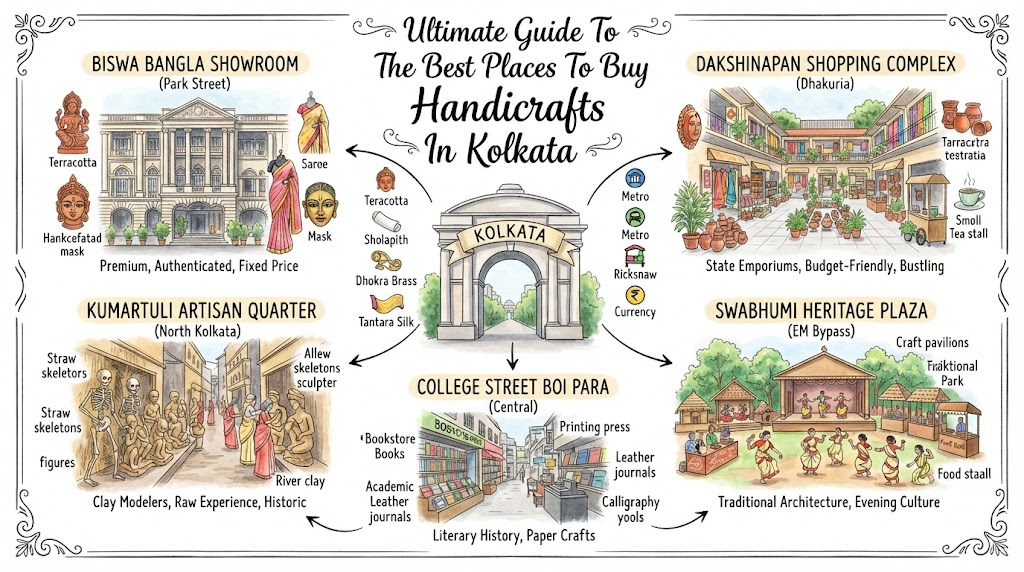
Biswa Bangla Showroom
The state government established this sophisticated flagship initiative to protect and elevate endangered regional master-crafts. Step inside the beautifully curated space to witness an incredible collection of premium handloom textiles, delicate clay items, and aromatic items. Artisans from remote villages receive direct financial equity when you purchase these carefully authenticated premium goods.
The interior showcases massive architectural displays that highlight the absolute pinnacle of indigenous design. Furthermore, every item features a certified tag outlining the exact tribal origin and artisan background. It offers a comfortable, reliable shopping experience with fixed transparent pricing structures.
- Location: Park Street area, situated right in the central business district of the capital.
- Why it is worth visiting: It acts as a curated living museum offering certified authentic heritage products under a single government-backed roof.
- Best things to do: Browse the gorgeous silk scrolls, purchase authentic woody mask carvings, and sample organic honey collected from Sundarbans.
- Best time to visit: Afternoon hours between 1:00 PM and 4:00 PM ensure an uncrowded browsing environment.
- Ideal for whom: Premium souvenir collectors, textile enthusiasts, and corporate travelers seeking authenticated items.
- Travel tip: Ask the staff for the specific historical pamphlet that details the tribal weavers behind the sarees.
Dakshinapan Shopping Complex
This sprawling open-air cultural market complex brings together state-run emporiums from every corner of India under one roof. Consequently, bargain hunters and handicraft collectors flock here to purchase genuine handlooms and traditional artifacts directly from regional trade boards. The open pathways feature a bustling local atmosphere filled with students, artists, and families.
The architecture reflects a vintage charm that honors older community meeting spaces. Additionally, the complex houses excellent regional snack stalls that keep you energized during your intensive retail exploration. It remains the absolute definitive hub for sourcing genuine hand-woven cotton fabrics.
- Location: Dhakuria district, roughly eleven kilometers south of the central railway terminus.
- Why it is worth visiting: It centralizes diverse tribal handicrafts from various Indian states at direct government-regulated prices.
- Best things to do: Buy authentic terracotta lamps from the Bengal stall, explore Odisha ikat fabrics, and drink local tea nearby.
- Best time to visit: Late evenings from 5:00 PM onwards provide a lively breeze and beautiful community interactions.
- Ideal for whom: Budget travelers, textile scholars, families, and individuals seeking genuine household decor items.
- Travel tip: Please note that these government-operated outlets enforce non-negotiable fixed pricing policies across all items.
Kumartuli Artisan Quarter
This world-famous historic settlement houses thousands of traditional clay modelers who sculpt massive icons entirely by hand. Walking through the narrow, atmospheric alleys reveals rows of straw skeletons transforming slowly into magnificent spiritual figures. The scent of river clay and wet paint fills the entire neighborhood atmosphere.
Artisans here trace their direct ancestry back centuries to the original potters of the region. Moreover, watching these creators work using simple wooden tools provides an unforgettable insight into local creative dedication. It provides an immersive look at live manufacturing rather than standard retail shelves.
- Location: North Kolkata, positioned along the banks of the historic Hooghly River network.
- Why it is worth visiting: It represents the largest active clay modeling artisan colony surviving in modern urban India.
- Best things to do: Photograph the delicate hand-painting process, talk with senior sculptors, and buy miniature clay home decorations.
- Best time to visit: Early morning hours around 7:30 AM offer magnificent soft lighting and quiet alley exploration.
- Ideal for whom: Photography enthusiasts, cultural anthropologists, and travelers craving a raw, deep-dive industrial experience.
- Travel tip: Always ask the individual studio owners for polite permission before taking close-up photographs of their sacred sculptures.
Swabhumi Heritage Plaza
This uniquely designed cultural park replicates a traditional elite mansion layout to celebrate historical regional art. The complex features specialized steps and pavilions where individual craftsmen display unique handmade jewelry, pottery, and leatherwork. Visitors stroll through nicely landscaped traditional architecture while discovering rare decorative items.
The plaza frequently hosts evening folk performances that beautifully complement your craft exploration. Furthermore, the specialized food courts serve outstanding traditional delicacies prepared using authentic ancestral family recipes. It provides an elegant, relaxed retail environment away from intense urban traffic.
- Location: Eastern Metropolitan Bypass zone, roughly seven kilometers away from the central core.
- Why it is worth visiting: It combines traditional architectural structures with dynamic lifestyle retail options and cultural stage shows.
- Best things to do: Shop for handmade beaded ornaments, watch live pottery demonstrations, and enjoy classic sweet treats.
- Best time to visit: Weekends during sunset hours when the entire complex lights up beautifully with traditional lamps.
- Ideal for whom: Leisure travelers, families with young children, and couples looking for an integrated cultural evening.
- Travel tip: Check their monthly schedule online because major regional craft fairs regularly offer direct artisan discounts here.
College Street Boi Para
While primarily famous as the largest second-hand book market worldwide, this historic neighborhood sells beautiful academic paper crafts. Tiny wooden stalls offer handmade leather journals, local calligraphy tools, and traditional hand-painted greeting cards. The academic energy creates a distinct atmosphere filled with intellectual debates and vintage charm.
Historic publishing houses still operate from these ancient brick buildings. Additionally, you can find traditional woodblock prints that local students create using older historical machines. It remains an absolute goldmine for finding rare paper-based artistic treasures.
- Location: Central urban zone, well-connected by old tram lines and major metro railway stations.
- Why it is worth visiting: It offers an incredible blend of literary history, indie paper crafts, and historic academic architecture.
- Best things to do: Hunt for vintage woodcut illustrations, purchase handmade sketchbooks, and explore ancient map prints.
- Best time to visit: Late morning around 11:00 AM when the wooden stalls just begin opening their heavy doors.
- Ideal for whom: Writers, artists, academics, and vintage stationery collectors looking for unique paper items.
- Travel tip: Wear highly comfortable walking shoes since navigating these crowded pavements requires significant physical movement.
Offbeat Exploration: Hidden Gems Tourists Miss
Barisha Sholapith Studios
Hidden deep within the southern residential pockets, master craftsmen work with the milky-white spongy core of the Sholapith plant stem. They slice this delicate organic material to create incredibly intricate headgears, miniature structural models, and decorative art. The finished products resemble ivory but remain remarkably feather-light. Tourists rarely visit these home-based family studios, making it an extraordinarily intimate cultural encounter.
Chitpur Wooden Block Carvers
Tucked inside the ancient residential corridors of old upper-town quarters, senior woodcarvers manually chisel dense blocks of seasoned timber. These custom blocks create the gorgeous patterns stamped onto traditional regional textiles and handloom sarees. Watching these masters carve flawless geometric shapes without using modern computer software feels like stepping back through history. Visitors can purchase these blocks as magnificent standalone rustic interior design pieces.
Detailed Practical Guidance for Travelers
| Destination | Standard Entry Fee | General Timings | Best Local Food Options Nearby | Recommended Nearby Attractions |
| Biswa Bangla Showroom | Completely Free | 10:30 AM – 8:30 PM | Traditional fish fry platters | Historic Park Street Cemetery |
| Dakshinapan Complex | Completely Free | 11:00 AM – 8:00 PM | Steaming momos and hot tea | Jodhpur Park Lake Enclave |
| Kumartuli Quarter | Free (Small photography pass fee) | Open sunrise to sunset | Classic sweet shops and kachoris | Bagbazar Ghat River Promenades |
| Swabhumi Plaza | Variable based on special events | 12:00 PM – 9:00 PM | Authentic traditional thali meals | Salt Lake Central Parklands |
| College Street Corridor | Completely Free | 10:00 AM – 8:30 PM | Heritage mutton cutlets and cold coffee | Historic Marble Palace Mansion |
Logistics & On-Ground Navigation
Local Transport Options
- Suburban and Underground Railways: The rapid underground metro lines offer the fastest north-to-south connectivity across major shopping zones.
- Traditional Auto-Rickshaws: These vehicles operate on fixed routes with shared seating arrangements, providing highly cost-effective short-distance commutes.
- Handcrafted E-Rickshaws: These silent battery-powered vehicles excel at navigating tight residential lanes where hidden craft studios operate.
- App-Based Car Rentals: Utilizing mobile apps ensures secure, air-conditioned point-to-point journeys directly to decentralized markets.
Budget Planning
- Backpacker/Budget Tier: Allocate roughly 1,200 to 1,800 Indian Rupees per day to cover shared public transport, budget guesthouses, and delicious street food vendors.
- Comfort/Mid-Range Tier: Budget around 4,000 to 6,500 Indian Rupees daily for private air-conditioned cars, heritage properties, and nice boutique dining establishments.
Safety and Inclusivity Tips
- Families: Always travel during daytime hours and keep young children close because market crowds can build very rapidly.
- Couples: Enjoy the serene riverfront paths near craft quarters but remain mindful of local cultural etiquettes regarding public displays of affection.
- General Safety: Secure your valuable electronic devices and cash wallets inside front-facing bags while navigating heavily congested market streets.
Strategic Travel Planning Guardrails
Travel Planning Tips for Kolkata
- Schedule your shopping journeys between November and February to completely avoid extreme tropical summer heat waves.
- Always carry sufficient physical paper currency because tiny neighborhood artisans rarely maintain functional digital payment terminals.
- Dress in modest, lightweight cotton apparel that respects local cultural sensitivities while keeping you perfectly comfortable.
- Keep a durable, spacious canvas tote bag with you to easily carry multiple fragile handicraft purchases.
- Hire certified local walking guides when venturing deep into historic northern residential neighborhoods to avoid getting lost.
Common Mistakes to Avoid
- Avoid planning major retail excursions on Sundays because most traditional state emporiums remain completely closed.
- Do not attempt to rush through multiple markets on a single afternoon due to dense urban street traffic.
- Never assume that all handicraft vendors accept intense price haggling, especially within regulated government showrooms.
- Avoid buying heavy items early in the morning since carrying them around all day causes significant physical exhaustion.
- Do not overlook the humble, non-branded street shops that often source directly from elite village craftsmen.
Suggested Itinerary Blueprints
1. One-Day Quick Dash (The Heritage Circuit)
This rapid path targets time-pressed collectors, focusing strictly on high-yield central locations. Begin with morning exploration at Kumartuli to see active crafting, followed by a midday air-conditioned visit to the central Biswa Bangla flagship showroom. Conclude your evening by purchasing certified textiles at the Dakshinapan market complex.
2. Two-Day Deep-Dive (North & South Exploration)
- Day 1: Explore northern lanes starting with the College Street paper craft stalls, then spend your afternoon tracking down the woodblock carvers of Chitpur.
- Day 2: Move south to immerse yourself fully in the vast regional collection inside Dakshinapan, then finish your journey picking up Sholapith items in Barisha.
3. Complete Weekend Travel Plan (The Artisan Loop)
- Friday: Arrive and explore the modern, comfortable crafts showcases at Swabhumi Heritage Plaza during the breezy evening hours.
- Saturday: Dedicate your morning to photographing the incredible clay sculptors of Kumartuli, then spend your afternoon bargaining near old municipal markets.
- Sunday: Dedicate your day to relaxed textile hunting at southern handicraft centers, followed by traditional dining experiences at historic local eateries.
Common Tourist Mistakes to Avoid
- Geographic Blunders: Trying to combine the distant northern clay workshops of Kumartuli with the deep southern boutiques of Dakshinapan on the same morning results in spending hours stuck in stressful traffic.
- Commercial Traps: Spending your precious cultural vacation inside shiny, modernized shopping malls results in buying mass-produced plastic replicas instead of genuine, heart-made heritage goods.
- Neglecting Modern/Alternative Zones: Forgetting to explore the quiet, artistic residential lanes of southern neighborhoods means missing beautiful independent galleries and lovely craft cafes.
- Transport Overpayment: Accepting random flat-rate quotes from street vehicles without cross-referencing modern ride-sharing apps can easily cause you to overpay significantly for short city journeys.
- Luxury Dining Bias: Restricting your dining choices exclusively to high-end luxury hotels completely deprives your palate of tasting the legendary street-level culinary heritage that defines local culture.
Frequently Asked Questions
1. Where can I find genuine terracotta items in the city?
You can purchase authentic terracotta pottery and traditional home decor pieces directly from the West Bengal state emporium located inside the Dakshinapan Shopping Complex.
2. Are the prices negotiable at the major government-run handicraft showrooms?
No, all state-operated emporiums and flagship showrooms enforce strictly non-negotiable fixed price tags that directly support rural artisan welfare.
3. How do I transport fragile clay or Sholapith crafts back home safely?
Always request specialized multi-layered bubble wrapping from the sellers, and pack these feather-light items inside your hard-case carry-on luggage rather than checked bags.
4. Which market offers the best collection of authentic traditional handloom sarees?
The Biswa Bangla showrooms and the various state emporiums at Dakshinapan provide the absolute finest certified collections of genuine handloom textiles.
5. Do local street handicraft vendors generally accept international credit cards?
No, small independent street craftsmen almost exclusively require physical Indian rupee currency for all retail transactions.
6. Is Kumartuli open to the public during major festive manufacturing months?
Yes, visitors can freely explore the public alleys of Kumartuli, but you must remain highly respectful of the busy artisans working under tight deadlines.
7. Can I request international shipping from the larger handicraft emporiums?
Certain premium flagship showrooms offer custom freight shipping assistance for massive furniture or heavy metal artwork purchases for an additional delivery fee.
8. What makes Sholapith handicrafts completely distinct from standard white thermocol replicas?
Sholapith is a completely natural, organic plant-derived reed material that offers a gorgeous natural luster and profound historic relevance unmatched by synthetic plastic materials.
9. Are there any specific clothing rules for visiting traditional artisan neighborhoods?
While no formal dress codes exist, wearing modest clothing that covers your shoulders and knees shows excellent respect for these conservative working-class communities.
10. Where can I buy genuine Dhokra brass metal tribal figurines?
The central Biswa Bangla showroom stocks an exceptional, certified inventory of genuine Dhokra metalwork sourced directly from authentic tribal artisan collectives.
11. Do local markets stay open during major regional autumn festival weeks?
Many traditional artisan workshops remain open, but major retail emporiums often close for several days during peak festive holidays.
12. Can I hire a local guide directly at the handicraft markets?
It is highly recommended to book a certified cultural walking guide through reputable travel agencies before arriving at the dense historic market clusters.
Conclusion
Choosing to explore the magnificent handicraft corridors of Kolkata offers an incredibly deep, intellectually rewarding journey that standard, superficial vacations simply cannot duplicate. Instead of collecting mass-produced plastic souvenirs, you return home holding genuine fragments of living human history sculpted by hand. These gorgeous local creations reflect the absolute soul, resilience, and creative genius of Bengal’s ancestral communities. Ultimately, supporting these remarkable grassroots creators ensures that their incredible artistic devotion continues to thrive beautifully for generations to come.