Introduction
When planning a trip to India, most mainstream travel brochures direct you straight toward manicured historical reserves or predictable commercial malls. But if you are seeking a destination that captures the unfiltered, breathing soul of an ancient metropolis, you must look elsewhere.
New Market in Kolkata is not just a shopping center; it is a sprawling, sensory-overloading living museum. Stepping through its brick archways means bypassing the sanitized tourist traps and submerging yourself directly into 150 years of continuous cultural connection and chaotic local authenticity.
Why Kolkata is a must visit city
Kolkata, formerly known as Calcutta, stands as the intellectual, artistic, and cultural capital of India. Located strategically along the banks of the Hooghly River, it acts as a timeless bridge between British colonial grandeur and fiercely independent Bengali traditions. For any traveler who prioritizes human stories, architectural history, and a rich culinary lineage over sterile luxury, this city is a mandatory chapter in their global journeys.
Navigating your way to this iconic hub is remarkably seamless for all archetypes of wanderers. The city is bound together by an intricate network of historical tramways, the country’s oldest underground Metro system, and massive railway junctions like Howrah and Sealdah. For those flying in, Netaji Subhash Chandra Bose International Airport serves as a sleek modern gateway connecting the city to the rest of the world.
Whether you are a solo backpacker looking for an affordable heritage trail, a couple seeking atmospheric old-world cafes, or a family exploring rich museum circuits, Kolkata wraps you in an accessible, warm embrace.
| Aspect | Details |
| Location | Lindsay Street, Ward 63, Central Kolkata |
| Historical Name | Sir Stuart Hogg Market (Est. 1874) |
| Primary Attraction | Over 2,000 stalls selling everything from silver to clothing and gourmet food |
| Nearest Transit Hub | Esplanade Metro Station (2-minute walk) |
Best Places or Experiences
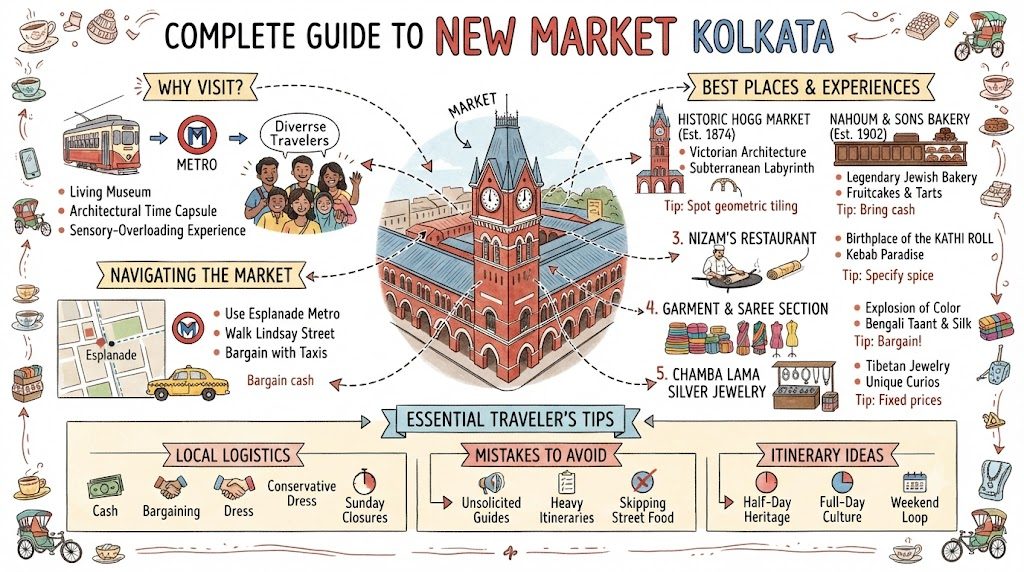
The Historic Hogg Market Building
The red-brick Gothic exterior of the main building stands as a gorgeous monument to Victorian architecture. Built in 1874 to serve British residents who refused to rub shoulders with locals at regular bazaars, it was later named after Sir Stuart Hogg, the then-municipal commissioner.
Walking into this central structure feels like stepping inside a subterranean labyrinth where history has frozen in place. The high ceilings, old iron pillars, and distinct quadrants organized by merchandise type showcase a masterclass in pre-modern urban planning.
- Location: Central area of New Market complex, Lindsay Street, 0 km from Esplanade hub.
- Why it is worth visiting: It is an architectural time capsule that lets you experience Victorian-era commerce surviving intact within a modern megacity.
- Best things to do: Photograph the central clock tower tower structure, explore the historical central courtyard, and track down old British-era shop signboards.
- Best time to visit: 11:00 AM to 2:00 PM on weekdays when the lighting filters through old ventilators beautifully and crowds are manageable.
- Ideal for whom: Architecture enthusiasts, history buffs, and street photographers.
- Travel tip: Keep your eyes on the ground inside the old corridors to spot original, centuries-old geometric tiling patterns that survived multiple fires.
Nahoum & Sons Bakery
No visit to New Market is complete without standing before the wooden glass display counters of this legendary Jewish institution. Established in 1902 by Nahoum Israel Mordecai, this bakery has stood resolute through world wars, the end of the British Raj, and the rise of modern fast-food chains.
The aroma of freshly baked rich fruitcakes, marzipan, and savory puffs acts like an olfactory time machine. The shop retains its original teakwood showcases and antique cash till, keeping a tiny slice of Calcutta’s once-thriving Jewish community vibrpt and alive.
- Location: F-block, Stall 18-19, deep inside the old Hogg Market building.
- Why it is worth visiting: It is the last functioning Jewish bakery in Kolkata, offering an unparalleled taste of authentic colonial-era baking.
- Best things to do: Try their signature rich fruit cake, sample the lemon tarts, and chat with the elderly staff about the store’s history.
- Best time to visit: 11:30 AM before the popular items sell out, or early December to experience the famous Christmas rush.
- Ideal for whom: Culinary historians, dessert lovers, and nostalgic travelers.
- Travel tip: Bring cash here because during peak rush hours, network congestion can cause digital wallet payments to freeze.
Nizam’s Restaurant
Tucked away on the edge of the market complex on Hogg Street, Nizam’s is the absolute birthplace of the world-famous Kathi Roll. Founded in 1932, it originally catered to British bureaucrats who wanted to eat succulent, greasy kebabs without getting their hands dirty.
The chefs cleverly wrapped the iron-skewered parathas around grilled meat fillings, creating a portable culinary masterpiece. The interior remains delightfully no-frills, echoing with the clatter of heavy plates and the intense sizzle of the open griddle outside.
- Location: 22 & 23, Hogg Street, immediately adjacent to the New Market building.
- Why it is worth visiting: To taste the definitive, globally replicated street food item exactly where it was invented.
- Best things to do: Order a classic double-egg double-chicken roll, watch the cooks flip parathas on the massive iron tawa, and try their rich mutton biryani.
- Best time to visit: 4:00 PM to 8:00 PM for the ultimate evening street food atmosphere.
- Ideal for whom: Foodies, meat lovers, and adventurous eaters.
- Travel tip: Specify your spice tolerance level to the roll maker beforehand; their default green chili kick can be incredibly intense for untrained palates.
The Garment and Saree Section
The textiles quadrant of New Market is an explosion of pure color, textures, and sensory stimulation. Hundreds of tightly packed stalls display a dazzling spectrum of traditional Indian wear, ranging from local Bengali Taant and Jamdani sarees to heavy Banarasi silk drapes.
The sellers here are legendary conversationalists who will unroll dozens of elaborate fabrics with mesmerizing speed while offering you a complimentary cup of sweet clay-pot chai. It is an immersive theater of commerce where bargaining is treated as a respectful art form.
- Location: The northern wing of the inner market complex.
- Why it is worth visiting: It offers an exhaustive collection of regional Indian weaves at wholesale prices that you won’t find in modern malls.
- Best things to do: Hunt for authentic Baluchari silks featuring mythological motifs, bargain for hand-embroidered kurtas, and observe the sheer variety of textiles.
- Best time to visit: 3:00 PM to 5:00 PM when shops are fully set up but before the massive post-office evening crowd arrives.
- Ideal for whom: Fashion enthusiasts, souvenir hunters, and cultural explorers.
- Travel tip: Don’t buy from the first shop you enter; walk down at least three corridors to cross-verify prices and master the local benchmark rate.
Chamba Lama Silver Jewelry Stall
For decades, trendy college students and global travelers have gravitated toward this tiny, iconic corner stall in the market. Established by a Tibetan family, Chamba Lama is famous for its incredible collection of authentic tribal silver, heavy bohemian jewelry, and intricate curios.
The silver pieces here range from sleek contemporary rings to heavy, weathered statement necklaces sourced from Tibet, Nepal, and Rajasthan. The compact space is tightly packed with glass cases that glint under warm yellow bulbs, creating a treasure-trove atmosphere.
- Location: Shop No. F-58, Inner Market Corridor, close to the bakery line.
- Why it is worth visiting: It is a landmark destination for high-quality, verified sterling silver and unique ethnic accessories with a cult following.
- Best things to do: Browse their collection of silver toe rings, inspect the antique Tibetan turquoise pendants, and pick up unique silver gifts.
- Best time to visit: 12:00 PM to 2:00 PM for a calmer browsing experience.
- Ideal for whom: Jewelry collectors, solo female travelers, and shoppers looking for non-generic souvenirs.
- Travel tip: The prices here are mostly fixed because of their verified metal purity, so save your heavy bargaining skills for the street clothing stalls outside.
Offbeat Exploration: Hidden Gems Tourists Miss
The Old Toy and Curio Passage
Most tourists stick to the wide main avenues, completely bypassing the narrow, dimly lit lanes dedicated to old-school wooden toys and mechanical wind-up novelties. Here, local artisans still sell traditional clay dolls from Krishnanagar and hand-painted wooden owls that are slowly vanishing from modern households.
The Dried Fruit and Spice Alleys
Tucked deep into the rear quadrants is a fragrant, misty zone where wholesale spice vendors pile high sacks of green cardamom, long cinnamon barks, and rare regional chilies. It is a fantastic spot to pick up premium quality Darjeeling tea leaves packed in rustic wooden boxes at a fraction of airport store prices.
The Red-Light Heritage Architecture of Free School Street
Just a short stroll from the main market periphery lies a network of lanes lined with fading, moss-covered colonial mansions featuring crumbling slatted windows. Exploring this rim gives you a profound look at the residential life that once directly sustained the market’s workforce during the height of the 20th century.
Detailed Practical Guidance for Travelers
The following table provides essential practical logistics to help you coordinate your visits to the key landmarks around the market complex:
| Destination | Standard Entry Fee | General Timings | Best Local Food Options Nearby | Recommended Nearby Attractions |
| Hogg Market Building | Free Access | 10:30 AM – 8:30 PM | Street-side Jhalmuri & Puchka stalls | Indian Museum (5-min walk) |
| Nahoum & Sons Bakery | Free Access | 10:00 AM – 9:00 PM | Try their legendary Lemon Tarts on site | Old Esplanade Tram Terminus |
| Nizam’s Restaurant | Free Entry (Pay per dish) | 11:30 AM – 11:00 PM | Mutton Egg Kathi Roll, Beef Kebabs | Sudden Street Antique Bookstalls |
| Garment Corridors | Free Access | 11:00 AM – 8:30 PM | Clay-pot Milk Chai from local runners | Globe Cinema Heritage Building |
| Chamba Lama | Free Access | 11:00 AM – 8:00 PM | Local hot Mughlai Parathas nearby | Sudder Street Backpackers Hub |
Logistics & On-Ground Navigation
Local Transport Options
- Metro Railway: The fastest and smartest way to arrive. Get off at Esplanade Metro Station, take Exit 4, and weave through Lindsay Street for two minutes to reach the market gates.
- Yellow Taxis and Rideshares: Traditional metered yellow cabs, along with Uber and Ola apps, drop passengers off at the Lindsay Street entrance, though traffic can get completely gridlocked during evening peak hours.
- Auto-Rickshaws: Fixed-route shared autos run frequently from surrounding neighborhoods like Sealdah and Chandni Chowk straight to the outskirts of the market zone.
- Walking: The entire central market area is pedestrian-only, meaning your own two feet are the ultimate vehicle to cross the dense inner grids.
Budget Planning
- Backpacker Tier (₹1,000 – ₹1,500 per day): Includes exploring the free heritage market lanes, consuming street food lunches like kathi rolls and puchkas, purchasing basic cotton kurtas, and navigating solely via the metro system.
- Comfort / Mid-Range Tier (₹3,500 – ₹6,000 per day): Includes a sit-down meal at historic restaurants, buying premium sterling silver jewelry or high-end silk sarees, using app-based air-conditioned cabs, and hire a local market guide to expedite shopping.
Safety and Inclusivity Tips
- For Families: Stick together tightly, especially in the central textile avenues where dense human traffic can quickly separate small children from parents.
- For Couples: The market area is generally progressive and welcoming, but avoid overly overt public displays of affection to stay aligned with local public etiquette.
- General Safety: Keep your backpacks zipped and worn on your front side. Pickpocketing is rare but can happen during high-density holiday crowds or busy weekend evenings.
Strategic Travel Planning Guardrails
Travel Planning Tips for New Market
- Embrace the Cash Economy: While major textile showrooms accept digital cards, hundreds of small lane vendors operate purely on physical cash notes.
- Learn the Bargaining Baseline: Always counter an initial street vendor price quote with roughly 40% to 50% of their starting demand, then negotiate your way up gracefully.
- Dress Conservatively: Wear lightweight, breathable cotton clothing that covers your shoulders and knees to blend in seamlessly with local shoppers.
- Understand Sunday Closures: Note that the main indoor market building is completely closed on Sundays, though street vendors outside continue to operate.
- Stay Hydrated Responsibly: Carry sealed mineral water bottles with you; navigating the non-air-conditioned heritage wings can get hot and sweaty.
Common Mistakes to Avoid
- Engaging with Unsolicited Shopping Guides: Politely ignore aggressive street touts who offer to show you “the cheapest authentic silk shop”—they charge high hidden commissions built directly into your bill.
- Planning Heavy Itineraries Afterward: Do not book a stressful museum tour immediately after New Market; your arms will likely be full of shopping bags, and your energy will be drained.
- Assuming Fixed Prices Everywhere: Avoid paying the first price quoted on the streets without putting effort into friendly, lighthearted negotiation.
- Skipping the Street Food: Do not rely solely on familiar global fast-food joints located on the main road; you will completely miss the authentic culinary essence of the district.
- Carrying Massive Luggage Bags: Avoid bringing large travel suitcases or bulky backpacks into the tight, narrow inner shopping lanes.
Suggested Itinerary Blueprints
1. The Half-Day Quick Dash (The Heritage & Bites Route)
Designed for time-restricted travelers. Arrive at 11:00 AM via Esplanade Metro. Head straight to the central Hogg Market Building to photograph the Victorian architecture. Walk over to Nahoum & Sons for a quick mid-day sweet treat, then conclude your express run with a legendary lunch at Nizam’s before catching an afternoon train or flight.
2. The Full-Day Deep-Dive (The Culture & Commerce Track)
Start your morning at 10:30 AM inspecting the historic collections at the nearby Indian Museum. By 1:00 PM, enter New Market for a hearty street-side meal. Spend your afternoon systematically exploring the Garment and Saree section, visiting Chamba Lama for silver jewelry, and hunting for hidden spice alleys. Conclude your evening watching the street lights glow on Lindsay Street while drinking hot clay-pot chai.
3. The Complete Weekend Travel Plan (The Central Kolkata Loop)
- Friday Afternoon: Arrive at the backpacker hub of Sudder Street, check into a heritage hotel, and enjoy a relaxed evening walk around the outer market peripheries.
- Saturday: Dedicate your entire day from 11:00 AM to 7:00 PM to deep shopping inside the main historical building, stopping frequently for street snacks like kathi rolls and fresh lime sodas.
- Sunday: Since the main inner building is closed, spend your day exploring the alternative artistic cafes of nearby Park Street, viewing colonial architecture, and taking an old-school tram ride across Esplanade.
Common Tourist Mistakes to Avoid
- Geographic Blunders: Do not attempt to visit the northern heritage ghats of Kolkata and shop at New Market within the same tight morning slot. The central traffic gridlock can eat up hours of your day.
- Commercial Traps: Avoid spending your limited time inside the new, air-conditioned multi-story concrete malls lining the outer road. They offer the exact same products you can find anywhere globally, completely lacking the historic charm of the older red-brick bazaar.
- Neglecting Modern/Alternative Zones: Don’t forget that just behind the chaotic market lies the quiet, creative, and intellectual residential pockets of central Kolkata, filled with independent bookstores and classic bakeries.
- Transport Overpayment: Never board an unmetered yellow taxi parked directly outside the market gate without confirming a flat rate beforehand. It is always safer to use ride-sharing apps to check the standard price benchmark.
- Luxury Dining Bias: Sticking purely to high-end hotel buffets means you will completely miss out on the magnificent street-level culinary ecosystem that defines Kolkata’s global food identity.
Frequently Asked Questions
1. Is New Market open every single day of the week?
No, the historic main indoor building of New Market is completely closed to the public on Sundays. However, many independent street-side stalls and food joints on the surrounding Lindsay Street remain open.
2. How far is New Market from the main Howrah Railway Station?
It is roughly 5 to 6 kilometers away depending on the route. Due to central city traffic, a taxi or auto ride can take anywhere from 20 to 45 minutes to cover this distance.
3. Can I pay using international credit cards inside the market?
Large, established saree emporiums and silver showrooms accept international credit cards. However, smaller lane stalls, street food vendors, and old legacy bakeries operate strictly on local cash or Indian UPI apps.
4. Is New Market a safe destination for solo female travelers?
Yes, it is generally very safe as the area is continuously bustling with families and shoppers. Standard street smarts apply: dress modestly to match the local culture and keep your personal belongings close to you.
5. What is the closest metro station to reach the market gates?
The closest station is Esplanade Metro Station. Taking the designated Lindsay Street exit puts you a mere two-minute walk away from the market’s main red-brick entrance.
6. Is bargaining expected inside Nahoum & Sons bakery?
No, Nahoum & Sons is a historic retail establishment with strictly fixed prices displayed clearly on their menu boards. Bargaining here is considered inappropriate.
7. What should I do if a local street guide approaches me?
Politely but firmly say “No, thank you” and keep walking. These unauthorized touts will try to lead you to specific shops where prices are inflated to cover their personal commissions.
8. Are there public restroom facilities available inside the complex?
There are basic public restrooms inside the older municipal building blocks, but they may not meet high western hygiene standards. For cleaner facilities, it is recommended to visit a modern cafe or hotel nearby.
9. Can I find authentic Kashmiri shawls inside New Market?
Yes, there is an entire dedicated section where generational traders from Kashmir sell authentic pashminas, hand-embroidered shawls, and traditional carpets.
10. What is the absolute best item to buy as a souvenir here?
The top choices include handmade silver jewelry from Chamba Lama, traditional Bengali handloom sarees, or a durable box of rich fruitcake from Nahoum & Sons.
11. Is the market wheelchair accessible?
The older sections have narrow, highly crowded corridors with occasional uneven steps and high thresholds, making independent wheelchair navigation quite challenging during peak hours.
12. Does it get flooded during the monsoon season?
Heavy downpours during July and August can cause temporary waterlogging on the outer streets like Lindsay Street. It is best to check local weather updates before heading out during peak monsoon days.
Conclusion
Choosing to explore the dense, historic labyrinth of New Market over a predictable, sanitized modern shopping center is a profound travel choice. It is an immersive journey that rewards you with an intellectual and sensory understanding of Kolkata’s living history.
Long after you return home, it won’t be the items in your shopping bags that stay with you. Instead, it will be the echoing calls of the vendors, the timeless taste of a century-old baking recipe, and the beautiful, chaotic energy of a historic bazaar that has refused to let its unique soul fade away.