Introduction
Forget the sterile, air-conditioned luxury malls that make every international city feel exactly the same. Kolkata doesn’t offer a passive shopping trip; it delivers a sensory pilgrimage. Stepping into the city’s historic commercial hubs means trading predictable retail chains for sprawling street labyrinths filled with the scent of raw cotton, roasted spices, and hot chai served in small clay cups (bhar).
Here, commerce is deeply intertwined with culture, and every transaction comes with a story. In an era where modern travel often feels packaged and sanitized, Kolkata’s historic markets remain proudly unpolished, fiercely authentic, and deeply connected to their colonial and pre-colonial roots. For any traveler looking to understand the true spirit of the City of Joy, shopping isn’t just a leisure activity—it is how you experience the heartbeat of the city.
Why Kolkata is a must visit city
Kolkata occupies a singular space in the story of global trade and cultural evolution. As the former capital of the British Raj, the city served as the primary gateway for international trade in the East, creating a unique synthesis of European architecture and traditional Bengali lifestyle. Geographically positioned on the banks of the Hooghly River, it has historically drawn weavers, artisans, bookbinders, and traders from across the Indian subcontinent.
Navigating Kolkata’s travel circuit is a journey through distinct historical layers. From the grand colonial structures of Central Kolkata to the academic and artistic lanes of North Kolkata, and down to the bustling, creative residential hubs of South Kolkata, the city is remarkably accessible. A highly integrated network of historic tram lines, an efficient underground metro system, suburban railways, and iconic yellow ambassador taxis link these diverse commercial zones, making it simple for budget backpackers, cultural historians, and luxury travelers alike to explore.
| Key Metric | Details & Practical Insights |
| Best Retail Hubs | New Market (Hogg Market), Gariahat, Burrabazar, College Street |
| Primary Souvenirs | Lalpar Baluchari & Jamdani Sarees, Terracotta artifacts, Dokra metal craft, Sholapith handicrafts |
| Transit Access | Netaji Subhash Chandra Bose International Airport (CCU), Howrah & Sealdah Rail Terminals |
| Local Transport | Kolkata Metro, Yellow Taxis, Electric Trams, Auto-rickshaws, App-based cabs (Uber, Ola, Yatri Sathi) |
| Food Pairings | Puchka, Jhalmuri, Kathi Rolls, Mutton Mughlai Paratha, Mishti Doi, Rosogolla |
Best Places or Experiences
New Market (Sir Stuart Hogg Market)
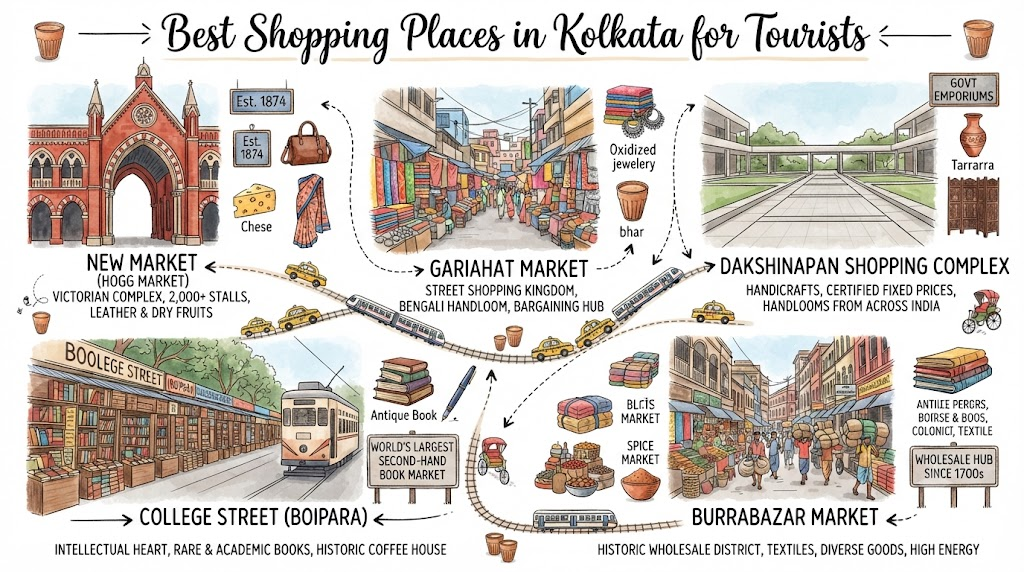
Stepping into New Market is like entering a living Victorian time capsule. Originally opened in 1874 strictly for British residents, this sprawling red-brick Gothic revival complex houses over 2,000 stalls arranged under a sprawling labyrinth of interconnected corridors. The air is a thick blend of old paper, leather goods, fresh flowers, and the rich aroma of baking fruitcakes coming from legendary confectionery shops nearby.
The true magic of New Market lies in its organized chaos. The market is divided into strict sections: one lane handles hand-embroidered silver zardozi bags, another specializes in authentic leather footwear, while deep in the interior lies the historic dry fruit and cheese market. It remains the absolute epicenter of Kolkata’s daily trade, where generations of families have frequented the exact same vendors for over a century.
- Location: Lindsay Street, Ward 63, Central Kolkata; roughly 2 kilometers from Esplanade Metro Station.
- Why it is worth visiting: It is the oldest shopping institution in the city, boasting unparalleled colonial architecture and a massive variety of goods under a single roof.
- Best things to do: Buy premium dried fruits and traditional bandel cheese at Johnson & Co., shop for silver jewelry at the old heritage shops, and sample the iconic macaroons at Nahoum & Sons.
- Best time to visit: Between 11:00 AM and 2:00 PM on weekdays to avoid the massive evening rush hour.
- Ideal for whom: Architecture enthusiasts, bargain hunters, and culinary travelers.
- Travel tip: Be prepared for persistent independent shopping guides (coolies) who offer to lead you through the stalls; politely decline with a firm “No, thank you” if you prefer to explore solo.
Gariahat Market
Gariahat is the undisputed crown jewel of street shopping in South Kolkata. Spanning a massive four-way intersection, the sidewalks are packed with makeshift wooden stalls that display a vibrant sea of fabrics, home decor items, and statement jewelry. The soundscape here is dominated by the energetic shouts of street hawkers bargaining with buyers, creating a classic local atmosphere.
This destination is famous for its collection of traditional Bengali textiles. From budget-friendly daily wear cottons to high-end silk boutiques tucked away in the permanent buildings behind the street stalls, it is the premier destination for regional clothing. The market provides an incredible look into the modern, creative lifestyle of South Kolkata.
- Location: Gariahat Crossing, South Kolkata; approximately 1.5 kilometers from Kalighat Metro Station.
- Why it is worth visiting: It offers the ultimate outdoor street shopping experience in Kolkata, specializing in authentic regional handloom sarees.
- Best things to do: Bargain for oxidized silver earrings on the pavement stalls, browse the high-quality handloom collections at nearby state emporiums, and enjoy hot kathi rolls during a shopping break.
- Best time to visit: 4:00 PM to 7:00 PM when the street lights come on and the displays look their best.
- Ideal for whom: Fashion students, textile lovers, and budget shoppers.
- Travel tip: Pavement vendors regularly quote prices 40% higher than what they will accept, so quote a reasonable counter-offer to begin bargaining.
Dakshinapan Shopping Complex
For travelers seeking a calmer, more curated shopping environment, Dakshinapan is a welcome escape. This open-air, multi-level concrete complex is a dedicated hub for government-run handloom and handicraft emporiums from various Indian states. The atmosphere is relaxed, with wide open walkways, central courtyards, and a distinctly slower pace of commerce.
Here, you can browse authentic, ethically sourced products without the pressure of street bargaining. Each state cottage-industry outlet features fixed pricing and certified materials, ranging from Kashmiri walnut wood carvings to Odisha textiles and Bastar iron art. It is a fantastic educational experience that showcases India’s vast and diverse craft traditions in one accessible location.
- Location: Dhakuria, South Kolkata; right next to the Madhusudan Mancha cultural hall.
- Why it is worth visiting: It is the finest spot for high-quality, authentic Indian handicrafts and handlooms at certified, government-fixed prices.
- Best things to do: Explore the massive collection of hand-woven sarees at the Tantuja stall, shop for unique terracotta pottery from the rural Bengal emporium, and sit down for a unique clay-pot tea blend at Dolly’s Tea Shop.
- Best time to visit: 2:00 PM to 6:00 PM for a quiet, unhurried walk through the long corridors.
- Ideal for whom: Collectors of fine art, families, and travelers looking for a relaxed experience.
- Travel tip: Most state emporiums remain closed on Sundays and major public holidays, so plan your visit between Monday and Saturday.
College Street (Boipara)
College Street is the largest second-hand book market in the entire world, and the undisputed intellectual heart of Bengal. Stretching for nearly a mile, the sidewalks are lined with hundreds of small bookstalls constructed from wood and canvas. The stalls are packed from floor to ceiling with books, creating walls of paper that smell beautifully of ink and aged binding.
Every imaginable print media finds a home here, from rare, out-of-print 19th-century colonial journals to modern academic textbooks. The area has long been a gathering spot for generations of writers, filmmakers, and students from neighboring institutions like Calcutta University and Presidency University. The intellectual energy here is unmatched anywhere else in the country.
- Location: Central-North Kolkata; easily accessible via the Mahatma Gandhi Road Metro Station.
- Why it is worth visiting: It is a unique literary landmark, offering an incredible variety of rare books and a historic academic atmosphere.
- Best things to do: Hunt for rare first-edition fiction along the pavement stalls, find classic translated regional literature, and enjoy a cold sherbet drink at the legendary Paramount Juice Center.
- Best time to visit: 11:30 AM to 4:00 PM when all the independent sellers have fully opened their stalls.
- Ideal for whom: Avid readers, history buffs, and academics.
- Travel tip: If you are searching for a specific out-of-print title, write the name and author clearly on a piece of paper; the local stall owners have an amazing mental map of their stock and can often track it down across multiple stalls.
Burrabazar Market
Burrabazar is one of the oldest and largest wholesale trading hubs in India. Originally starting as a small yarn and textile market in the 1700s, it has grown into a massive commercial district divided into specialized sub-markets known locally as katras. The narrow lanes are tightly packed with colonial-era commercial buildings, handcarts, and porters moving large bundles of goods.
This is a high-energy wholesale environment where you can find everything from bridal wear and festive decorations to spices and home goods at rock-bottom prices. The sheer volume of trade is staggering, making it an incredible destination for travelers who want to experience the raw commercial energy of the city.
- Location: Greater Central-North Kolkata; adjacent to the Mahatma Gandhi Road Metro Station and the Howrah Bridge approach roads.
- Why it is worth visiting: It offers an immersive look into an authentic wholesale commercial district that has driven the regional economy for centuries.
- Best things to do: Explore the colorful fabric lanes of Raja Katra, shop for wholesale festive items, and try the legendary street food snacks like hot kachoris and jalebis.
- Best time to visit: 11:00 AM to 1:30 PM before the afternoon crowding peaks.
- Ideal for whom: Adventurous travelers, photographers, and textile researchers.
- Travel tip: Wear durable, closed-toe walking shoes, keep your personal items close, and be prepared to step aside for busy porters carrying heavy loads through the narrow lanes.
Offbeat Exploration: Hidden Gems Tourists Miss
Kumartuli Artisan Quarter
Tucked away in the narrow lanes of North Kolkata, near the banks of the Hooghly River, lies Kumartuli—the historic neighborhood of traditional clay artisans. For over three centuries, these skilled craftsmen have hand-sculpted stunning idols of Hindu deities using special clay sourced from the riverbed. Walking through the quiet workshops reveals rows of life-sized straw armatures slowly being transformed into graceful clay figures. It’s an open-air art gallery where you can purchase miniature terracotta masks, unbaked clay figurines, and exquisite traditional art directly from the creators.
Metiabruz Tailoring Clusters
Located on the far western edge of the city, Metiabruz is a historic textile enclave with roots tied to the exiled King of Oudh, Wajid Ali Shah. Today, it stands as one of the largest independent garment manufacturing hubs in Asia. The maze of busy alleys is filled with the rhythmic sound of thousands of mechanical sewing machines. For travelers interested in fashion and design, this is an incredible spot to source wholesale fabrics, hand-tailored sherwanis, and intricate Zari embroidery panels at a fraction of standard retail costs.
The Byamkesh Bakshi Antique Trail (Russell Street)
While most visitors crowd the modern stores on Park Street, seasoned collectors slip onto Russell Street to explore its unassuming auction houses and vintage shops. Outlets like The Russell Exchange host weekly public auctions of estate goods from the colonial era. Here, you can hunt for genuine pocket watches, vintage crystal glassware, old movie posters, and mid-century teak wood furniture, making it a dream for antique lovers.
Detailed Practical Guidance for Travelers
| Destination | Standard Entry Fee | General Timings | Best Local Food Options Nearby | Recommended Nearby Attractions |
| New Market | Free Access | 10:30 AM – 8:30 PM (Closed Sundays) | Mutton Kathi Rolls at Nizam’s, Plum Cake at Nahoum & Sons | The Indian Museum, Indian Council for Cultural Relations |
| Gariahat Market | Free Access | 11:00 AM – 9:00 PM (Sundays open late afternoon) | Fish Fry at Mitra Cafe, Traditional sweets at Jugal’s | Rabindra Sarobar Lake, Birla Academy of Art and Culture |
| Dakshinapan | Free Access | 11:00 AM – 8:00 PM (Closed Sundays) | Spiced Fruit Tea at Dolly’s Tea Shop, Mughlai Paratha at local stalls | Jodhpur Park neighborhood cafes, Dhakuria Lake |
| College Street | Free Access | 11:00 AM – 7:30 PM (Closed Sundays) | Sherbets at Paramount, Mutton Cutlet at Coffee House | Marble Palace, Jorasanko Thakurbari (Tagore House) |
| Burrabazar | Free Access | 10:30 AM – 7:30 PM (Closed Sundays) | Club Kachori at Sharma Tea, Khasta Kachori at local vendors | Howrah Bridge, Mullick Ghat Flower Market |
Logistics & On-Ground Navigation
Local Transport Options
- The Underground Metro: The fastest way to bypass heavy surface traffic. The North-South line directly links key shopping areas like College Street, New Market, and Gariahat.
- Yellow Taxis & App Cabs: Iconic yellow Ambassador taxis operate on flat rates or app platforms, while Uber, Ola, and Yatri Sathi offer convenient app-based booking for comfortable city travel.
- Auto-Rickshaws: These shared vehicles operate on fixed routes between metro stations and residential shopping neighborhoods, offering a fast and highly affordable ride.
- Heritage Electric Trams: The oldest operating electric tram network in Asia still runs along select routes in Central and North Kolkata, providing a classic, nostalgic travel experience.
Budget Planning
- Budget Tier (Backpacker): ₹1,500 – ₹2,500 per day. Covers budget guest houses, navigating via shared autos and metro, dining on street snacks like kathi rolls and puchkas, and shopping at street markets like Gariahat.
- Mid-Range Tier (Comfort): ₹4,500 – ₹8,000 per day. Covers comfortable 3-star boutique hotels, using app-based air-conditioned cabs, dining at historic restaurants on Park Street, and purchasing fine handlooms from state emporiums.
Safety and Inclusivity Tips
- For Families: The dense crowds in wholesale hubs like Burrabazar can be overwhelming for young children. Opt for spacious layouts like Dakshinapan or the permanent indoor shops in New Market for a smooth family outing.
- For Couples: Take a peaceful late-afternoon stroll through the leafy lanes of South Kolkata near Hindustan Park, which features independent artisan boutiques and charming indie cafes.
- General Safety: Kolkata is widely recognized as one of the safest metro cities in India for solo travelers. Keep a close eye on your personal belongings in busy market crowds, and always carry some cash, as smaller street vendors rarely accept international credit cards.
Strategic Travel Planning Guardrails
Travel Planning Tips for Kolkata
- Plan Around Festive Seasons: The city transforms completely during the weeks leading up to Durga Puja (typically September or October). Markets are vibrant and fully stocked, though extremely crowded with festive shoppers.
- Keep Cash on Hand: While digital payment apps (UPI) are common, carrying small cash denominations is essential for street purchases, taxi fares, and small food stalls.
- Dress Vertically & Comfortably: Wear light, breathable cotton clothing and durable walking shoes, as exploring these historic markets requires plenty of walking.
- Check the Calendar: Remember that many traditional markets, including New Market and the state emporiums at Dakshinapan, remain completely closed on Sundays.
- Learn a Few Local Words: Using basic Bengali phrases like “Koto nilen?” (How much is this?) or “Ektu kom krun” (Please lower the price a bit) builds great rapport with local sellers.
Common Mistakes to Avoid
- Over-packing Itineraries: Trying to explore North Kolkata’s book markets and South Kolkata’s textile hubs on the exact same day will leave you stuck in traffic for hours. Focus on one major geographic zone per day.
- Sticking Only to Luxury Malls: Modern shopping centers offer the same international brands you can find anywhere. The true soul and craft heritage of Kolkata live in its historic street markets.
- Assuming Fixed Prices Everywhere: Pavement hawkers always expect a friendly negotiation. Accept the first price quoted only at certified, government-run emporiums.
- Skipping the Local Street Food: Missing out on iconic street snacks like jhalmuri or puchka deprives you of the quintessential local shopping experience.
- Hiring Independent Street Guides: Avoid shopping assistants who offer to guide you through the markets; they often lead buyers to specific stores that charge high commissions.
Suggested Itinerary Blueprints
1. 1-Day Quick Dash (The Heritage Retail Core)
Designed for business travelers or visitors short on time, this route focuses on Central Kolkata’s historic highlights.
- Morning (09:30 AM): Enjoy a traditional breakfast of kachori and tea near Esplanade, followed by a walk through the historic architecture of New Market.
- Afternoon (02:00 PM): Take a short taxi ride to College Street to explore the vintage book stalls and grab lunch at the historic Indian Coffee House.
- Evening (05:30 PM): End your day with a relaxing stroll along the Russell Street antique shops, followed by dinner on Park Street.
2. 2-Day Deep-Dive (The North-South Cultural Split)
A comprehensive route that highlights the fascinating cultural differences between the city’s northern and southern halves.
- Day 1 (North Heritage Route): Start early at the bustling Mullick Ghat Flower Market by the river, move inward to explore the busy wholesale lanes of Burrabazar, and spend your afternoon exploring the artisan workshops in Kumartuli.
- Day 2 (South Artisan Route): Dedicate your morning to browsing the colorful textile stalls at Gariahat Crossing. In the afternoon, shift to the calm walkways of Dakshinapan for certified handicrafts, ending your trip with a premium tea tasting session.
3. Complete Weekend Travel Plan (The Grand Kolkata Loop)
The ultimate Friday-to-Sunday loop for an immersive look at the city’s commercial and creative heritage.
- Friday: Arrive and explore the vintage charms, leather goods, and historic bakeries of New Market, topped off with a classic Mughlai dinner.
- Saturday: Spend your morning exploring the literary lanes of College Street. In the afternoon, take an electric tram ride down to the historic colonial business district near B.B.D. Bagh.
- Sunday: Enjoy a relaxing morning walk around Rabindra Sarobar Lake. Spend your afternoon exploring the independent design boutiques and artisan cafes tucked away in the trendy lanes of Hindustan Park.
Common Tourist Mistakes to Avoid
- Geographic Blunders: Many travelers try to combine a trip to the northern potter’s quarter of Kumartuli with the southern handicraft complex of Dakshinapan on the same afternoon. The cross-city transit can easily take over 90 minutes during peak traffic hours, leaving you exhausted.
- Commercial Traps: Do not waste precious travel time visiting modern luxury shopping malls. These developments offer the same uniform global brands you can find anywhere, missing the rich cultural history found in the city’s older markets.
- Neglecting Modern/Alternative Zones: Visitors often miss the creative independent boutiques, contemporary art galleries, and craft cafes hidden in residential South Kolkata neighborhoods like Hindustan Park and Ballygunge.
- Transport Overpayment: Never accept high, unmetered flat rates from airport taxi drivers or street cabs. Always request the official meter or use reliable app-based ride services to ensure fair pricing.
- Luxury Dining Bias: Relying solely on fine-dining hotel restaurants means missing out on the incredible local food scene. The true culinary soul of the city is found in its historic street side stalls.
Frequently Asked Questions
1. What are the absolute best things to buy in Kolkata that I cannot find elsewhere?
You should look for authentic Lalpar cotton sarees, certified Baluchari silks, traditional terracotta pottery from Bankura, intricate Dokra metal casting items, and fresh sweets packed for travel like Sondesh and Rasgulla.
2. Are the shopping markets in Kolkata open seven days a week?
No, most major historic markets, including New Market, College Street, Burrabazar, and the Dakshinapan emporiums, are completely closed on Sundays. Always double-check operating hours before planning a weekend visit.
3. How do I know if a Baluchari or Jamdani saree is genuinely authentic?
To ensure authenticity, purchase directly from government-certified stores like Tantuja, Manjusha, or established heritage outlets. Genuine handloom pieces feature slightly unique irregularities in their weaving patterns on the reverse side.
4. Is bargaining acceptable in all shopping areas across Kolkata?
Bargaining is expected at street-side stalls in Gariahat, Burrabazar, and New Market. However, prices are strictly fixed at government-run state emporiums, boutique craft galleries, and modern retail outlets.
5. Which market is best for buying authentic leather goods at low prices?
The rear complex of New Market features a dedicated leather lane packed with independent shops that sell high-quality, handcrafted leather boots, jackets, wallets, and travel bags at excellent prices.
6. What is the most convenient way to travel between different markets?
The Kolkata Metro system is the fastest and most reliable way to bypass city traffic. For areas further from metro lines, app-based ride platforms offer comfortable, air-conditioned transport at transparent rates.
7. Can I use international credit cards at street market stalls?
No, street-side vendors and smaller market stalls accept payments exclusively via cash or local digital wallets (UPI). Keep a good supply of small-denomination cash bills for smooth street purchases.
8. Where can I shop for rare and vintage books in the city?
College Street (Boipara) is the premier destination for book lovers. The street features hundreds of independent stalls packed with rare editions, historic journals, and out-of-print literature.
9. Is it safe for solo women travelers to explore the busy wholesale markets?
Yes, Kolkata is consistently ranked among the safest major cities in India for women. While areas like Burrabazar are very crowded, maintaining basic situational awareness ensures a safe and rewarding visit.
10. What unique food items can I buy to take back home as gifts?
Premium Nolen Gur (date palm jaggery available during winter months), artisanal Bandel cheese, special spiced fruit teas, and dry sweets like Darbesh or Kora Pak Sondesh make fantastic edible souvenirs.
11. What should I wear when exploring the outdoor street markets?
Opt for modest, lightweight clothing made from breathable cotton, and wear comfortable, closed-toe walking shoes to stay comfortable along the busy pavement stalls.
12. How can I avoid paying inflated tourist prices when hiring local transport?
Always insist that taxi drivers use the official vehicle meter, or use local app-based ride services like Uber or Yatri Sathi to ensure accurate, clear pricing.
Conclusion
Choosing to explore the vibrant markets of Kolkata offers a far deeper reward than a conventional vacation. The city rewards curious travelers who look past the hectic exterior to discover the deep artistic traditions underneath.
When you purchase a hand-woven saree from a local weaver or find a vintage book along College Street, you aren’t just buying an object—you are preserving a piece of living history. In a rapidly modernizing world, Kolkata’s markets stand as a beautiful reminder of the enduring power of human connection, heritage, and authentic craftsmanship.